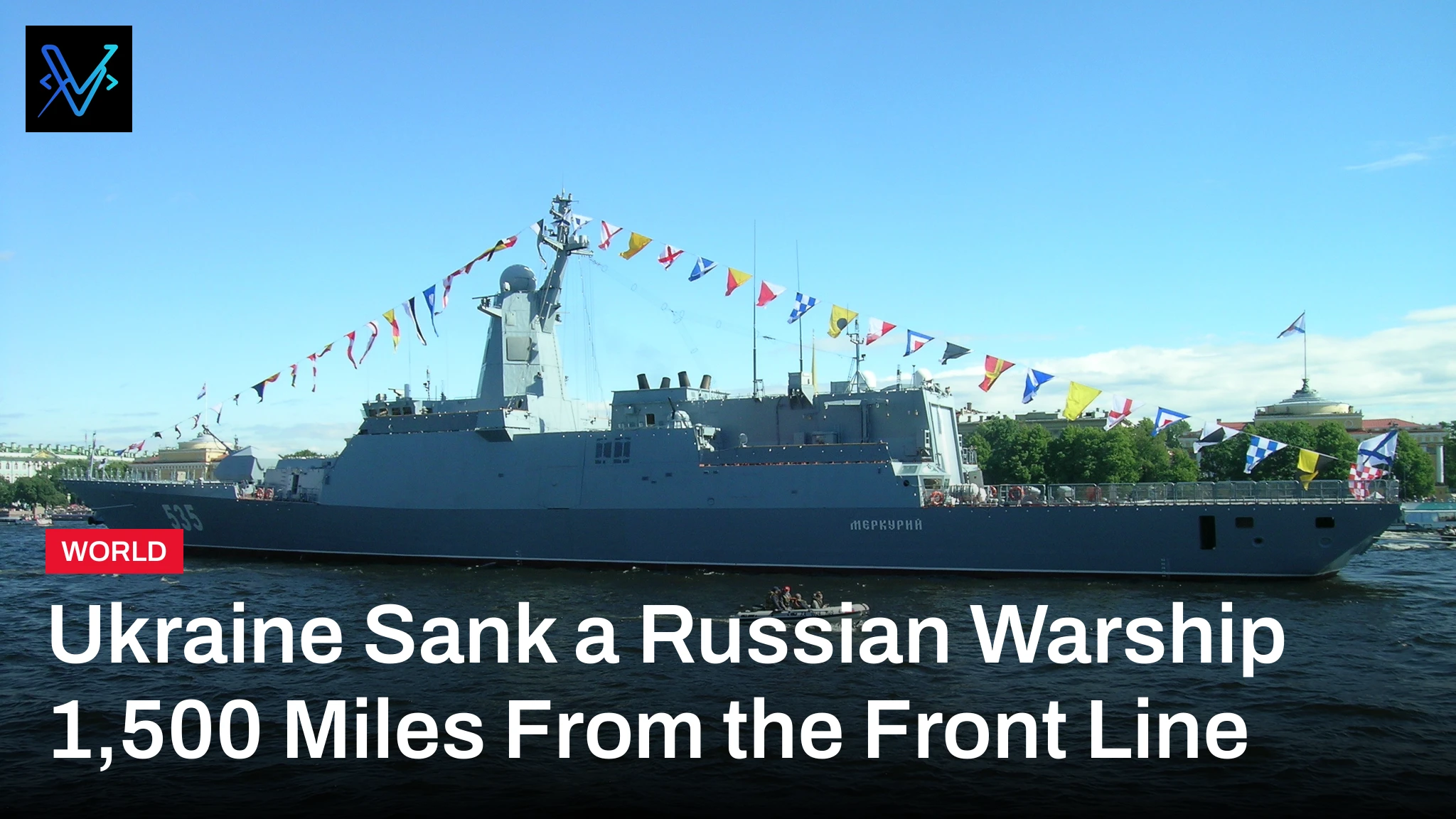
Ukrainian sea drones sank the Russian corvette Merkury at the Libyan port of Benghazi on Sunday, President Volodymyr Zelenskyy confirmed on Monday — 1,500 miles from the nearest front line in Ukraine. Seven Ukrainian-made naval drones carried out the attack, destroying a Ka-27 helicopter aboard the ship and hitting a second vessel, the cargo ship MV Angara, which Kyiv says Moscow used to move weapons.
KEY POINTS
- Seven Ukrainian-made naval drones sank the Russian corvette Merkury — commissioned in 2023, one of the navy’s newest ships — at its berth in the Libyan port of Benghazi on Sunday. A Ka-27 helicopter aboard the ship was destroyed, and the sanctioned cargo vessel MV Angara was also hit.
- The attack took place about 2,400 kilometres (1,500 miles) from the front line in Ukraine. Kyiv says the drones were carried to the target area aboard a “mothership”; Libyan officials said at least four drones were intercepted and two struck the corvette, wounding at least 10 people.
- Satellite imagery shows the corvette capsized and mostly sunk at its berth. Russia has made no immediate comment, while the government in eastern Libya has asked the United Nations for an international investigation into the attack.
| Target | What it is | Result |
|---|---|---|
| Corvette Merkury | Project 20380 Steregushchiy-class corvette, hull 535, Black Sea Fleet, commissioned 2023 | Sunk at its berth in Benghazi |
| MV Angara | Sanctioned dry cargo vessel Kyiv says was used to transport weapons | Hit |
| Ka-27 helicopter | Military helicopter aboard the Merkury | Destroyed |
| The weapons | Seven Ukrainian-made naval drones, launched from a “mothership” near the target | At least two struck the corvette |
| Distance | About 2,400 km (1,500 miles) from the front line in Ukraine | Farthest confirmed Ukrainian naval strike of the war |
Source: Associated Press, Naval News and PA reporting, November 23, 2026.
What happened in Benghazi
Residents of Benghazi heard loud explosions and saw flames at the naval base early on Sunday. Civil defence units rushed to the site and put out the fire, authorities in eastern Libya said. By Monday morning, satellite images showed the scale of the damage: most of the corvette had capsized and sunk, with debris, fires and thick smoke visible along the pier.
Zelenskyy claimed the operation in a post on X on Monday morning, calling it “an exemplary Ukrainian operation in response to Russia’s war” and saying “the targets we set were achieved.” He said he had received detailed briefings on the operation on Sunday and again on Monday, and he thanked the Security Service of Ukraine, the SBU, and the other defence forces involved. He also released onboard video of the drone attack.
“It all took place off the coast of Libya. Our warriors deployed seven Ukrainian-made naval drones. Despite all the enemy’s efforts to counter the attack, the Russian corvette Merkury was sunk. It’s one of their newest ships, commissioned in 2023, during the full-scale war. A Ka-27 combat helicopter was also destroyed along with the corvette,” Zelenskyy wrote. “We continue our operations in designated waters. We are responding to Russia’s aggression. We are developing Ukrainian weapons.”
Libyan officials who were briefed on the attack told the Associated Press that at least four drones were intercepted while two hit the corvette, and that at least 10 people, including Libyan and Russian nationals, were wounded. The ship had docked to refuel and take on supplies as part of a cooperation agreement between Russia and the eastern-based government in Libya, the statement said. Russian officials made no immediate comment.
How seven drones sank a warship 1,500 miles away
The SBU described the operation as “unique.” The drones were delivered to a designated location and launched from a so-called “mothership” near the target, rather than sailing all the way from Ukraine. Russian defences tried to hit the attacking drones from the air, from the sea and from land, the SBU said — and still could not stop them.
That detail matters, because it explains how a country with no navy to speak of keeps sinking Russian warships far from its own shores. Ukraine’s naval drones are small, cheap, hard to spot on radar and, increasingly, launched from civilian-looking vessels that can loiter near a target for days. The same method has now been used repeatedly in the Mediterranean, a sea Russia treated as a safe rear area for its logistics.
The Merkury was not a random target. The SBU said the multipurpose corvette regularly escorted Russian naval convoys, including guarding the MV Angara, and that the Angara itself was sanctioned and used to transport Russian military equipment. Hitting both ships in one operation cut a link in the chain that moves Russian arms between the Black Sea, the Mediterranean and points beyond.
Why Libya, and why now
Libya has been quietly central to Russia’s Mediterranean presence for years. The country is divided between a government in Tripoli in the west and a rival administration in the east, backed by the self-styled Libyan National Army. Russia has built its relationship with the eastern authorities, who let Russian ships refuel and resupply at Benghazi — the arrangement under which the Merkury was docked when it was hit.
Ukraine, meanwhile, has been operating in western Libya under a covert arrangement endorsed by the West, the Associated Press reported earlier this year, using the North African country’s territory to strike Russian assets in the Mediterranean. In March, Ukrainian forces hit a Russian tanker in the Mediterranean from bases in western Libya. The Benghazi operation is the boldest step yet in that campaign — striking not at sea, but inside a port, in the east of the country, against a warship at its berth.
It also fits a pattern. The Merkury’s sister ship Boikiy was seriously damaged by Ukrainian aerial drones in drydock at Kronstadt, near St. Petersburg, on June 3 this year. In December 2024 the Russian government-linked ship Ursa Major was sunk in the Mediterranean, likely by limpet mines. In March 2026 the LNG tanker Arctic Metagaz was destroyed off the Libyan coast, likely by uncrewed surface vessels. Each time, the target was part of the same shadow logistics network. Each time, Moscow had no good answer.
Why it matters
First, it redraws the map of the war. The fighting on land runs along a front of roughly 1,250 kilometres in eastern and southern Ukraine. This attack happened 2,400 kilometres from that front, in a different sea, on a different continent. As the SBU put it, Ukraine’s defence forces have “once again shown that the Russian navy and its logistics have no safe routes, even far beyond the Black Sea.” For insurers and shipping companies, that is not rhetoric — war-risk premiums for the Mediterranean are set on exactly this kind of evidence.
Second, it is a direct hit on Russia’s ability to supply its operations. The Merkury was an escort vessel, and the Angara a carrier. Russia’s Mediterranean squadron and its deployments in Africa depend on a thin chain of ships like these, and there are not many of them. Losing one of the navy’s newest corvettes — commissioned in 2023, after the full-scale invasion began — is a loss Moscow cannot quickly replace, because its shipyards are under sanctions and its Black Sea Fleet is bottled up by the war.
Third, it puts Libya’s eastern government in an awkward spot. Hours after the attack it sent a letter to UN Secretary-General António Guterres and the UN Security Council, calling for an international investigation into the potential use of western Libya to prepare and launch the attack. That letter is, in effect, an admission that a foreign power sank a Russian warship in its port — and a signal that the fallout will be diplomatic as well as military.
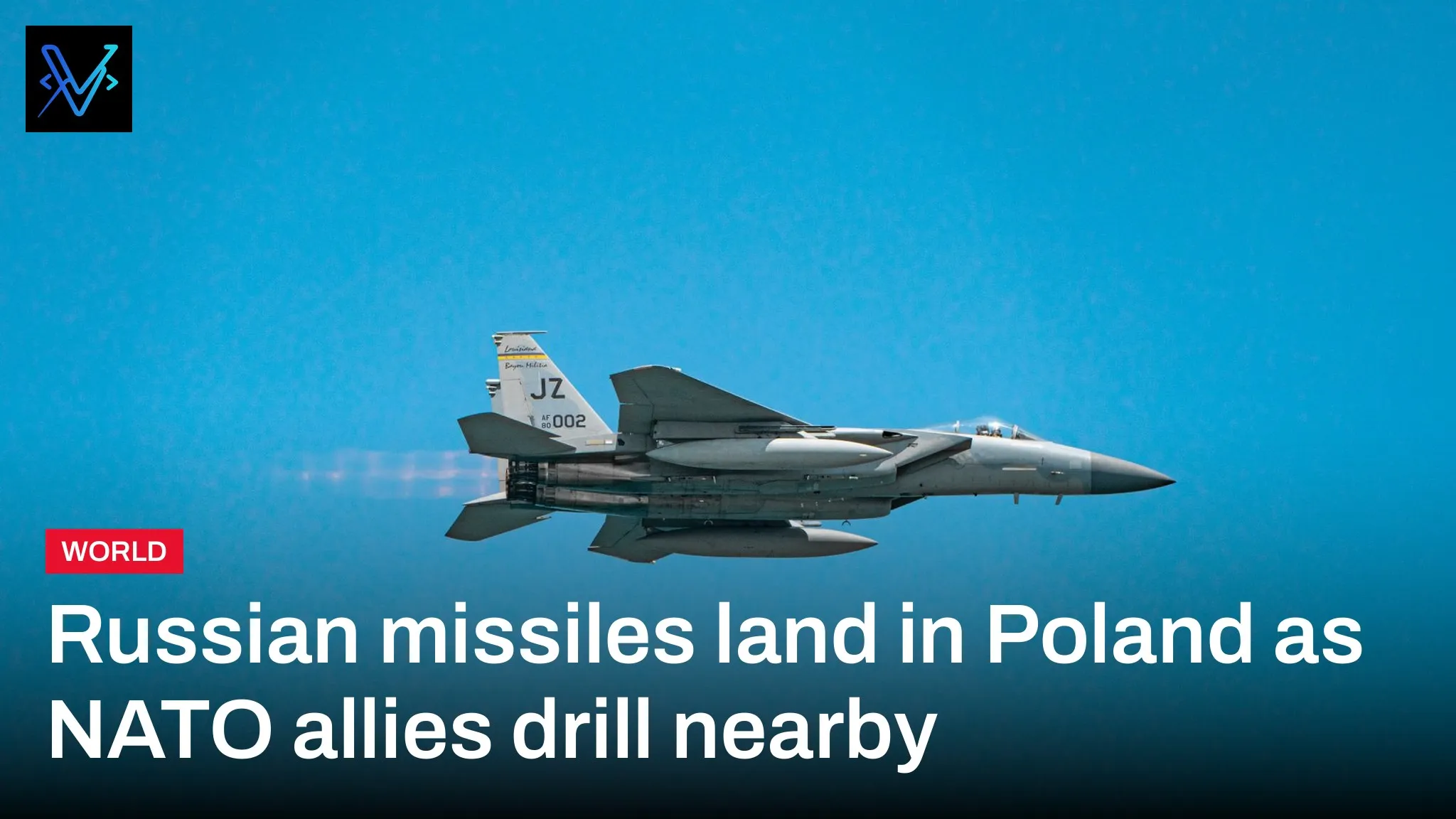
It was the second major Russia-Ukraine development in three days: on Friday, Russian missiles came down in south-eastern Poland, drawing NATO’s chief to Warsaw with a promise to defend “every inch” of allied territory. And attacks on shipping have become a front line of their own across the region — from the Gulf, where the US and Iran are nine months into open conflict, to the Red Sea, where Saudi defences have been shooting down Houthi missiles for three straight days.
What to watch next
The first question is what Russia does about it. Moscow has not commented yet, and its options are limited: its Mediterranean naval presence is small, its Black Sea Fleet is degraded, and retaliating against a Ukrainian drone operation staged from Libya would mean striking inside a country where Russia itself is a guest of the eastern government. Watch for a statement from the Russian defence ministry, and for whether Russian ships stop calling at Benghazi.
The second is the UN angle. The eastern Libyan government’s letter to the Security Council asks for an investigation into how the attack was prepared. If the Council takes it up, the argument will be about whether western Libya — and by extension its Western backers — hosted a Ukrainian operation. Kyiv has not confirmed where its forces were based, and is unlikely to.
The third is shipping. Hours after the warship attack, another sea drone strike hit a Maltese-flagged commercial vessel sailing off Benghazi, the Libyan coast guard said. Insurers and shipowners will be watching whether commercial traffic in the eastern Mediterranean is now in the line of fire, and whether war-risk rates for the region move. The Merkury was a military target; a merchant ship is a different matter entirely.
And the war itself has not paused. On the same Sunday morning that the drones struck in Benghazi, a Russian strike on a five-story apartment block in a village near Kyiv killed 11 people, regional police said. A 7-year-old child and a 79-year-old woman were pulled alive from the rubble. Zelenskyy addressed the NATO Parliamentary Assembly in Berlin on Monday, telling delegates Ukraine has hit Russian oil refineries as far away as western Siberia and Russian warships in the Mediterranean. “We keep finding ways to get back on our feet after every Russian attack,” he said.
The Merkury will not be the last ship in this story. Ukraine has shown, three times this year alone, that it can reach Russian vessels wherever they anchor. The question for Moscow is not whether its navy is safe in the Mediterranean — it plainly is not. It is how many more ships it is willing to risk there.
Looking to grow your business online? Explore Vertex Agency at vertexagency.in for professional website development, Meta Ads and social media growth.
Sources: Associated Press — Ukrainian drones hit a Russian warship at a naval base in Libya, Zelenskyy says (Nov 23, 2026); Naval News — Russian Warship Explosion in Libya Destroys Corvette Merkury (Nov 23, 2026); PA via Glasgow Times — Zelensky confirms Ukraine behind attack that sank Russian warship off Libya (Nov 23, 2026). Photo: 13243546A / Wikimedia Commons (CC BY-SA 4.0).