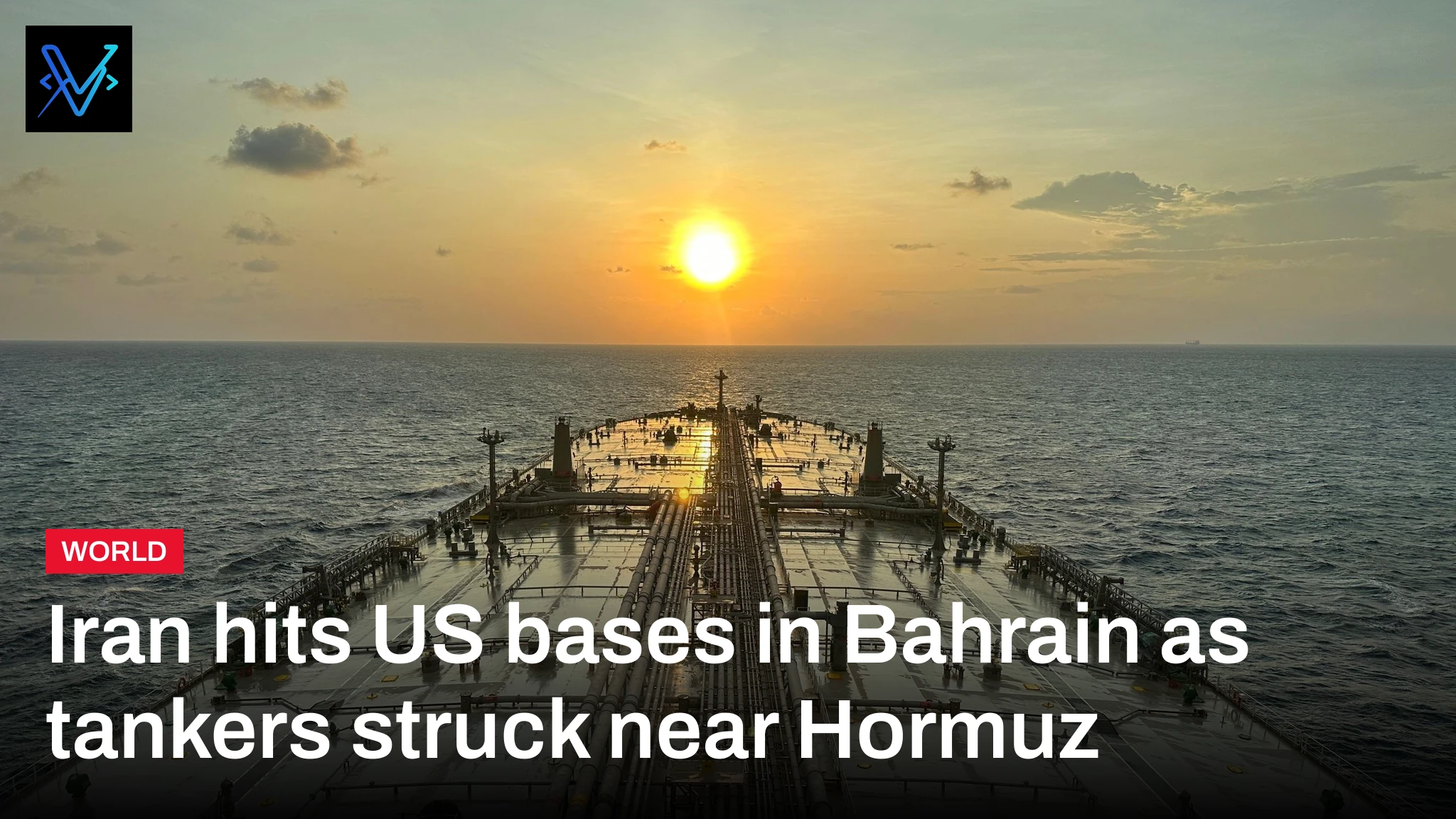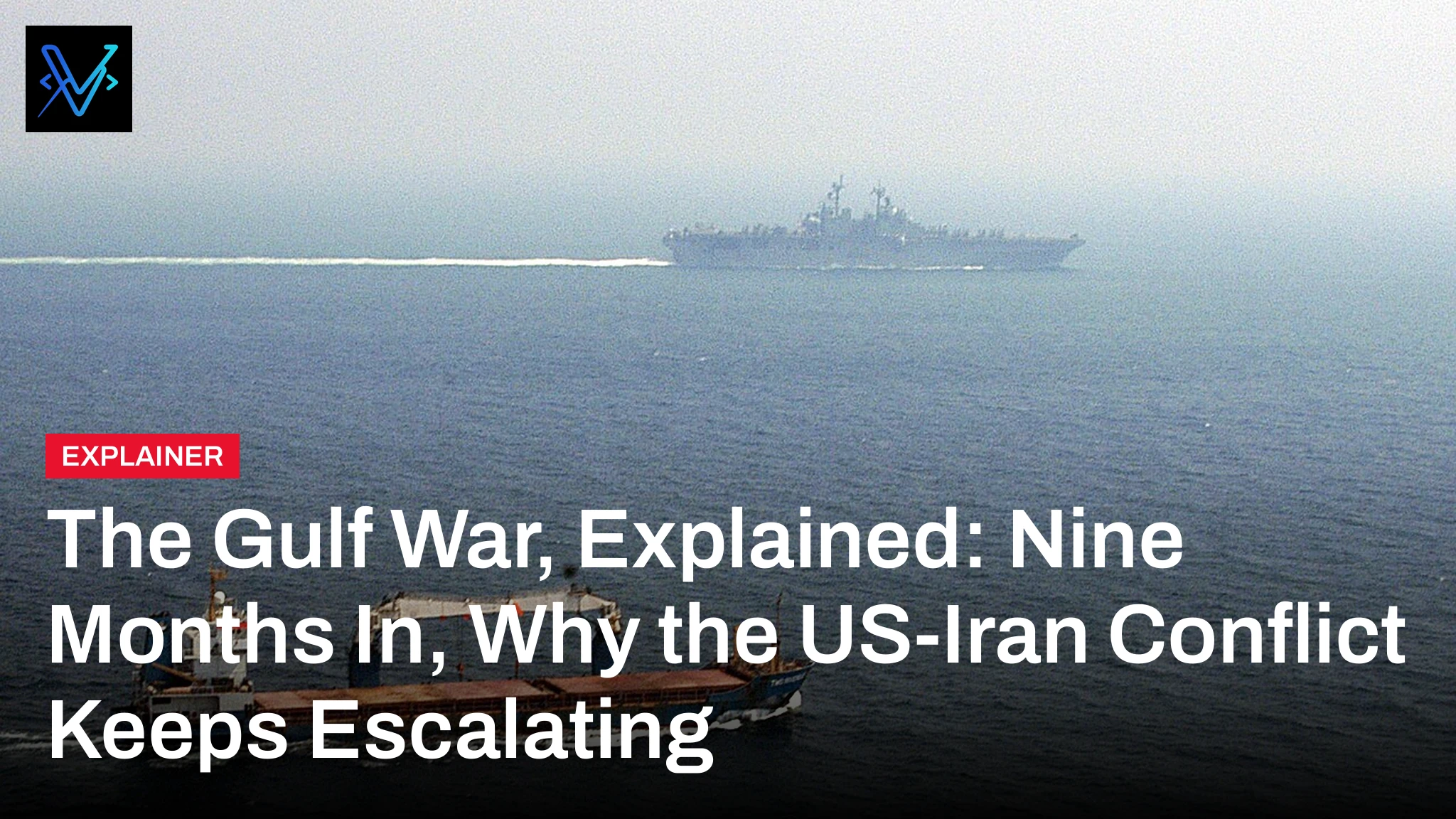
Nine months after American and Israeli warplanes struck Iran on February 28, 2026, the Gulf war is widening again — and it is further from ending than at any point since the summer. Iran fired missiles and drones at US positions in Bahrain late on Saturday night, hit two tankers near the Strait of Hormuz, and has now attacked American facilities in the Gulf three times in five days after a two-month lull. The war that was supposed to last weeks has become a grinding contest over oil, shipping and endurance, and both sides are now signalling they may escalate rather than settle.
KEY POINTS
- The war began on February 28, 2026, when the US and Israel struck Iran; two ceasefires and a June peace memorandum have all collapsed, and the conflict is now described by the Congressional Research Service as a war of attrition.
- The Strait of Hormuz is the centre of the war: it carried about a fifth of the world's oil before the fighting, and Iran's attacks on shipping there — plus a US naval blockade of Iranian ports — are the main weapons on both sides.
- The fighting escalated sharply this week: Iran hit US facilities in Bahrain three times in five days and struck a US air base in Kuwait, while the US now has three aircraft carrier strike groups in the region — more naval power than when the war began.
How it started
This war did not begin in February. It is the latest chapter in a confrontation that goes back to the 1979 Iranian revolution, when Iran cut ties with the United States and Israel, and through decades of sanctions, proxy wars and disputes over Iran's nuclear programme. The US and its allies feared Iran was building a nuclear weapon; Iran insisted its programme was for civilian energy. A 2015 deal, the Joint Comprehensive Plan of Action, capped the programme — but the US withdrew from it in 2018 and re-imposed sanctions, and the deal never recovered.
The immediate run-up was fast. In June 2025, Israel attacked Iranian military and nuclear sites in a twelve-day war that ended in a ceasefire, with the US striking Iranian nuclear facilities in support. Nuclear talks through late 2025 and early 2026 failed, the United Nations re-imposed sanctions on Iran in September 2025, and the Iranian currency collapsed. In early 2026, Israeli prime minister Benjamin Netanyahu lobbied President Donald Trump for a joint strike aimed at Iran's leadership, and Trump authorised it after the largest US military build-up in the region since the 2003 invasion of Iraq.
On the morning of February 28, US and Israeli forces launched hundreds of strikes across Iran — nearly 900 in the first twelve hours, according to Britannica — under the American codename Operation Epic Fury and the Israeli codename Operation Roaring Lion. The opening salvo killed Supreme Leader Ali Khamenei, in office since 1989, along with dozens of senior military and political leaders. His son, Mojtaba Khamenei, took over as supreme leader, and the regime consolidated under a new set of hard-liners rather than collapsing.
Iran answered with hundreds of ballistic missiles and thousands of drones fired at Israel, at US bases across the Gulf, and at commercial shipping — and it moved to choke the Strait of Hormuz, the narrow waterway between Iran and Oman through which about a fifth of the world's oil flowed before the war.
Nine months in nine dates
February 28 – March 2026: the opening campaign. Thousands of US and Israeli missiles and airstrikes hit Iranian missile and drone sites, air defences, naval assets, military industry and command centres. Iran fired back across the region and at shipping; oil prices spiked and Hormuz traffic fell sharply. Fighting resumed between Hezbollah and Israel in March, and Israel began occupying southern Lebanon.
April 7–8: the first ceasefire. The US and Iran agreed a two-week ceasefire, with Trump saying it was conditional on Iran agreeing to the "complete, immediate, and safe opening" of the Strait of Hormuz. Days later, Vice President JD Vance held talks with Iranian officials in Islamabad, but no broader deal followed — and Israel's airstrikes in Lebanon on the same day the ceasefire began strained it immediately.
April 13: the blockade. After the Islamabad talks failed, Trump imposed a US naval blockade on all shipping to and from Iranian ports. The ceasefire largely held, and on April 21 Trump announced its indefinite extension.
June 17: the peace memorandum. Trump and Iranian president Masoud Pezeshkian signed a memorandum of understanding meant to end the war within 60 days: an immediate and permanent end to military operations on all fronts, an end to the US blockade, sanctions waivers for Iranian oil exports, the release of frozen Iranian funds, and a $300 billion regional reconstruction plan for Iran. Iran reaffirmed it would not seek nuclear weapons. The US ended the blockade the next day.
July 7–8: the collapse. Iran attacked commercial vessels that used a southern route through the Strait close to Omani waters, bypassing its preapproved route. The US launched its first post-memorandum strikes on Iran on June 26 and extensive airstrikes on July 7; Trump declared the memorandum "over" the next day. The blockade was reinstated on July 14. An Iranian strike killed three US troops in Jordan on July 17. The memorandum formally expired on August 17 with no final deal.
August 19: the economic war. With diplomacy at a standstill, Trump announced what he called "ECONOMIC D-DAY" against Iran, and Treasury Secretary Scott Bessent launched "Operation Economic Outcast" to sever every economic lifeline sustaining the regime — new sanctions designations, more sectors covered, and suspended licences for remittances and exchanges.
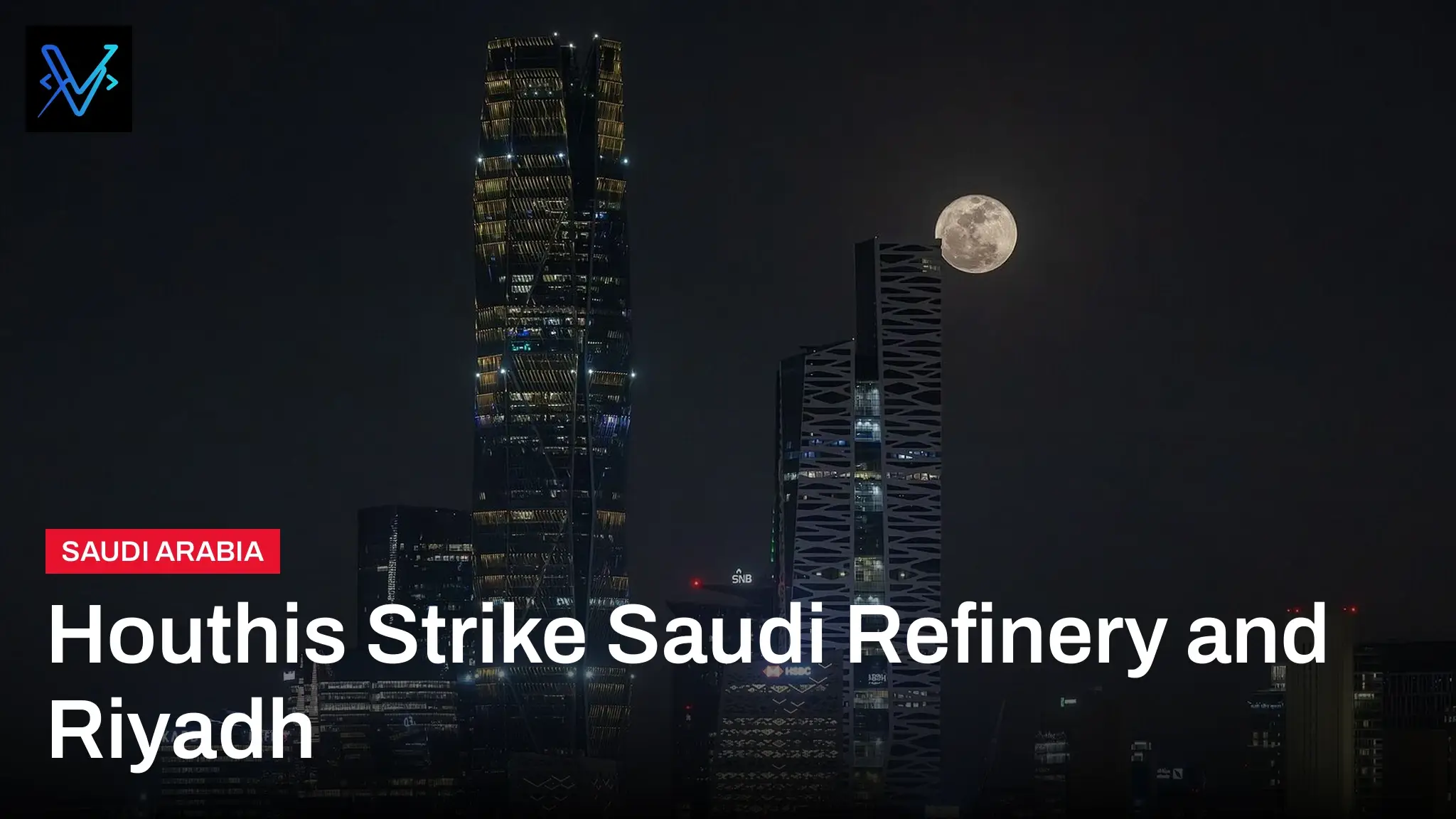
September: strikes resume. The two sides again exchanged attacks at levels approaching mid-July, including Iranian attempts to strike a US aircraft carrier and destroyers, and US attacks on Iranian oil tankers. Iran's Houthi allies in Yemen launched an offensive, and in October a wave of Houthi drone and missile attacks on Saudi Arabia opened a second front — one that reached Riyadh again this week, when Saudi defences shot down three Houthi ballistic missiles over the capital on the third straight day of alerts.
November 13–18: the lull breaks. After about two months without such attacks, Iran struck US facilities in Bahrain on November 13, again on November 15 — six drones at a radar system at the al-Riffa air base — and a third time on November 17. On November 18 it widened the campaign to a US air base in Kuwait, Ali Al Salem, which Iran has now struck at least 30 times during the war, damaging or destroying at least 15 aircraft hangars. An ADNOC tanker crew member went missing and 11 others were injured in a Hormuz attack on November 17.
November 21–22: the widest night yet. Iran fired missiles and drones at US positions in Bahrain late on Saturday, setting fire to a civilian industrial facility, while two tankers were struck near Hormuz. Nobody was reported hurt — but the combination, American bases and the oil lane in a single night, is what makes this escalation different from the weeks of lower-level exchanges before it.
The war in numbers
| Measure | Figure | Source |
|---|---|---|
| US military killed / wounded | 18 killed, 824 wounded (as of Sep 15) | Congressional Research Service |
| Iranian casualties | 3,636 killed, including 1,701 civilians (as of Apr 7) | Congressional Research Service |
| Cost of US military operations | $33.4 billion as of Jun 29; Pentagon estimate $48.3 billion as of November | Congressional Research Service; US Department of Defense |
| Brent crude, prompt-month futures | $60.85 (Jan 1) → $118.35 (Mar 31) → $71.57 (Jul 1) → $107.63 (Sep 10) → about $94 (mid-Nov) | Congressional Research Service; JINSA |
| Iranian missiles and drones launched since Jul 7 | At least 648 (as of Nov 16) | JINSA war update |
| US carrier strike groups in the region | Three — USS Theodore Roosevelt arrived Nov 14, joining USS George H.W. Bush and USS George Washington | Associated Press; JINSA |
| Oil exported via Hormuz with US escort since summer | 1.5 billion barrels | US Central Command |
| Share of world oil that flowed through Hormuz pre-war | About a fifth | Associated Press; Reuters |
The key players
The United States, led by Donald Trump. Trump ordered the war after the biggest regional build-up in two decades, promising it would last weeks. Eight months on, he has been circumspect about his next steps — saying new strikes are highly unlikely, while sending a third aircraft carrier and thousands more troops to the region and telling Vice President JD Vance that talks are not needed at this time. The war is unpopular at home: the Republican Party lost control of Congress in a landslide in the November midterm elections, a defeat widely attributed to the war's economic effects.
Israel, led by Benjamin Netanyahu. Netanyahu lobbied for the joint strike and pushed for regime change in Tehran. His government lost its governing majority in Israel's October legislative election, and he is now pressing the Trump administration for a joint air campaign against Iran's nuclear facilities and missile capabilities — a push that US Central Command chief Admiral Brad Cooper discussed with Israel's military chief of staff, Eyal Zamir, in Tel Aviv on November 18.
Iran, led by Mojtaba Khamenei and President Masoud Pezeshkian. The regime survived the decapitation strike and consolidated under hard-liners, but it is under severe strain: a US naval blockade that has run for months, oil exports curbed, and an economy that Tehran-based analysts say is pushing the leadership towards escalation. Iranian officials call the current situation "no war, no peace" and have vowed to end it. The Revolutionary Guard runs the missile and drone campaign and the naval harassment in the Strait; the regular army and the foreign ministry handle the diplomacy.
The Gulf Arab states. Bahrain, Kuwait, Saudi Arabia, the UAE and Qatar host US forces and have been drawn into a war that began as a US-Israeli attack on Iran. Bahrain hosts the US Navy's Fifth Fleet and has been attacked repeatedly; the UAE, Saudi Arabia, Kuwait and Bahrain have all struck Iranian targets after being hit themselves. Egypt, Qatar, Saudi Arabia and the UAE all condemned this week's attacks on Bahrain as a violation of its sovereignty.
The mediators. Qatar has intensified its mediation, sending a delegation to Tehran on Friday for two hours of talks, and Pakistan and Oman have acted as back channels. But the talks have stagnated, and Qatar warned this week that continued attacks on Bahrain pose an "extremely grave danger" to any agreement.
The Houthis. Iran's allies in Yemen control the Bab el-Mandeb Strait, the other end of the Red Sea shipping route, and their missile campaign against Saudi Arabia has become a second front in the war.
Why the Strait of Hormuz decides everything
Everything in this war runs through a waterway about 21 miles wide at its narrowest point. Roughly a fifth of the world's oil moved through Hormuz before the war, and there is no practical alternative route for most Gulf exports. That makes the strait both Iran's strongest card and its greatest vulnerability.
Iran's leverage is disruption. Its Revolutionary Guard navy uses fast boats, mines, drones and anti-ship missiles to threaten tankers, and it claims the right to control who passes. In the early months of the war, shipping through the strait fell by about a third, and fuel shortages appeared in parts of Asia. But the disruption has limits: attacking ships frightens insurers and crews, yet it has not forced Washington to lift the blockade, and the US military has been escorting tankers through the strait — helping Gulf states export 1.5 billion barrels since the summer and returning oil flows to roughly prewar levels.
America's leverage is the blockade. By cutting off Iran's own oil exports — its main source of income — the US has squeezed an economy already weakened by years of sanctions and the September 2025 UN snapback. That is why the recent Iranian attacks look, to analysts, like a change of strategy: as Tehran-based security analyst Mostafa Najafi told the Associated Press, Iran may be shifting from waiting and retaliating to targeting the operational capability of the bases themselves. Hamidreza Azizi of the International Crisis Group put it more bluntly: Iran's leaders are weighing whether "breaking the blockade through escalation is less costly than accepting its continuation."
The costs are mounting on both sides. The Pentagon says the war has cost the US $48.3 billion in military spending as of November. The US has burned through roughly a third of its prewar Tomahawk missile inventory and more than half of its Patriot and THAAD interceptors, according to analyses cited by the Congressional Research Service, and a September Pentagon inspector-general report warned of "strategic inventory shortfalls" in munitions. Iran, meanwhile, has kept as much as 75% of its mobile missile launchers and 70% of its prewar missile stockpile, according to intelligence assessments cited in May — and has restarted missile production in underground facilities. Neither side is running out of weapons quickly. That is what a war of attrition looks like.
Why it matters
For readers in the US, UK and Europe, the most direct consequence is the price of energy — and through it, the price of almost everything else. Brent crude has swung between about $71 and $118 a barrel this year, and every escalation around Hormuz pushes it up. The war's fuel-price shock has already fed into inflation and a global cost-of-living squeeze, and it helped decide an American election. Friday's market rout erased the Nasdaq's gains for the whole of 2026; a fresh escalation around Hormuz is the last thing jittery markets need when they reopen on Monday.
There is also a human cost that rarely makes the headlines. In Iran, US and Israeli strikes on energy infrastructure have worsened power shortages, and President Pezeshkian has warned Iranians to expect difficulties this winter; the national electricity company said it would impose rolling power cuts from Sunday. More than a sixth of Lebanon's population has been displaced by the fighting there, according to Britannica, and thousands of people have been killed in Iran and Lebanon.
And there is a strategic cost. The war has consumed American munitions, strained US Navy logistics, damaged or destroyed hundreds of buildings at US bases across the Middle East, and forced the Pentagon to consider moving bases westward and shrinking its regional footprint. The US military's own assessments say the tempo is not sustainable indefinitely — which is why the question of what comes next matters so much.
What happens next: four paths
The Congressional Research Service lays out four options Washington is weighing. None of them is clean.
One: keep going as now. Maintain the status quo — intermittent strikes to degrade Iranian capabilities, the blockade, and escorted shipping. This is the cheapest option politically, but it means an open-ended war of attrition with no end date, rising costs and a constant risk of miscalculation.
Two: another ceasefire. Conclude or suspend hostilities as part of an uneasy, informal or temporary ceasefire. Two ceasefires have already failed, and the June memorandum collapsed within weeks — but Qatar's mediation is still active, and both sides have kept talking even while shooting. The obstacle is Iran's demands: an end to the war on all fronts, unfrozen assets, lifted oil sanctions, and an end to the blockade — plus a refusal to let its enriched uranium stockpiles leave the country or to let international inspectors into its damaged nuclear facilities.
Three: escalate. Netanyahu is pressing for a joint US-Israeli air campaign against Iran's nuclear facilities and missile capabilities, and the US now has more naval firepower in the region than when the war began. But escalation carries the risk the Gulf Arab states fear most: Iranian retaliation against oil facilities, power and desalination plants, and the undersea cables that carry the region's financial traffic.
Four: a deal. Negotiate an end to hostilities with policy concessions on both sides — the path the June memorandum tried and failed to walk. It would require Washington to lift sanctions and the blockade, and Tehran to accept limits on enrichment and the disposition of its uranium stockpile. Neither side has yet shown it will pay that price.
Three things will tell us which path is being chosen. First, whether Washington answers Tehran's new strategy — and whether the Netanyahu pressure campaign produces a joint air operation or is resisted. Second, what happens to oil when markets open on Monday, and whether shipping through Hormuz slows or reroutes. And third, whether the Qatari mediation produces anything concrete, or whether Saturday night was the start of a new, harder phase of the war.
The one certainty from this week is that the lull is over. The war that began in February has not stayed where it started — and after Saturday night, it is closer to everyone's doorstep than it was on Friday.
Looking to grow your business online? Explore Vertex Agency at vertexagency.in for professional website development, Meta Ads and social media growth.
Sources: Associated Press via WCMU — Iran launches a third round of strikes on Bahrain, host of U.S. Navy's 5th Fleet; Congressional Research Service — U.S. Conflict with Iran; Wikipedia — 2026 Iran war; JINSA — Iran War Update: November 14–16, 2026; Associated Press via Military.com — Iran Widens Gulf Attacks by Targeting a US Air Base in Kuwait and Sites in Bahrain. Photo: U.S. Navy / Wikimedia Commons (public domain) — archive photo of a merchant ship transiting the Strait of Hormuz with USS Kearsarge, 2004.