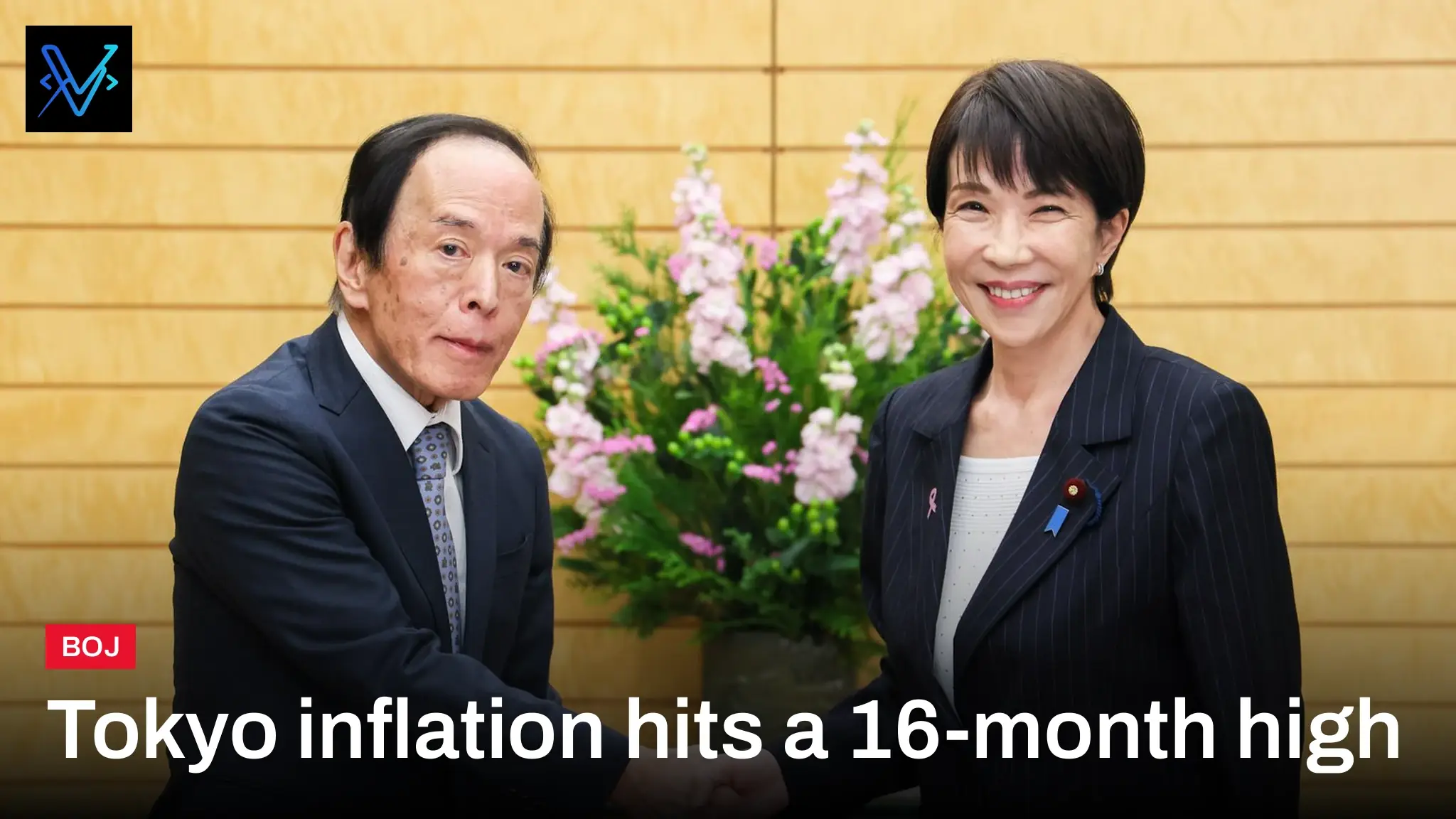
Tokyo’s core inflation accelerated to 2.9% in November — the fastest pace in 16 months — and the Bank of Japan now looks all but certain to raise interest rates at its December meeting. The data, released on Friday morning, keeps price growth well above the central bank’s 2% target for a third straight month, and markets are pricing in a move to 1.5% when policymakers gather on December 17–18.
KEY POINTS
- Tokyo’s core consumer prices rose 2.9% in November from a year earlier — up from 2.6% in October and the fastest annual pace since July 2025 — keeping inflation above the Bank of Japan’s 2% target for three straight months.
- Markets widely expect the Bank of Japan to lift its policy rate to 1.5% from 1.25% at its December 17–18 meeting, with a majority of economists in a Reuters poll also expecting another hike by the end of March.
- The one caveat is market turmoil: economists warn the Bank of Japan could hold off in December if instability tied to the AI and chip sell-off persists — though a hike next month remains the baseline call.
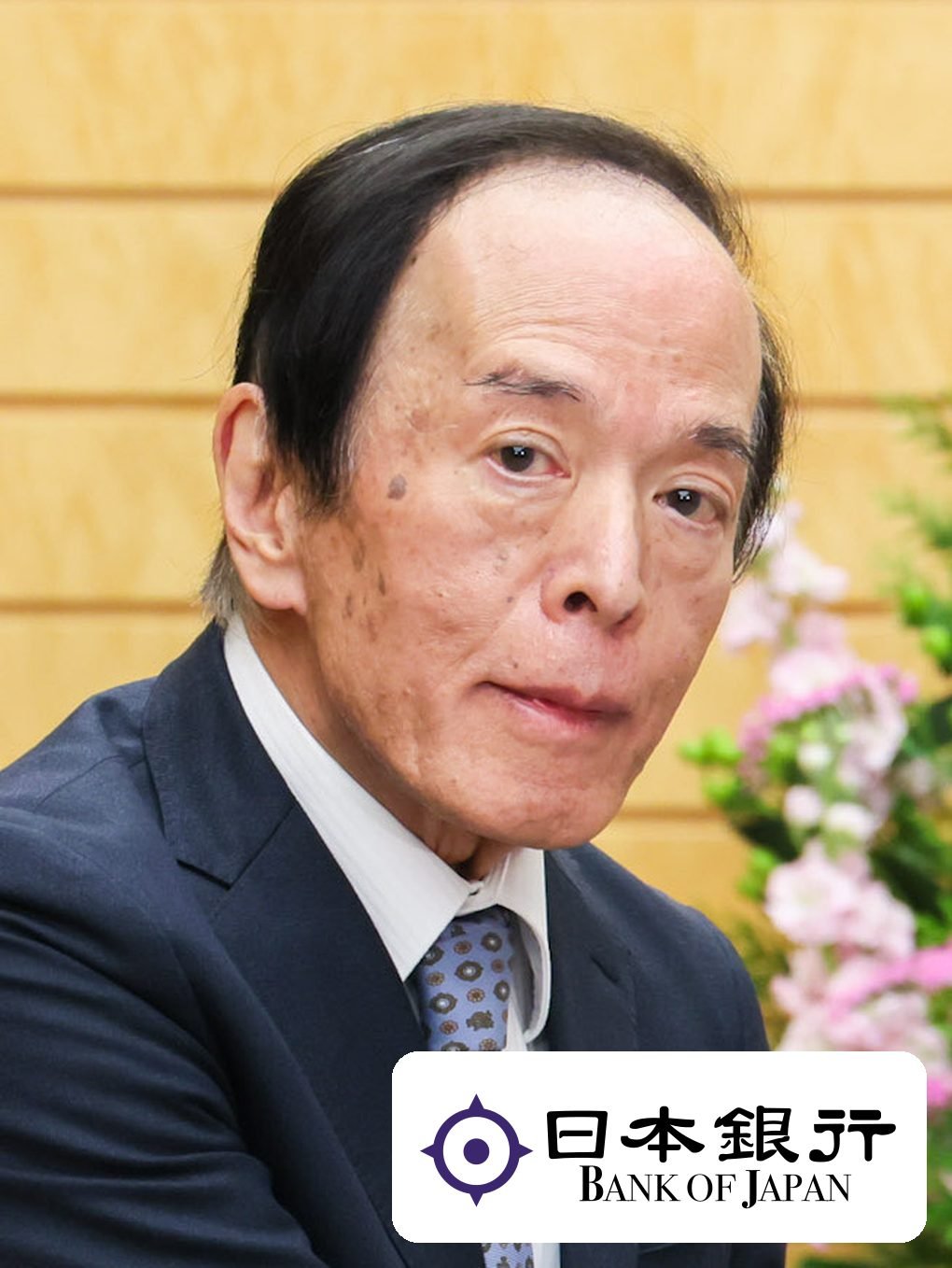
Bank of Japan Governor Kazuo Ueda. (Photo: Cabinet Public Affairs Office, Japan, via Wikimedia Commons, CC BY 4.0; Bank of Japan logo: Wikimedia Commons, public domain)
What the numbers say
Tokyo’s core consumer price index — which includes fuel but excludes fresh food — rose 2.9% in November from a year earlier, according to data released on Friday. That was up from a 2.6% gain in October and marked the fastest year-on-year rise since July 2025, though it came in just below the 3.0% median forecast in a Reuters poll.
Tokyo’s figures are widely watched as a leading indicator of nationwide trends, so the print lands with unusual weight: it is one of the last major inflation readings policymakers will see before the December decision. The nationwide data is due on the morning of December 18 in Tokyo — the final day of the Bank of Japan’s two-day meeting.
Part of the jump came from the end of government utility subsidies, but the increases were broad-based, with prices rising for food, daily necessities and hotel charges. “Core consumer inflation is expected to accelerate due to rising energy prices from the Middle East conflict and ensuing second-round effects,” said Masato Koike, senior economist at Sompo Institute Plus.
| Tokyo inflation at a glance | Reading |
|---|---|
| Core CPI, November (year on year) | 2.9% — fastest since July 2025 |
| Core CPI, October | 2.6% |
| Market forecast for November | 3.0% |
| Core-core CPI (ex fresh food and energy) | 2.5%, easing from 2.6% in October |
| Months above the BOJ’s 2% target | Three straight |
| Policy rate now / expected in December | 1.25% / 1.5% |
The picture underneath is a little softer. The index that strips out both fresh food and fuel — the gauge the Bank of Japan watches most closely for trend inflation — eased slightly to 2.5% from 2.6% in October. That leaves underlying inflation comfortably above target, but suggests energy did much of the heavy lifting in the headline rise.
Why the Bank of Japan is under pressure to move
The Bank of Japan has been moving faster than it did in the past two years. It raised its policy rate in June, then again in September to 1.25% — a shorter interval than the roughly twice-a-year hikes seen in 2024 and 2025. In October it held rates steady, but said underlying inflation had roughly reached its 2% target and signalled its readiness to keep tightening to prevent price growth from accelerating too much.
Friday’s data strengthens that case. With stubbornly high energy costs and rising import costs from a weak yen adding to inflationary pressures, a majority of analysts polled by Reuters expect the bank to raise rates in December and follow up with another hike by the end of March. Many see the terminal rate at around 1.75% or 2.0%.
The hawks on the board are not waiting quietly. Board member Naoki Tamura said on Thursday that the central bank must respond swiftly to signs of an inflation overshoot, including by accelerating the pace of rate hikes. With the yen hovering near 160 per dollar, a widely expected 25-basis-point move on its own may do little for the currency — the bigger driver is likely to be any signal that the bank will speed up its pace of hikes.
The one thing that could stop a December hike
Markets, not inflation, are the main risk to the call. Koike warned that if the current market instability stemming from concern over the AI and chip outlook persists, there is a chance the Bank of Japan may forgo a rate hike in December. The baseline projection, he said, is still for the bank to proceed next month.
That instability has been the story of November. Asian shares were set to end a bruising month on a steadier note on Friday — Japan’s Nikkei rose 0.7%, bringing its gains for the week to 2.7%, but it is still down 8.4% for the month. The sell-off has been driven by doubts about the durability of AI-driven business investment, and by Nvidia’s slide after S&P put its credit rating on watch for a possible downgrade. Wall Street was closed on Thursday for Thanksgiving, but S&P 500 futures were up 0.8% and Nasdaq futures 1% higher in Asia on Friday.
Why American readers should care
A rate hike in Tokyo is not a local story. Japan is the world’s largest creditor nation and the biggest foreign holder of US Treasuries, and the yen has been the funding currency for one of the largest carry trades in global finance — borrowing cheaply in yen to buy higher-yielding assets elsewhere, including US stocks and bonds.
Every Bank of Japan hike makes that trade more expensive and pulls Japanese money home, which is one reason Japanese rate decisions now move US Treasury yields and global equity markets. It also matters because the world’s two most important central banks are now moving in the same direction at the same time: the Federal Reserve is almost certain to lift US rates in December too, after October core PCE inflation came in hot at 3.3%. Two major central banks tightening together is a very different backdrop for markets than the rate-cutting cycle investors had priced in at the start of the year.
The dollar, meanwhile, was headed for its third straight monthly gain on Friday, up 1.8% against its major peers at 103.8, supported both by expectations of a Fed hike and by safe-haven flows from the equity sell-off. A stronger dollar and higher Japanese yields together are a headwind for the AI-fuelled rally that carried markets for much of the year — the same rally investors are now asking whether $800 billion of AI spending can ever justify.
What to watch next
Three dates decide this story. The first is December 18, when the Bank of Japan announces its decision — with the nationwide inflation figures landing that same morning. The second is the bank’s guidance on the pace of further hikes: markets will listen less to the 25 basis points everyone expects and more to whether Governor Kazuo Ueda signals that the next move comes sooner than March. The third is the yen itself: if it keeps sliding toward 160 per dollar, pressure on the bank to act — and to act faster — only grows.
For now, the message from Tokyo is clear. Inflation is running hot, it is running broad, and the central bank that spent decades fighting deflation is now worried about the opposite problem. December 18 is the day it is expected to do something about it.
Looking to grow your business online? Explore Vertex Agency at vertexagency.in for professional website development, Meta Ads and social media growth.
Sources
- Reuters (via DailyFoxNews) — Core inflation in Tokyo hits 16-month high, bolsters case for BOJ hike (Nov 27, 2026)
- InvestingLive — Tokyo core inflation hits 16-month high of 2.9%, firming the case for a December BoJ hike (Nov 27, 2026)
- Reuters (via KELO-FM) — Shares find footing after bruising month, dollar set for third monthly gain (Nov 27, 2026)