Yemen’s Houthi movement said on Wednesday it had attacked Saudi Arabia’s largest oil refinery and Riyadh’s financial district, escalating a campaign that has already wounded 11 people in the Saudi capital this week and disrupted flights and major events across the Gulf’s biggest economy.
KEY POINTS
- The Houthis said on Wednesday, November 25, that they attacked the Ras Tanura oil refinery — Saudi Arabia’s largest — and Riyadh’s financial district. Their spokesman said the refinery attack caused fires; that claim has not been independently verified.
- The Saudi-led coalition said its air defences intercepted and destroyed four drones at Ras Tanura earlier on Wednesday. A day earlier, a drone strike on a tower in Riyadh’s financial district wounded 11 people — the second strike on the same tower in less than a week.
- Oil prices fell anyway: Brent crude traded around $90.47 a barrel and US WTI around $80.96 in Wednesday’s Asian session, as rising-supply worries outweighed fears of disruption — for now.
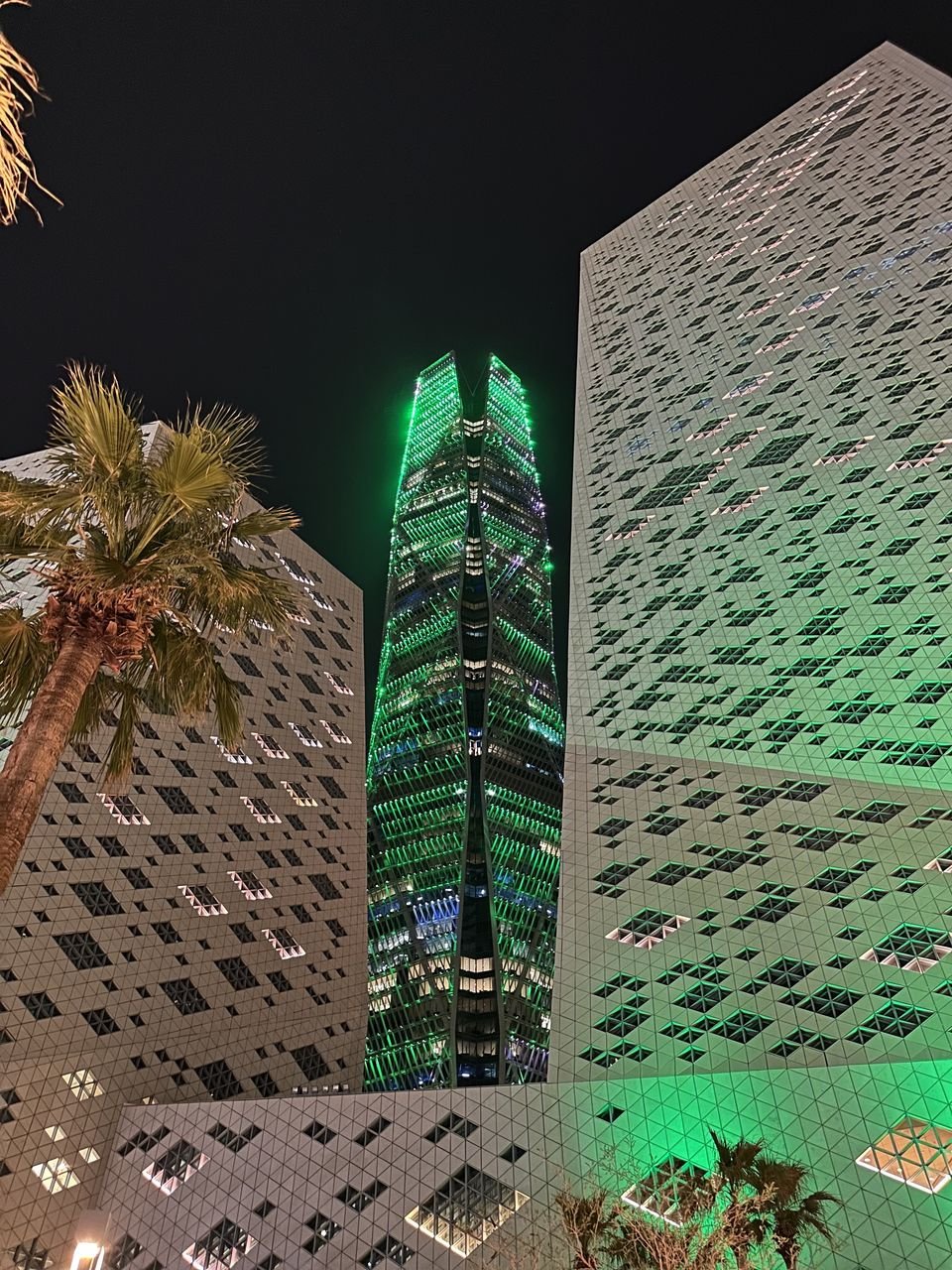
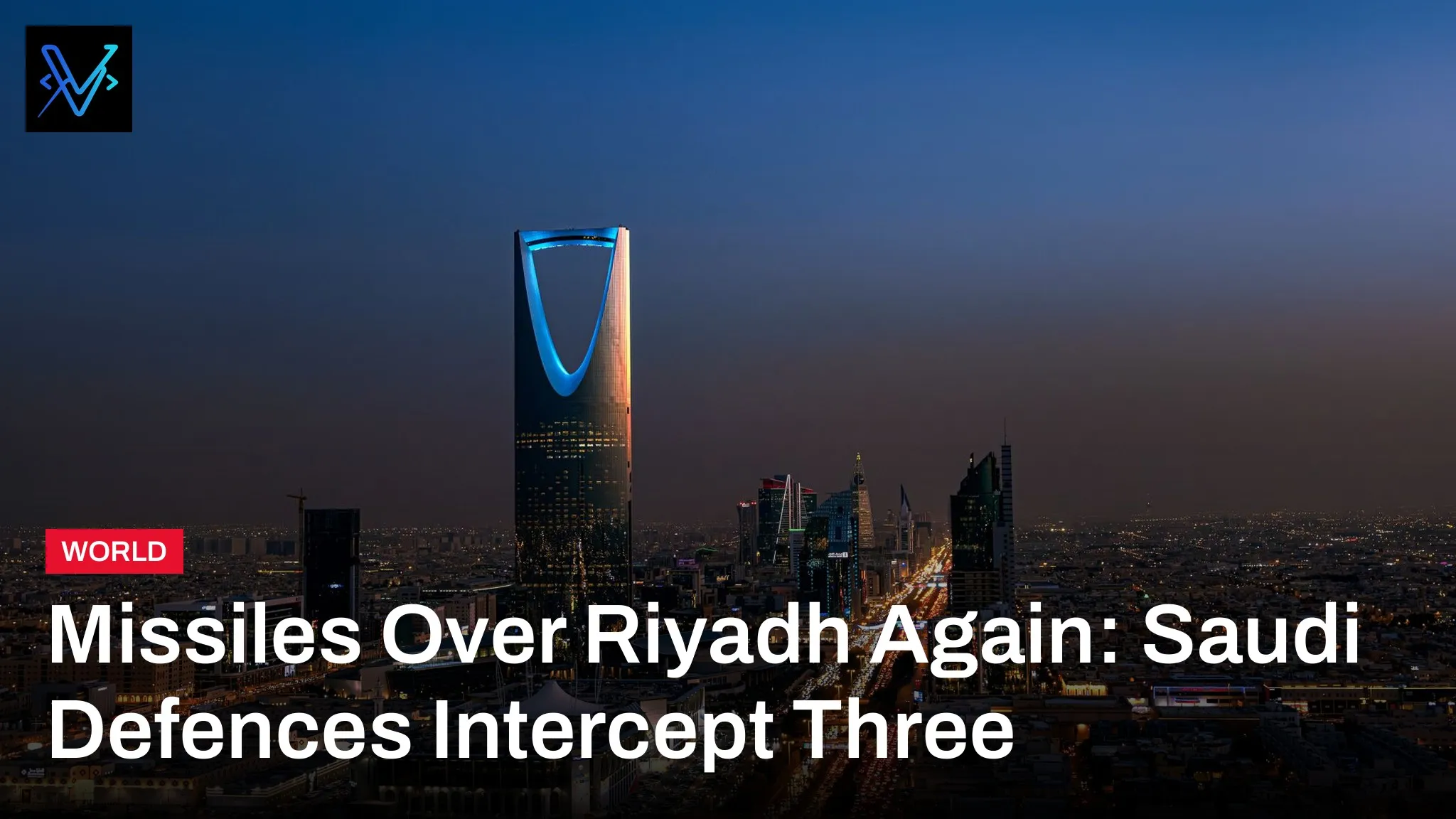
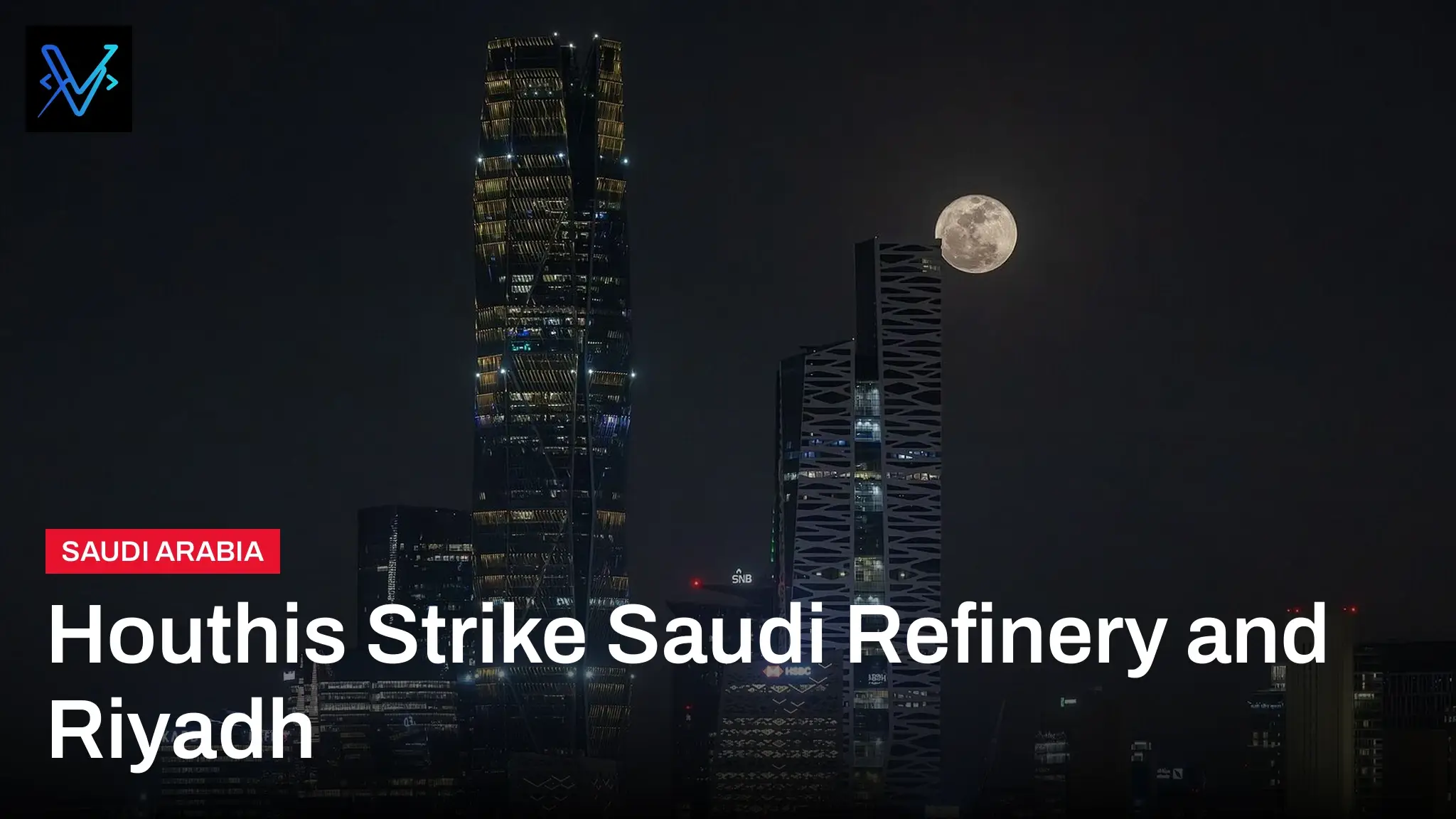
The Public Investment Fund Tower in Riyadh in 2024. The 385-metre, 80-storey tower is the tallest building in the Saudi capital and the headquarters of the kingdom’s sovereign wealth fund. (Photo: Faisal Arif / Wikimedia Commons, CC BY-SA 4.0)
What the Houthis claimed on Wednesday
The claim came from the group’s military spokesman, Yahya Saree, who said the refinery attack caused fires and that the group had attacked the financial district in three phases, according to Reuters. Ras Tanura, on Saudi Arabia’s Gulf coast, is the kingdom’s largest refinery and part of a complex that also serves as a major export terminal for Saudi crude — the kind of target that can move global oil prices if it is hit hard.
The Saudi-led coalition gave a different account of the morning. It said earlier on Wednesday that air defences had intercepted and destroyed four drones in Ras Tanura, in the kingdom’s Eastern Province. Saudi authorities had not issued a detailed statement on the refinery’s condition by Wednesday morning, and the Houthi claim of fires and damage could not be independently verified.
That gap between claim and confirmation is the story’s central fact for now. What is verified is narrow: the Houthis have claimed the attacks, Saudi civil defence has confirmed injuries from Tuesday’s strike on a Riyadh financial-district tower, and the coalition says drones at Ras Tanura were intercepted. What remains unconfirmed is whether the refinery itself was damaged.
Eleven wounded in Tuesday’s tower strike
The attack that preceded Wednesday’s claims hit on Tuesday, November 24. A drone struck a tower in Riyadh’s King Abdullah Financial District, wounding 11 people, Saudi Arabia’s Civil Defense said. The injured included two Saudi citizens, two Indian nationals, three Nepalese nationals and four Egyptians, according to an official statement carried by the Saudi Press Agency.
Reuters identified the building as the capital’s tallest tower — the Public Investment Fund Tower, the 385-metre, 80-storey headquarters of the Saudi sovereign wealth fund and the centrepiece of the financial district. Saudi authorities’ initial public statement did not name the specific building, and the precise extent of the damage from the latest strike has not been independently established. Civil Defense posted a picture of the landmark tower showing damage about halfway up the facade.
It was the second strike on the same tower in less than a week. On November 19, a strike damaged at least five of the tower’s floors, according to the tower’s record, which cites The New York Times. That first attack caused material damage but no injuries. Tuesday’s strike was the first to wound people in the financial district.
The Saudi-led coalition confirmed late on Tuesday that the attack was carried out with a drone, and vowed to respond “decisively to the deliberate targeting of civilians and civilian property” by the Houthis.
| Date | Target | Outcome |
|---|---|---|
| Nov 8 | Aramco corporate building, Riyadh financial district | Windows damaged across several floors; no injuries |
| Nov 19 | Public Investment Fund Tower, Riyadh | At least five floors damaged; no injuries |
| Nov 24 | Tower in Riyadh’s financial district | 11 people wounded; drone confirmed |
| Nov 25 | Ras Tanura refinery and Riyadh financial district | Houthis claim attacks and fires; coalition says four drones intercepted; damage unconfirmed |
A campaign against the Gulf’s economy, not just its military
The sequence matters because of what it targets. The Houthis, who control much of western Yemen including the capital Sanaa, have been firing at Saudi airports, oil infrastructure and office buildings since Yemen’s frozen civil war reignited in July, in a knock-on from the US-Iran war, according to Reuters. The strikes have moved from airports and military installations to the commercial and financial heart of the Saudi capital — the district that houses the stock exchange, the sovereign wealth fund and the offices of global banks.
The disruption is already real, even where the physical damage is limited. The attacks have caused the cancellation of most international flights to Riyadh, Reuters reported, and forced Saudi Arabia to postpone or cancel major international events, including soccer’s AFC Asian Cup. An Aramco building in the same district was hit earlier in November. The pattern points to a deliberate campaign against the symbols of Saudi economic power, not only its military assets.
That is what makes the attacks economically significant beyond the casualty count. Saudi Arabia is trying to attract international investors, multinational companies and financial institutions to Riyadh as part of its Vision 2030 plan to reduce dependence on oil. The Public Investment Fund is the engine of that plan. Repeated attacks on its headquarters, even when casualties stay limited, chip at the confidence the whole programme depends on — confidence that projects will be completed, investments will stay secure and international businesses can operate without prolonged disruption.
Why oil markets are watching — and why prices fell anyway
For traders, the question is whether the campaign reaches the energy infrastructure that actually moves supply. Ras Tanura is the test case: Saudi Arabia’s largest refinery and one of its most important crude export terminals. Even limited damage there would matter, because the facility sits at the heart of the world’s largest oil export system.
So far the market has not panicked. Brent crude, the international benchmark, fell 1.02% to $90.47 a barrel in Wednesday’s Asian trading, while US WTI crude was down 1.30% at $80.96, as rising supply and expectations of a market surplus outweighed concerns about possible supply disruptions in the Middle East. The same risk-off mood swept Asian markets overnight, with chip stocks leading a broad sell-off.
The calm rests on an assumption: that Saudi air defences keep intercepting the drones, and that the refinery claims stay claims. If damage at Ras Tanura is confirmed, or if a strike lands on a working part of the oil system rather than an office tower, the pricing changes fast. That is the fact traders are waiting for, and it is the reason the coalition’s next statement on the refinery matters more than the Houthi claim itself.
What to watch next
Three things decide where this goes from here. First, the coalition’s promised response: it said on Tuesday it would act “decisively”, and whether that means airstrikes on Houthi positions in Yemen or a different kind of retaliation will shape the next round. Second, the refinery: confirmation or denial of damage at Ras Tanura, and whether flights to Riyadh resume or stay cancelled. Third, the diplomacy around it: Iran has said negotiations with Washington will not resume until its conditions are met, and the Houthis are aligned with Tehran — so the Gulf attacks and the stalled US-Iran talks are now moving on the same track.
The wider context is a region already stretched. Washington is preparing new tariff findings against 16 trading partners, a US jury has just convicted Huawei in a sprawling sanctions and trade-secrets trial, and markets are braced for a packed pre-Thanksgiving data release topped by the Fed’s preferred inflation gauge. The Gulf attacks add a live security risk to a week that already had plenty of reasons for caution.
For now, the verified picture is this: two strikes on Riyadh’s financial district in six days, 11 people wounded, most international flights to the capital cancelled, and a claim against the kingdom’s biggest refinery that nobody has yet confirmed. The next statement from Riyadh — on Ras Tanura, and on what “decisive” means — is the one to watch.
Looking to grow your business online? Explore Vertex Agency at vertexagency.in for professional website development, Meta Ads and social media growth.
Sources
- Reuters (via SRN News) — Yemen’s Houthis say they attacked Saudi oil refinery and Riyadh financial district (Nov 25, 2026)
- Reuters (via BusinessWorld) — Houthis hit Riyadh’s tallest tower, 11 wounded, Saudi Civil defense says (Nov 25, 2026)
- Kashmir InFocus — Two Indians Injured in Riyadh Attack as Middle East Conflict Threatens Gulf Stability (Nov 25, 2026)
- TipRanks — Markets Await October PCE Report After Tech Stocks Slide (Nov 25, 2026)
- Wikipedia — Public Investment Fund Tower (Nov 19 damage, tower specifications)