America’s next tariff wave could be announced as soon as today. The Trump administration is poised to release the findings of a nine-month investigation into what it calls excess industrial capacity in 16 of its biggest trading partners, Reuters reported on Tuesday — and new import duties on a wide range of goods are expected to follow. China is the main target, but the list runs from the European Union and Japan to Mexico, Vietnam and South Korea.
KEY POINTS
- The Trump administration is set to unveil the findings of a Section 301 probe into excess industrial capacity in 16 trading partners, with new tariffs expected as soon as Tuesday or Wednesday, three people familiar with the matter told Reuters.
- The new duties would stack on top of tariffs already imposed in Trump’s second term, and partly replace the global import taxes the US Supreme Court struck down in February.
- China is singled out as the biggest source of excess capacity. But the White House is expected to honour the tariff caps in its finished trade deals — 15% for the EU, Japan and South Korea, and 19% for Malaysia — while Mexico and Norway are unlikely to face immediate levies.
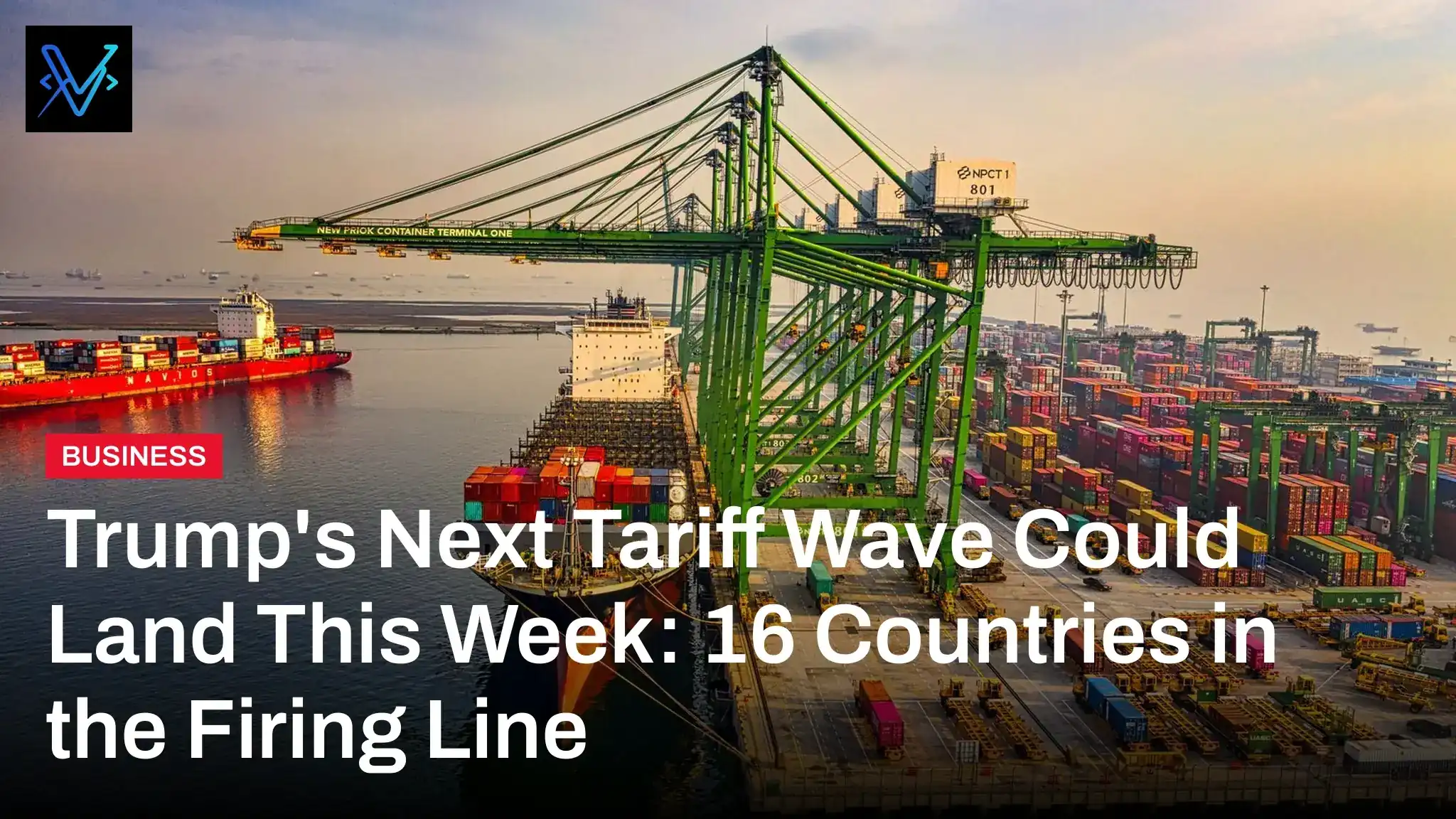
A container ship docked at a busy port. The new tariffs would cover goods shipped from 16 of America’s largest trading partners. (Photo: Tom Fisk / Pexels)
What is being announced, and when
The investigation sits with the Office of the US Trade Representative, which launched it in March under Section 301 of the Trade Act of 1974 — the unfair-trade statute Trump used against China in his first term. Three people with knowledge of the matter told Reuters the results are expected as soon as Tuesday or Wednesday, and the Wall Street Journal reported earlier that the findings could be unveiled this week.
What is not yet known is the most important part: the rates. Reuters’ sources said it was unclear what tariff rates would be charged or what exemptions may be granted. The duties are expected to be tailored to each country rather than applied as one flat rate — and that is where the politics starts.
Ryan Majerus, a former senior Commerce Department trade official now at the law firm King & Spalding, told Reuters he expects a lengthy report with differentiated remedies for each of the 16 partners. He said the administration could propose rates of 15% to 25% on imports from countries deemed to have excess capacity in various sectors — on top of the 10% or 12.5% duties already imposed under a separate investigation into lax enforcement of anti-forced-labour laws. He added that the administration could also propose lower rates with escalation clauses that ratchet higher over time unless countries cut excess production.
Neither the USTR’s office nor the White House responded to Reuters’ questions about the pending announcement.
The 16 countries in the firing line
The probe covers most of America’s largest trading partners. The full list, as set out when the investigation was launched in March, is:
| Country / bloc | What we know about its treatment |
|---|---|
| China | Singled out as the biggest source of excess capacity. Second-term tariffs capped at 20% while the trade truce holds; the truce expires January 10. |
| European Union | 15% cap under its finalised trade deal with the US is expected to be honoured. |
| Japan | 15% cap under its finalised trade deal is expected to be honoured. |
| South Korea | 15% cap under its finalised trade deal is expected to be honoured. |
| Malaysia | 19% cap under its finalised trade deal is expected to be honoured. |
| Mexico | Unlikely to see any immediate levies, according to one of Reuters’ sources. |
| Norway | Unlikely to see any immediate levies, according to one of Reuters’ sources. |
| India, Vietnam, Taiwan, Thailand, Indonesia, Switzerland, Singapore, Bangladesh, Cambodia | In the probe; duties to be tailored country by country. Rates not yet announced. |
The administration’s argument is that these economies have built factory capacity far beyond what their own markets can absorb, flooding global markets with cheap steel, aluminium, electric vehicles, appliances, solar products and other goods. China has rejected the accusations, saying its exports reflect competitive advantages. The probe is also aimed partly at Chinese investment in Southeast Asia — in Vietnam, Indonesia and Cambodia — where factories make goods for the US market and, in Washington’s view, sidestep earlier tariffs.
Why this round is different
This is not a brand-new tariff idea. It is the rebuild of one the courts already knocked down.
In February, the US Supreme Court struck down the administration’s global import taxes, which had been imposed under emergency-powers law. Since then, the White House has been reconstructing the same tariff wall on sturdier legal ground — Section 301 investigations, which carry no cap on rates and no statutory time limit. In July, the first of these produced duties of 10% or 12.5% on goods from 60 trading partners over weak enforcement of bans on forced-labour goods. The excess-capacity findings now due would be the second, and much bigger, brick in that wall.
The timing matters for another reason. The US–China trade truce expires on January 10. Under it, Trump’s second-term tariffs on Chinese goods are capped at 20%, on top of duties of about 25% imposed during his first term. The US has already imposed a 12.5% anti-forced-labour duty on all Chinese imports, leaving only 7.5 percentage points of headroom before the 20% cap is hit. One of Reuters’ sources said the 20% cap would likely be maintained as long as the truce is extended — but if it expires, the excess-capacity rate on China would snap to a higher level, giving Beijing a strong incentive to extend the deal.
The two sides are also working to cut tariffs on $30 billion of non-strategic imports from each side, under a process known as the “Board of Trade.” It is unclear how the new Section 301 duties would affect that. In a small sign of continued cooperation, China extended its suspension of export restrictions on some critical materials to the US until January, just days after last week’s Shenzhen summit between Trump and Chinese leader Xi Jinping, Dow Jones reported.
Why it matters for shoppers
Tariffs are paid by importers, but the cost usually lands on consumers. Reuters noted that the administration’s tariffs have in part contributed to higher prices on consumer goods in the United States — and the politics of that is now visible. A Reuters/Ipsos opinion poll taken after November’s midterm elections showed 62% of respondents would support efforts to repeal the tariffs.
That makes the timing awkward for the White House. US consumer confidence jumped to 103.3 in November, its highest in nearly two years, according to the Conference Board — a surge Dow Jones reported on Tuesday evening. Americans feel better about jobs and the economy. A fresh round of duties that pushes up the price of cars, appliances, electronics and clothing would test whether that confidence survives contact with the checkout.
Markets, for their part, have been whipsawed all week. Wall Street gave back some of Monday’s huge rally on Tuesday as traders digested the tariff headlines alongside the Nvidia drama — AI stocks fell sharply after Jensen Huang’s reinstatement sent Nvidia soaring. Tariffs are now one more variable in a market that has spent November lurching between euphoria and fear: Anthropic fell below its IPO price on the same day the tariff news broke.
What to watch next
First, the findings themselves — expected as soon as today. The report will show whether the administration goes for the high end of the 15–25% range Majerus sketched, or starts lower with escalation clauses. Second, the exemptions: which products and which countries escape, and whether the deal caps for the EU, Japan, South Korea and Malaysia hold. Third, China’s response — and whether the January 10 truce gets extended before the higher rates snap into place.
For American shoppers, the question is simpler: how much of this ends up in prices. The last round of tariffs already contributed to higher consumer-goods prices. This one, aimed at 16 countries at once, is broader. If the duties land as described, the bill will arrive quietly — a few dollars on an appliance here, a little more on a car there — and 62% of Americans have already told pollsters they would like the tariffs gone.
Looking to grow your business online? Explore Vertex Agency at vertexagency.in for professional website development, Meta Ads and social media growth.
Sources
- Reuters (via Virginia Business) — Trump administration set to unveil new tariffs after probe on excess factory capacity, sources say (Nov 24, 2026)
- Reuters (via WTBX) — Trump administration set to unveil new tariffs after probe on excess factory capacity, sources say (Nov 24, 2026)
- Dow Jones Newswires (via Morningstar) — U.S. Prepares to Raise Tariffs on China and Other Countries (Nov 24, 2026)