US stock futures surged on Friday as Wall Street prepared to reopen after Thanksgiving, with Nasdaq futures up 2.8% and S&P 500 futures up 2% in early trading. The rebound swept across Asia and Europe — South Korea’s Kospi jumped 4.3%, Japan’s Nikkei rose 2.1% and China’s blue-chip stocks gained 4.2% — after a brutal November for AI shares.
KEY POINTS
- Nasdaq 100 futures rose 2.8% and S&P 500 futures 2% on Friday morning, with Dow futures up about 1.2%, as Wall Street prepared for a shortened Black Friday session that ends at 1 p.m. ET.
- The same AI names that led the sell-off led the rebound: Nvidia rose 4.7% in premarket trading, AMD 7% and Broadcom 4.7%, after Nvidia closed Wednesday at $149.30 — down nearly 31% for the month.
- Strategists warn the bounce may be technical, not a turning point: the Nasdaq 100 traded about 20% below its October record on Wednesday, and a December Federal Reserve rate hike is now almost fully priced in.
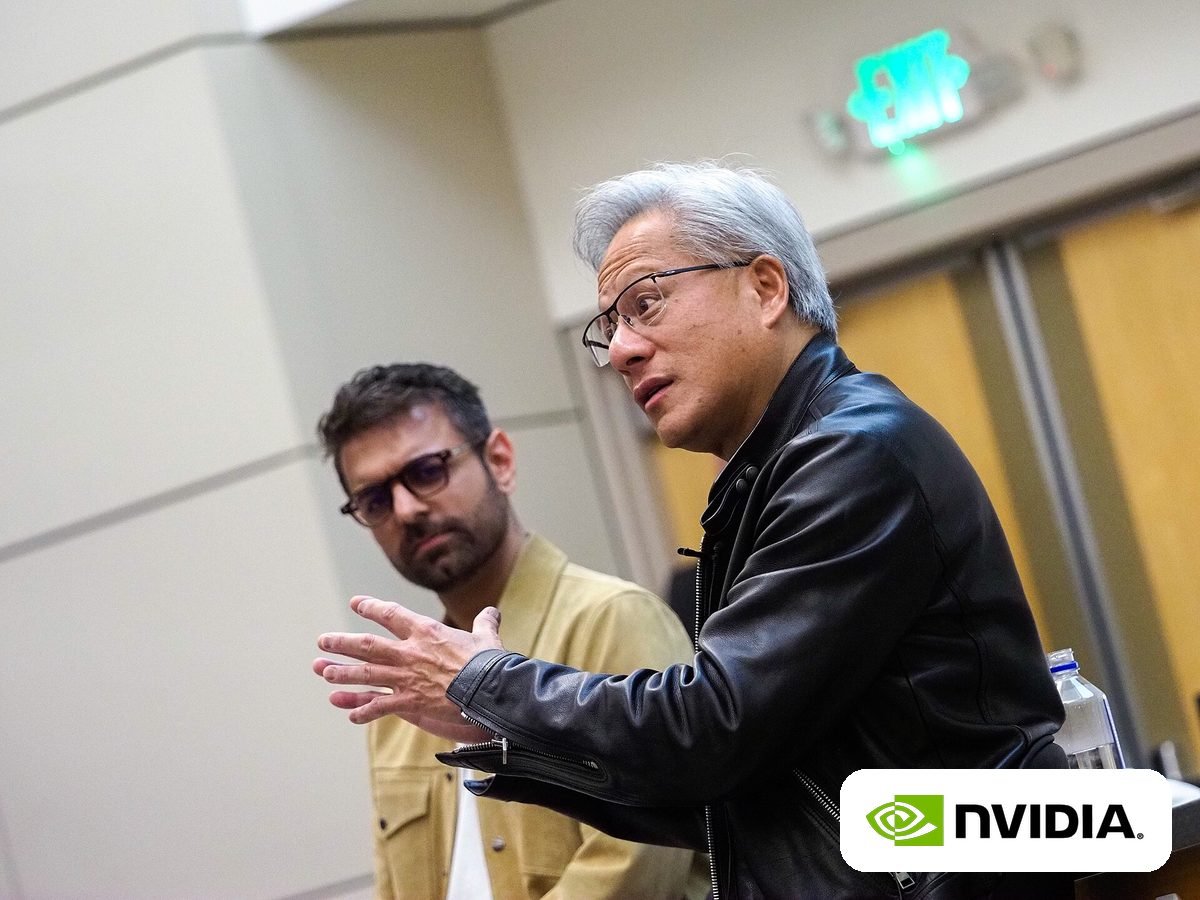
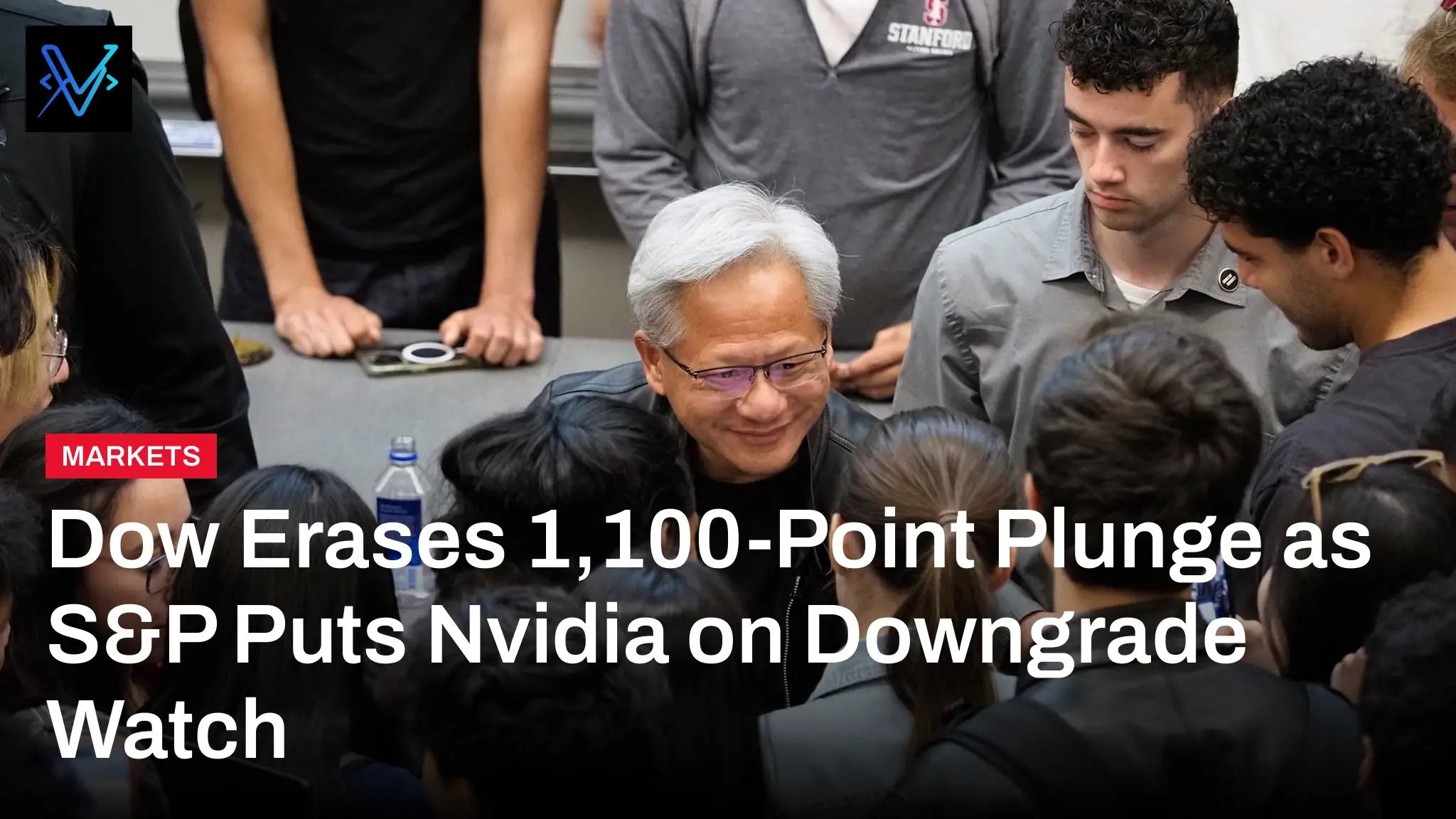
Nvidia CEO Jensen Huang at Stanford University in April 2026. (Photo: Anders Eidesvik, via Wikimedia Commons, CC BY 4.0; Nvidia logo: Wikimedia Commons, public domain)
Why are US stocks surging today?
The short answer is bargain hunting. Investors returning from the Thanksgiving holiday bought the same beaten-down AI-linked shares they had been selling all month, Reuters reported, and with US markets shut on Thursday, the buying had a full day to build up in Asia and Europe first.
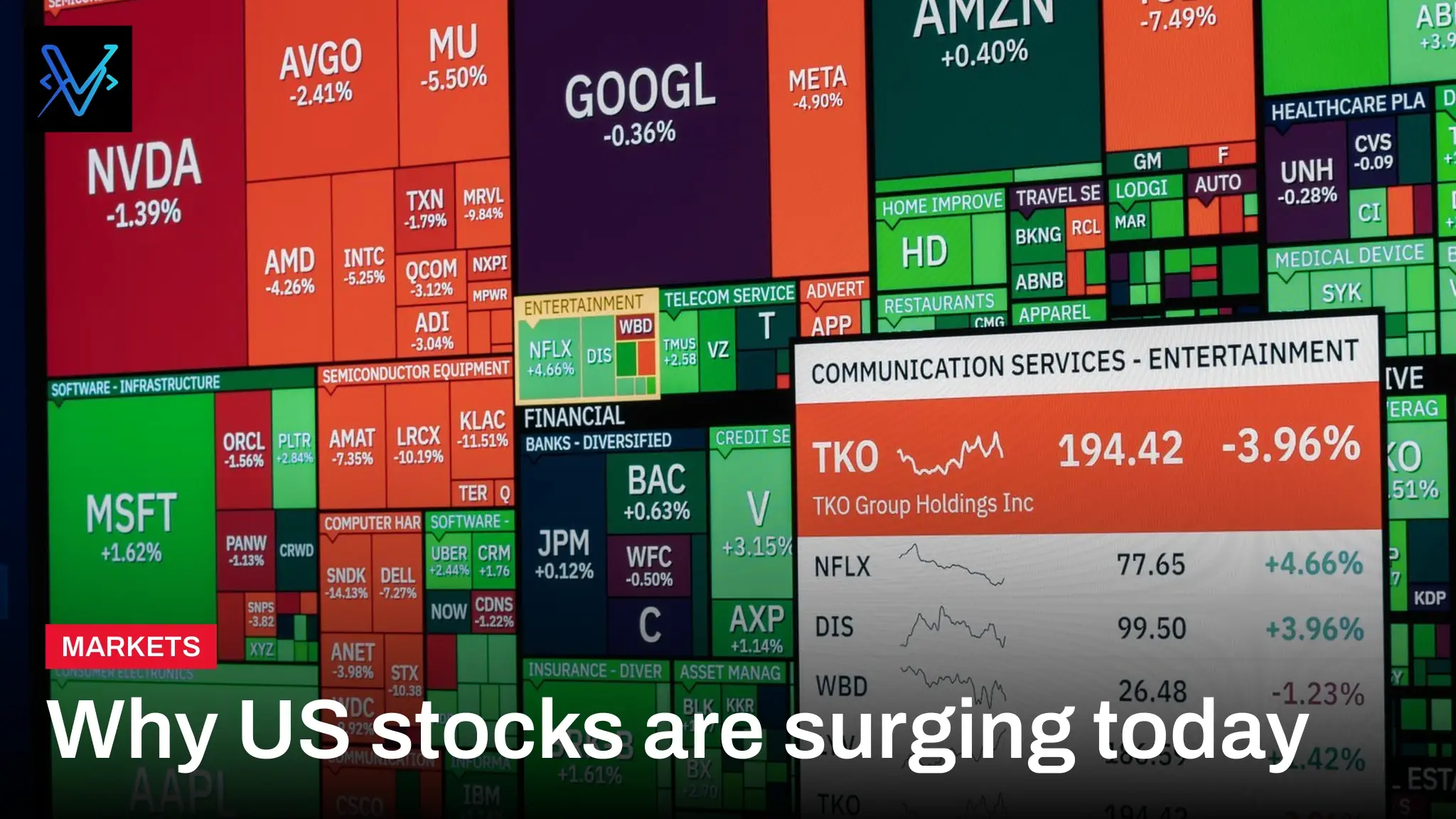
Nvidia is the centre of it. The chipmaker’s shares rose 4.7% before the open, with AMD up 7%, Broadcom 4.7%, CoreWeave 7.9% and Nebius 9.5%, according to Reuters data from around 4:23 a.m. ET. Micron was up 6%, Yahoo Finance reported. These are the names that have carried the market’s losses in November — and on Friday morning, they were carrying the rebound instead.
China gave the rally a second engine. Beijing’s cabinet rolled out fresh support for the country’s capital markets, with the State Council calling the stock market “vital to the overall landscape of economic development” and promising a stronger role for state-backed funds, the so-called “national team.” The CSI 300 jumped 4%, its biggest rise since October 2024, and China’s semiconductor index soared 17.6%, CNBC reported.
The chip rally spread. In Tokyo, shares of Tokyo Electron and Advantest dropped in morning trading but recovered quickly and finished considerably higher. In Seoul, Samsung rose 4.55% and SK Hynix 5.41%. Europe joined in too: stocks there rose 1%, building on a 1.7% gain the previous day, with Germany’s DAX up 0.7%, France’s CAC 40 up 0.3% and Britain’s FTSE 100 up nearly 0.7%.
And then there is Jensen Huang. The Nvidia chief’s dramatic departure and return has been one of the biggest sources of market volatility this month — shares surged 31% when he was reinstated on Monday — and his comeback is now being cited as a reason the rebound could run further. Shane Oliver, chief economist at AMP, told Reuters the return of Huang, a resilient US economy, strong corporate profit growth and December’s seasonally strong period for shares all argue the recovery has room to go. President Donald Trump, asked about the week’s swings, said he was “a little concerned yesterday when I saw some pretty big dips” — and of Huang, “I think he’s absolutely fine.”
A brutal month, in numbers
Friday’s jump looks big. Set against November, it is a dent in a much larger fall.
| Market | Friday move | The month so far |
|---|---|---|
| Nasdaq 100 futures | +2.8% (26,739 at 6:08 a.m. ET) | Index traded ~20% below its October record on Wednesday |
| S&P 500 futures | +2% (7,325.5 at 6:08 a.m. ET) | Closed Wednesday at 7,182.78, down 0.25% on the day |
| Dow futures | +1.2% (50,807) | Closed Wednesday at 50,182.95, up 0.33% on the day |
| Nvidia | +4.7% premarket | -30.88% for November; closed Wednesday at $149.30 |
| Brent crude | ~$98 a barrel, a two-week high | Down ~17% for the month |
| Gold | $3,704.20, +4.76% | Rebounding from a 14-month low |
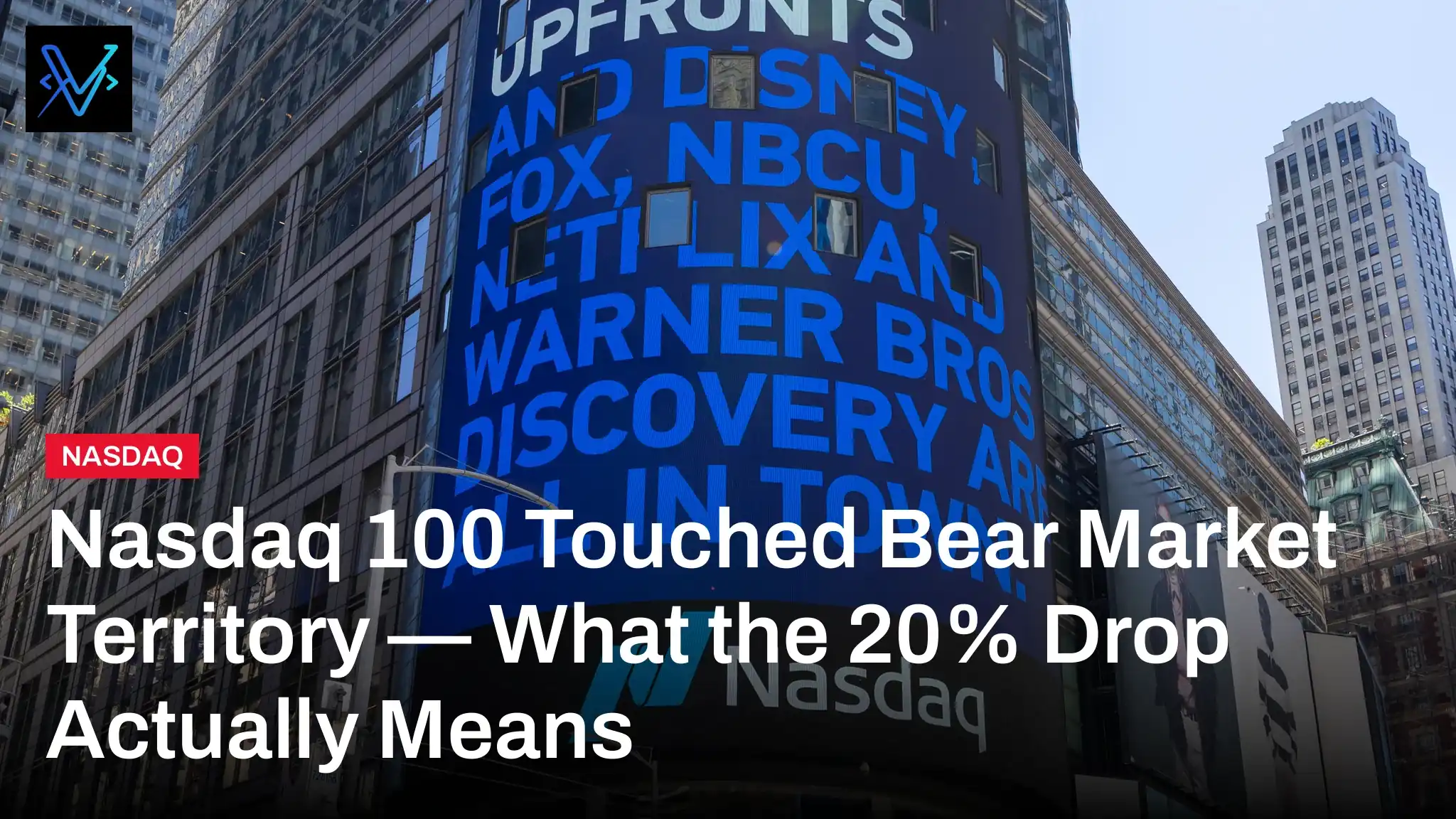
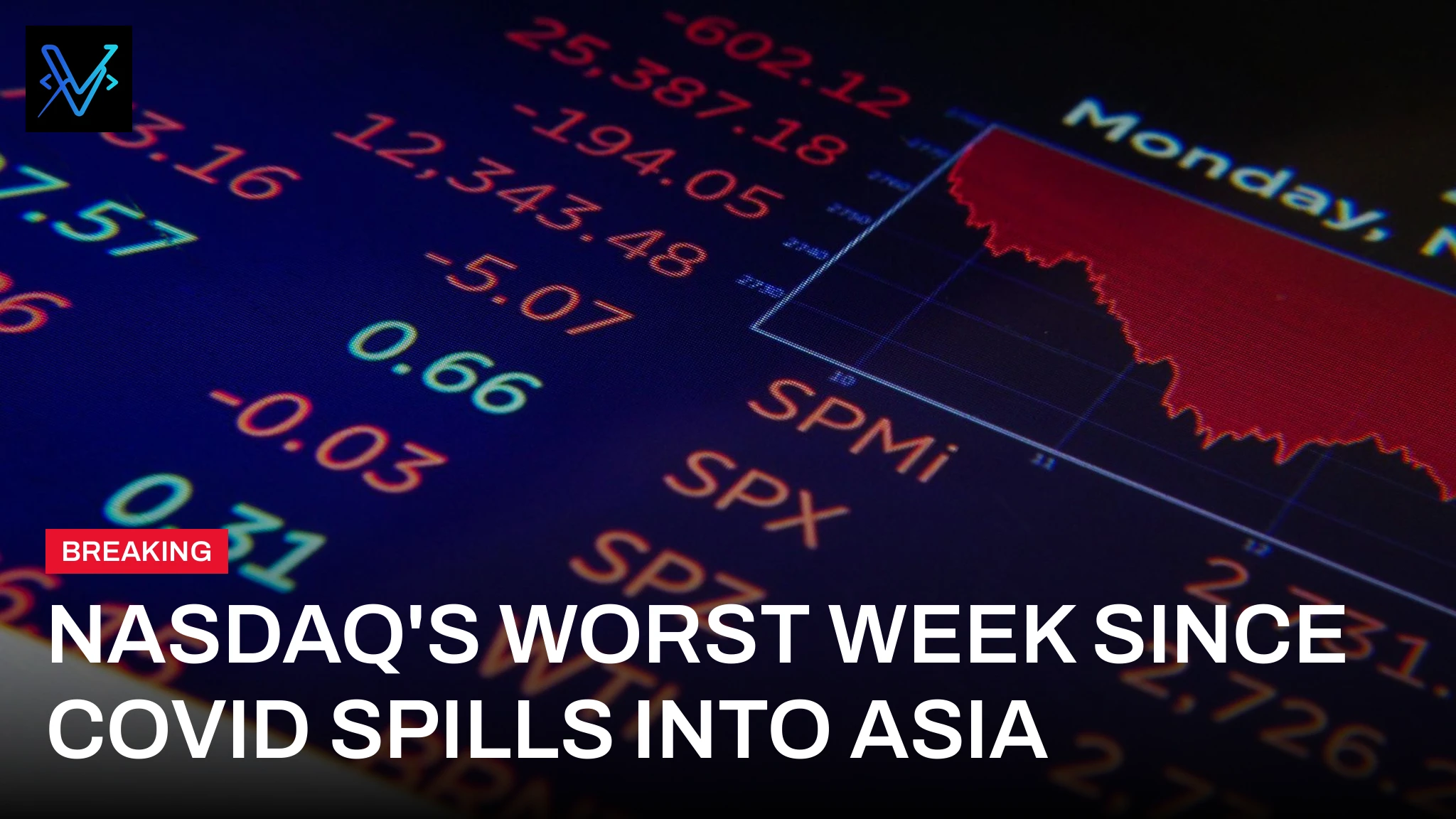
Wednesday showed why traders are nervous. The S&P 500 fell as much as 3.2% during the day and the Nasdaq plunged 4.6% at its worst, before late buying pulled both back — the S&P closed down 0.25% and the Nasdaq down 0.62%. The Dow erased a drop of more than 1,100 points to finish up 0.33%. The Nasdaq 100, the tech-heavy index at the heart of the AI trade, traded roughly 20% below its October record high during that session. It is the drop that put the Nasdaq 100 into bear-market territory — here is what that 20% fall actually means.
Nvidia’s own week captures the whiplash. The company is worth about $3.6 trillion, its shares jumped 31% on Monday when Huang was reinstated, and yet the stock still closed Wednesday down 3.91% at $149.30 — nearly 31% lower for the month and almost 38% below its one-year high. On the same day, S&P Global put Nvidia’s credit rating on watch for a possible downgrade, citing management and governance risks. Nvidia has also halted AI server shipments to parts of Southeast Asia under new US export curbs, adding another pressure point.
Why it matters
For most readers, this is not really about futures contracts — it is about retirement accounts. The same handful of AI names that dominate the S&P 500 and Nasdaq 100 also dominate most 401(k) and index funds, so a one-day bounce in Nvidia, AMD and Broadcom moves balances more than a one-day bounce in almost anything else. The fear gauge tells the same story from the other side: the Cboe VIX closed Wednesday at 28.29, well above its long-term median of about 17.6, and it was still near 25 on Friday morning.
Rates are the other half of the picture. The US economy is proving resilient — the Bureau of Economic Analysis revised third-quarter GDP growth up to a 4.3% annual rate on Wednesday — but October inflation also accelerated, and US inflation climbed to 3.8% in October as core PCE beat forecasts. Futures now imply a 99% chance the Federal Reserve raises interest rates in December, when it meets on December 8–9. The 10-year Treasury yield, which had fallen to 4.85% on Wednesday, rose 7 basis points to 4.92% on Friday as money rotated back into stocks. The dollar, meanwhile, is headed for a third straight monthly gain and its highest level since March 2025.
Oil is moving the other way for different reasons. Brent rose to a more than two-week high of $98 a barrel on Friday, and US crude climbed nearly 3% to about $86, as attacks on tankers and Saudi energy infrastructure kept supply fears alive — even though Brent is still down roughly 17% for the month. Gold rebounded 4.76% to $3,704.20 from a 14-month low. Bitcoin, which had sunk below $60,000 earlier in the week, was back at $61,560.
Why the rebound may not last
Not everyone is buying the bounce. “The recovery in stocks seems technical,” Kathleen Brooks of XTB told Reuters, adding that the questions behind the selloff “are still unanswered.” Oliver’s own verdict came with the same caveat: “However, the risk of a deeper correction at some point in the next six months remains high.”
The doubts are concrete. The AI trade’s core question — whether the trillions being poured into chips and data centres will be justified by future earnings — has not been answered by one morning of green futures. Nvidia’s credit-rating review is still open. And the Fed, which markets had hoped might blink, looks set to hike instead: David Rees, chief economist at Schroders, put it bluntly — “The Fed could, of course, still blink. But a Fed put would not necessarily be unambiguously positive for markets.”
Then there is the calendar. Today’s session is a half-day — the New York Stock Exchange closes at 1 p.m. ET — and holiday-thinned trading can exaggerate moves in both directions. A rally built on light volume is easier to reverse on Monday, when full desks return.
What to watch next
First, whether the gains hold into the 1 p.m. close — and whether Monday’s full session confirms them or takes them back. Second, the consumer: Adobe forecasts $12.9 billion in US online Black Friday spending, up 9.2% on last year, and $15.1 billion on Cyber Monday. The actual tallies will be the first hard read on holiday demand, and half of holiday shoppers are borrowing to pay for it.
Third, the data. The November jobs report lands on Friday, December 4 — economists expect about 90,000 new jobs and unemployment at 4.1% — and a hot number would strengthen the case for the December hike. After that comes the Fed meeting itself on December 8–9, and OPEC+ meets on Sunday, November 29, with oil near a two-week high. Nvidia’s Huang is also due before US lawmakers next week, with a closed-door House interview on Tuesday and a Senate Banking Committee appearance requested for Thursday.
For now, the market has done what it does after a bruising month: it has bounced. Whether this is the start of a recovery or a pause inside a correction will be decided by earnings, jobs data and the Fed — not by one Friday morning.
Looking to grow your business online? Explore Vertex Agency at vertexagency.in for professional website development, Meta Ads and social media growth.
Sources
- Reuters (via LA Post) — Global stocks rally on AI rebound after bruising month, while Treasuries dip (Nov 27, 2026)
- AP (via Reflector) — Global shares mostly rise ahead of Wall Street's reopening after Thanksgiving (Nov 27, 2026)
- World Money Roadmap — Nasdaq 100 Futures +2.45% Before Black Friday Half-Day (Nov 27, 2026)