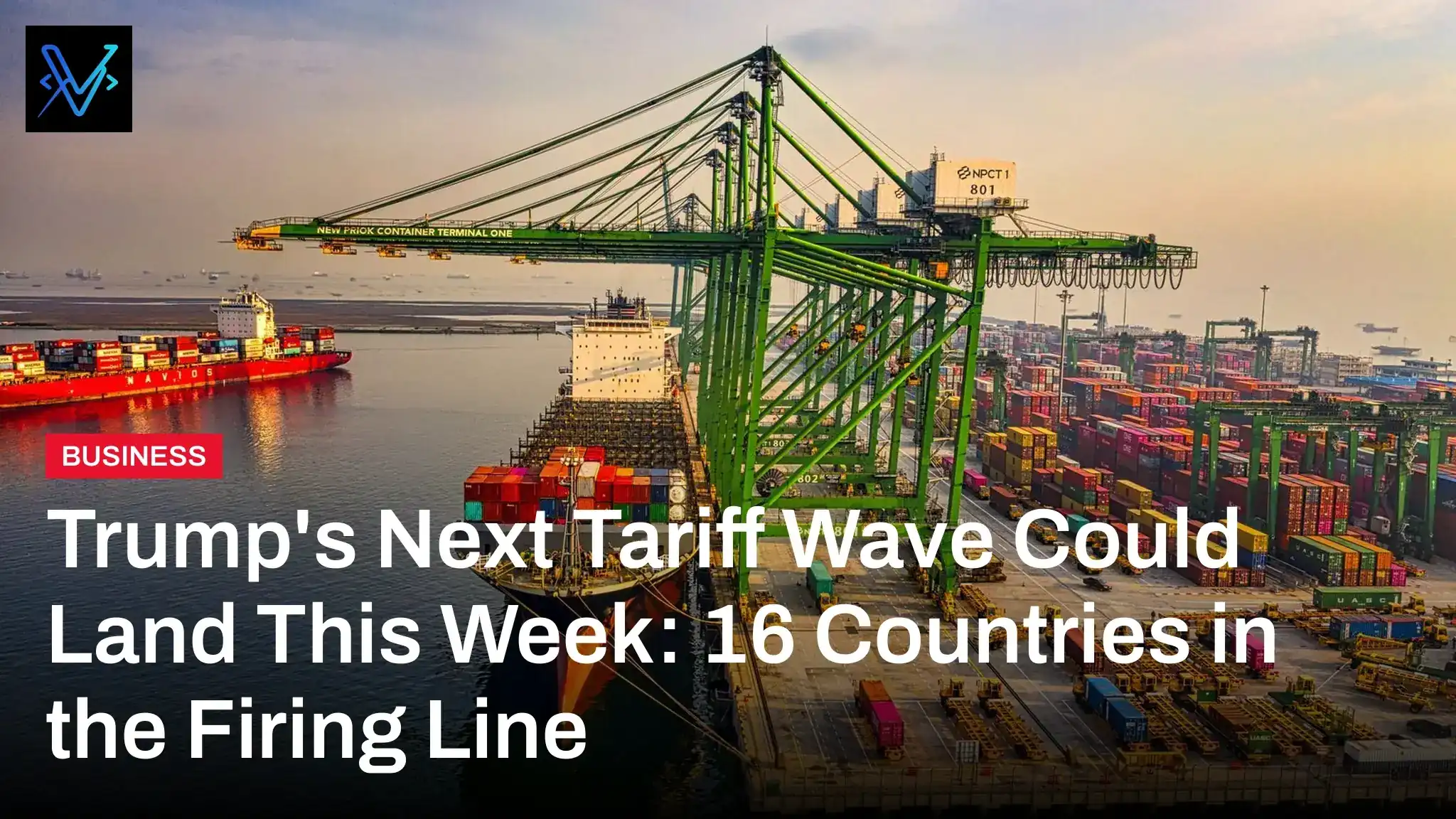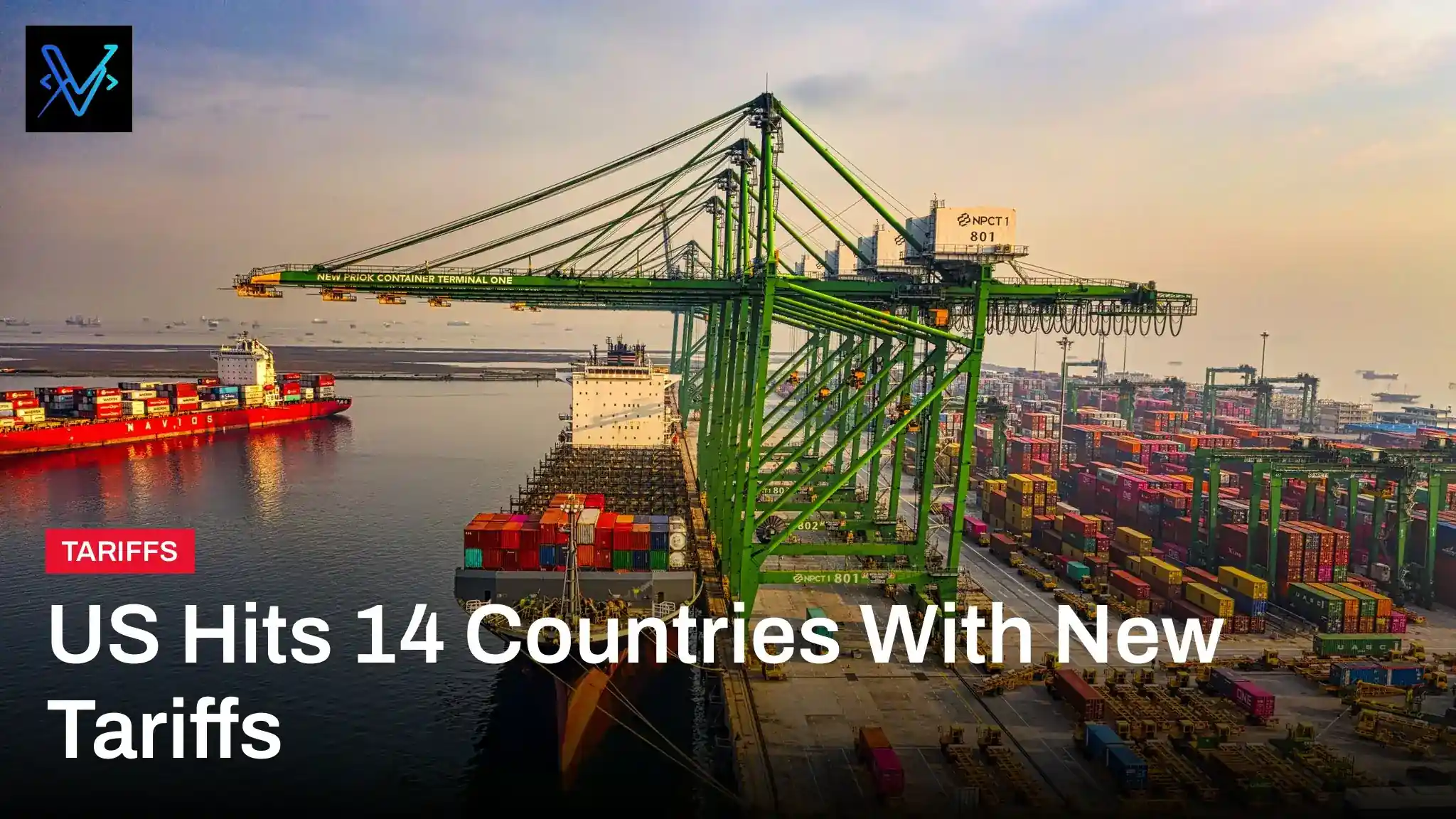
Donald Trump has fired a new tariff salvo at 14 of America's biggest trading partners — China, the European Union, Japan and 11 others — in the boldest attempt yet to rebuild his global tariff wall on firmer legal ground. China faces a 20% duty that could double to 40% if the US-China trade truce collapses in January. And yet markets barely flinched: European stocks jumped more than 1.5% on Thursday, and US futures rose, because the duties are capped by existing trade deals, cannot take effect before late January, and — crucially — do not stack on top of the tariffs already in place.
KEY POINTS
- The Trump administration on Wednesday proposed new tariffs on 14 trading partners under Section 301 of the Trade Act of 1974, after an eight-month investigation into what it calls "structural excess industrial capacity". Headline rates run from 20% to 40%, but the US Trade Representative says duties will be capped at lower levels already agreed in trade deals.
- China faces the highest capped rate at 20%, added to roughly 25% in duties from Trump's first term — and it would rise to 40% if the US-China trade truce expires on January 10 without a deal. The EU, Japan, South Korea, Taiwan and Switzerland face 15%; Vietnam 20% with a deal or 35% without; and five Southeast Asian economies 18%.
- Markets rallied on Thursday because the bite is smaller than feared: the duties cannot take effect until after a public hearing on January 25, they do not stack on July's forced-labour tariffs or sectoral duties on steel, autos and aluminium, and about $30 billion of Chinese imports are exempt. Europe's Stoxx 600 rose 1.7% and S&P 500 futures gained about 0.5% while Wall Street was closed for Thanksgiving.
| Trading partner | Proposed capped rate | If talks fail |
|---|---|---|
| China | 20% (on top of ~25% first-term duties) | 40% if the trade truce collapses |
| European Union | 15% | Up to 20%, per the USTR |
| Japan, South Korea, Taiwan, Switzerland | 15% | Capped at agreed deal levels |
| Vietnam | 20% with a trade deal | 35% without a deal |
| India | 17% if a trade deal is finalised | 25% if talks fail |
| Cambodia, Indonesia, Malaysia, Thailand, Bangladesh | 18% | Capped at agreed deal levels |
| Singapore | 10% with a trade deal | 20% without a deal |
Sources: US Trade Representative announcement via Reuters and Bloomberg; Conference Board Tariff Tracker (Nov 25, 2026). Malaysia's separately agreed deal ceiling is 19%, per the Conference Board. Mexico and Norway are excluded — investigations into their trade practices are still under way.
Why now — and why this time is different
This is not a repeat of the tariff announcements that defined Trump's second term. In February, the US Supreme Court struck down his broad global duties, which had been imposed under a national emergencies law. Since then the administration has been rebuilding the tariff wall piece by piece, using older, court-tested trade laws instead. Section 301 of the Trade Act of 1974 — the same tool used against China in Trump's first term — is the sturdiest of them, and the eight-month investigation behind Wednesday's announcement was designed to survive the legal challenges that killed the emergency-law tariffs.
The timing is political as well as legal. Trump announced the measures on Wednesday, undeterred by the losses his Republican Party suffered in the midterm elections — losses driven in part by voter anger over the cost of living. A Reuters/Ipsos poll conducted after the midterms found 62% of respondents supported efforts to repeal his tariffs, which have contributed to higher prices for American consumers. Announcing a new round of tariffs in that climate is a deliberate signal: the protectionist push is not slowing down.
US Trade Representative Jamieson Greer, announcing the proposals, said the tariffs were intended to counteract "industrial strategies built on targeting manufacturing, wage and labor suppression, financial and other support, non-market economy inputs, and other market-distorting practices" that undermine the US manufacturing base. Washington has long accused China of subsidising industry and flooding world markets with low-cost exports, from steel to electric vehicles and solar panels. Speaking to CNBC, Greer said the proposed caps were consistent with the trade agreements reached over the past year: "We're sticking to that in terms of our proposals because we think a lot of these deals we made actually solve a lot of the problems we see in excess capacity or can go toward it. So you know we've talked to our trading partners about this. They know what we're proposing. I think a lot of this is baked in."
What the new duties actually do — and what they don't
The headline numbers sound sweeping, but the fine print is what matters, and the fine print is unusually restrained. The proposed rates are caps, not starting points: where a trade deal already sets a lower ceiling, the lower ceiling applies. The EU, Japan, South Korea and Taiwan all keep the 15% caps from their deals with Washington. That is why the Conference Board, which tracks every tariff move, concluded the new duties "may not have a significant impact on the overall tariff rate".
Just as important is what the duties do not touch. They will not be added to the 10% and 12.5% tariffs imposed in July on a broader group of 60 trading partners over allegations of lax enforcement of anti-forced-labour laws. They will not stack on sectoral national-security duties on steel, aluminium, autos and other goods. And they will not apply to about $30 billion of Chinese imports that are under consideration for tariff reductions through a bilateral mechanism known as the Board of Trade. Several key imports, including tech goods, remain exempt.
Separately, the USTR proposed a new 10% tariff on imports of Brazil's finished Embraer commercial aircraft, and higher duties on Brazilian sugar above quotas, as part of an effort to push Brasilia over alleged unfair trade practices. The products had previously been exempt from the 25% tariffs on Brazilian goods imposed in July. A US official said that despite months of talks, there were "substantial differences" over the allegations.
Nothing takes effect quickly. The tariffs cannot be imposed until after a public hearing on January 25, 2027, and a senior US official told Bloomberg that final action could come as early as January — though Reuters' market reporting noted the new rates are unlikely to be imposed until February or March. That long runway is itself a negotiating tool: every country on the list has weeks to cut a deal and lower its rate.
Why markets shrugged — and what they are still afraid of
The market reaction on Thursday was the clearest verdict on the announcement. Stock markets in Europe and Asia posted solid gains, with European stocks up 1.6% in early trading and the broad MSCI global index up 0.4%. The Stoxx 600 jumped 1.7%. Wall Street was closed for Thanksgiving, but S&P 500 and Nasdaq futures rallied around 0.5% — a continuation of Wednesday's extraordinary comeback, when the Dow erased a 1,100-point plunge and the Nasdaq pulled back from the brink of bear-market territory.
The reason, analysts said, is that the announcement contained no nasty surprise. "The macro impact from this increase is likely to be modest, particularly given the fact that the investigations have been telegraphed well in advance," JPMorgan analysts wrote. "Several key imports are still exempt from tariffs, including tech goods, and the administration has shown itself to be sensitive to market disruptions. This sensitivity should limit the severity of tariff increases going forward." Tristan Hanson, a multi-asset fund manager at M&G, put it more bluntly: "I think the market, barring very extreme numbers, will discount some of this (tariffs) news really."
That does not mean the tariff story is over for markets — only that this round is priced in. The bigger fear hanging over trading this week is the AI investment boom and whether it can sustain itself, after a bruising sell-off in chip stocks. And the extra tariffs, while small, still point in the wrong direction for prices: "The additional tariff burden is likely to be small, but will still provide a marginal boost to prices and keep core goods inflation firm into next year," said Stephen Brown, chief North America economist at Capital Economics. That matters because US inflation climbed to 3.8% in October, and futures now imply a 98% chance the Federal Reserve raises rates by 25 basis points in December. In currency markets the dollar index was broadly flat at 103.71, the euro steadied at $1.0973, and Brent crude held near $94 a barrel after the Houthi attacks on Saudi Arabia's largest refinery.
China's response: "false issue", no retaliation — yet
Beijing's first reaction was dismissive rather than threatening. Foreign Ministry spokesperson Guo Jiakun called the overcapacity allegation a "false issue", saying "China opposes using it as an excuse for political manipulation" and urging the world's two largest economies to maintain stable relations. On Thursday, China said it reserves the right to take necessary measures in response — a formula that keeps retaliation on the table without committing to it.
The restraint is not surprising. The 20% rate matches the cap in the US-China trade truce that runs until January 10, 2027 — so for now, the announcement changes less than it appears to. The real cliff is January 10: if the truce unravels, China's rate would rise to 40%, and the $30 billion of imports under tariff-reduction talks would be back in play. Beijing's calculation is that a deal is still more valuable than a fight. Washington's calculation is the same — which is why Greer stressed that the proposals preserve the existing deals rather than tearing them up.
ING's analysts captured the longer game in a note to clients: "It is another reminder that while the legal justification for tariffs keeps changing, US protectionism is becoming increasingly difficult to unwind." The legal basis has moved from emergency powers to Section 301, the rates have been wrapped inside negotiated caps, and the timeline stretches into next year. Each step makes the tariffs harder to challenge in court — and harder for a future administration to simply remove.
Why it matters
For American shoppers, this round of tariffs is unlikely to move prices much on its own — the caps, the exemptions and the delayed start all blunt the impact, and analysts expect only a marginal boost to goods inflation. But it locks in a higher-tariff world for longer. The duties announced on Wednesday are built on the most legally durable foundation available, negotiated into trade deals country by country, and designed to survive court challenges that killed the earlier versions. For businesses that import from China, Vietnam or the EU, the January 25 hearing and the January 10 truce deadline are now the two dates that decide what their 2027 costs look like.
For everyone else, the episode is a reminder of how tariff policy now works: announced as a headline number, negotiated down through deals, and priced by markets on the gap between the two. Wednesday's gap was small — which is why Thursday's rally was large. The next test comes in January, when the truce expires, the hearing is held, and the gap between threat and reality gets measured again. Markets have already shown this week how fast sentiment can swing when that gap surprises in either direction.
What to watch next
Three dates now matter. January 10, 2027, when the US-China trade truce expires — if it is not extended, China's rate jumps to 40% and the tariff fight escalates sharply. January 25, 2027, when the USTR holds its public hearing on the proposals, after which final rates can be set. And the weeks in between, when each of the 14 partners will try to negotiate its rate down — Vietnam's 35% fallback and the EU's possible rise to 20% are both bargaining chips, not fixed outcomes. Watch Beijing's tone in particular: "reserves the right to take necessary measures" is the phrase China uses just before it acts, and its next move will say more about the truce's future than any statement so far.
Looking to grow your business online? Explore Vertex Agency at vertexagency.in for professional website development, Meta Ads and social media growth.
Sources
- Reuters via Kitco — Trump unveils new tariffs to fight excess factory capacity, undeterred by midterms defeat (Nov 25, 2026)
- Reuters via WDSM — Stocks climb as traders shrug off latest US tariff salvo (Nov 26, 2026)
- The Conference Board — Tariff Tracker (as of Nov 25, 2026)
- Bloomberg via Advisor Perspectives — US Targets China, EU With New Tariffs Citing Overcapacity (Nov 25, 2026)
Photo: Tom Fisk / Pexels