A server rack packed with Nvidia’s most powerful Blackwell AI chips — hardware the United States has barred from China — has turned up at a data center in Shanghai linked to Alice Huang, the woman at the centre of the smuggling investigation swirling around the chipmaker. The discovery, in loan filings reviewed by Bloomberg, is the sharpest contradiction yet of Jensen Huang’s own claim that his company’s biggest systems are simply too large to smuggle.
KEY POINTS
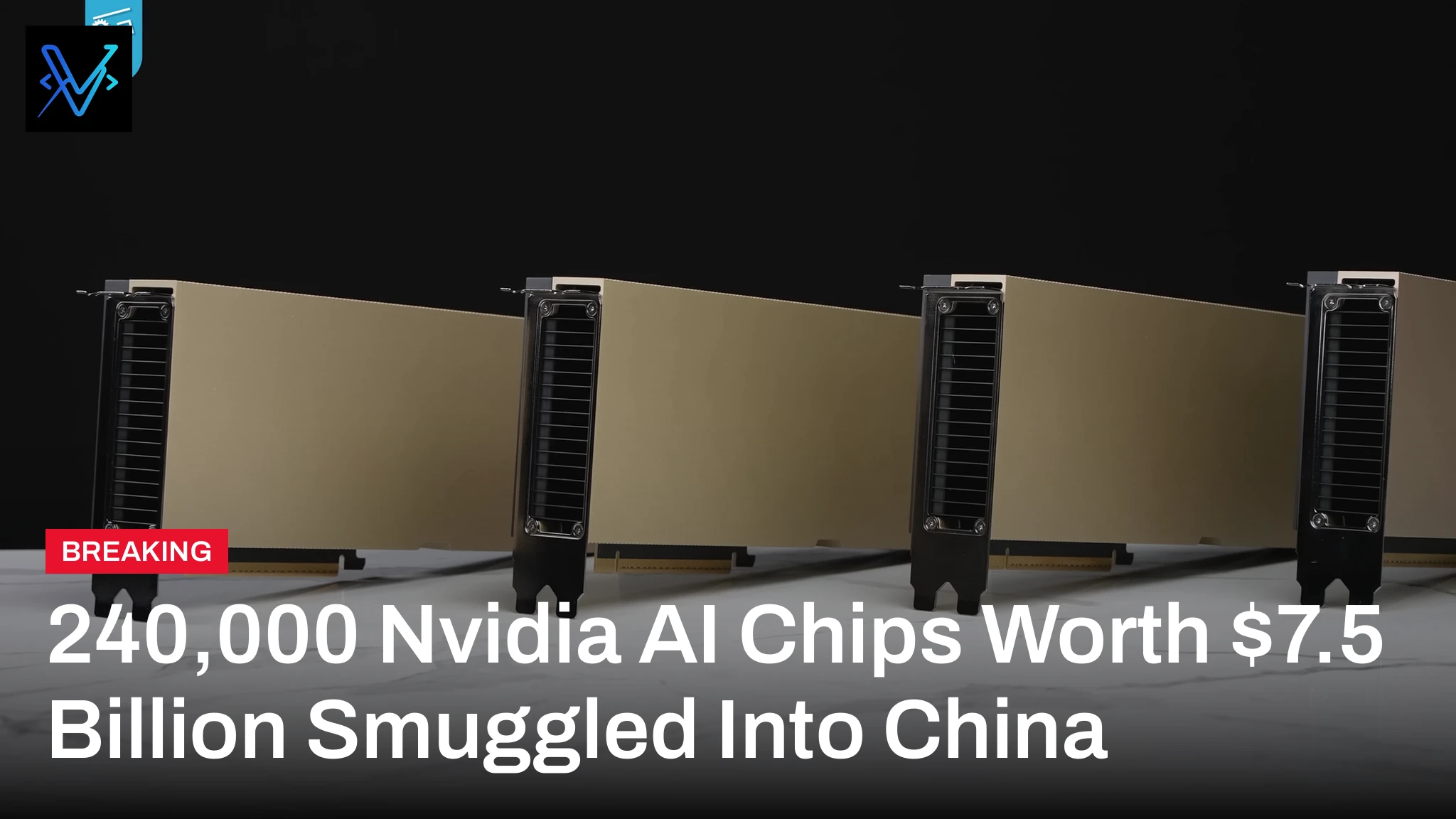
- A GB300 NVL72 rack — 72 Blackwell Ultra chips, about two metres tall and weighing more than 1,500 kilograms — was installed at the Yangtze River Delta Project in Shanghai, according to a serial number in documents filed with Chinese regulators in November.
- The hardware surfaced because two Chinese firms pledged it as collateral for loans: Shanghai Shuoyao offered the GB300 rack for a 96 million yuan ($14 million) loan, and Shanghai Kezhan disclosed a GB200 server and 32 H200 servers while securing a 90 million yuan loan.
- Bloomberg found no evidence that Megaspeed itself sent the hardware to the site, and the company denies wrongdoing. Nvidia did not respond to questions. How the chips reached China remains unknown.
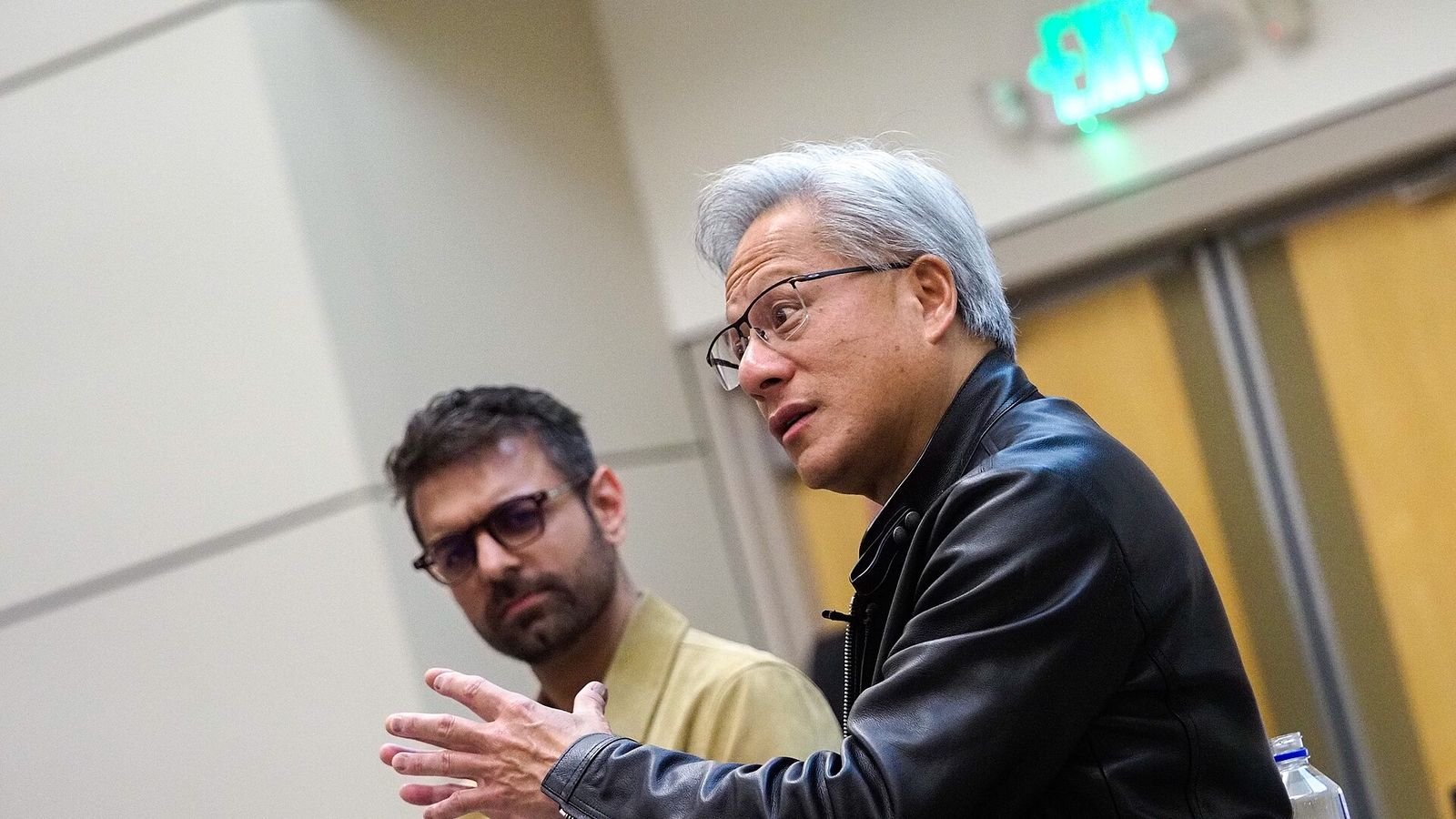
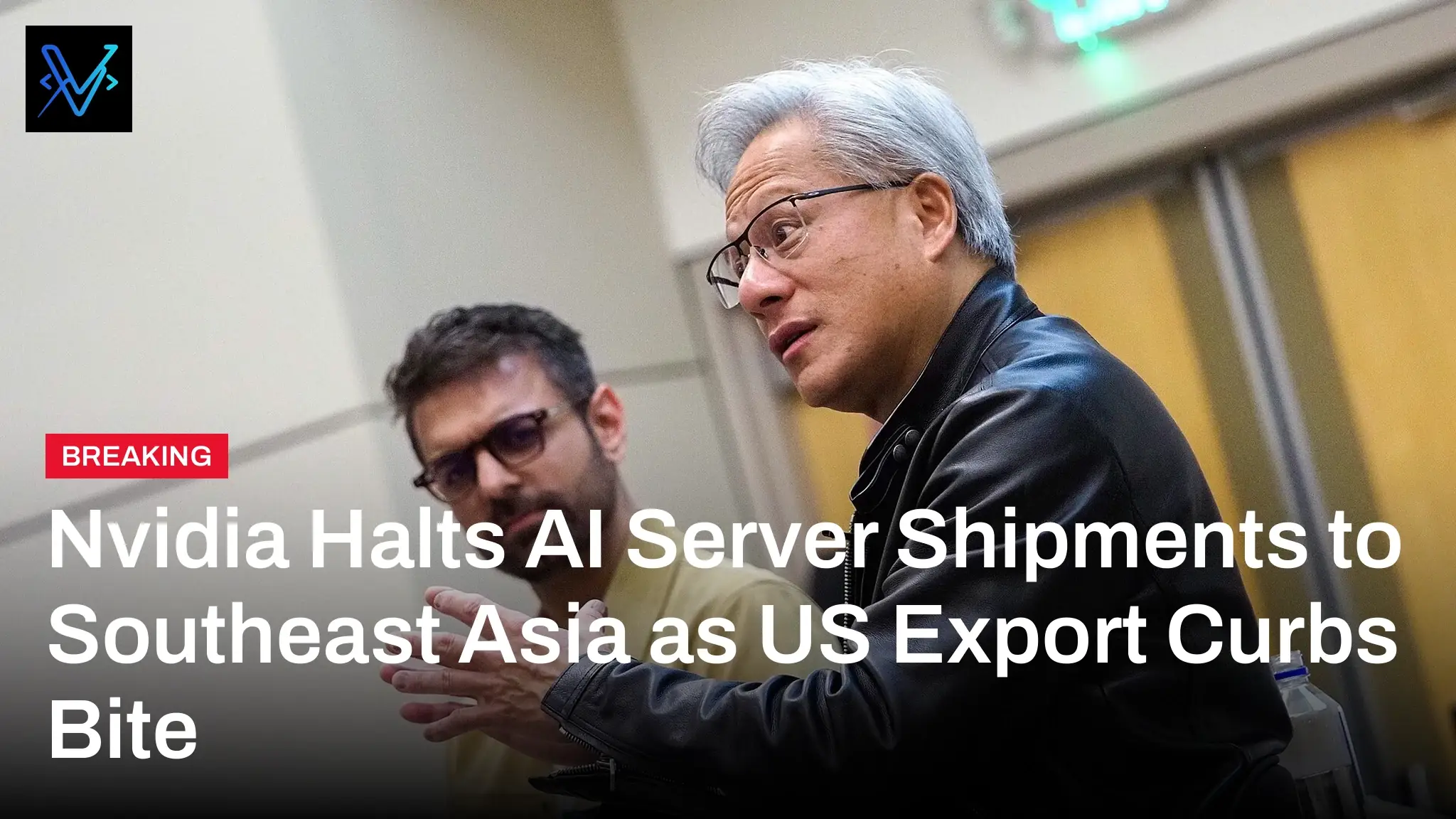
Jensen Huang speaking at Stanford University in April 2026. (Photo: Anders Eidesvik, via Wikimedia Commons, CC BY 4.0)
What the loan filings revealed
The trail starts with paperwork, not a raid. Bloomberg reviewed loan documents submitted to Chinese regulators in November, and the filings name the hardware by serial number. A GB300 NVL72 rack — one of Nvidia’s most powerful products, packing 72 Blackwell Ultra GPUs and 36 Grace CPUs into a single liquid-cooled cabinet — was installed at the Yangtze River Delta Project, a data center development in Shanghai. Bloomberg traced the rack’s serial number to Taiwan’s Gigabyte Technology, which assembles Nvidia chips into servers. Gigabyte declined to identify the original buyer, saying it complies with applicable laws.
Shanghai Shuoyao, a service provider to the Singapore-based cloud firm Megaspeed, offered the rack as collateral for a 96 million yuan loan — about $14 million — from Shanghai Innovation Bank. A second company, Shanghai Kezhan, disclosed a server containing Nvidia GB200 chips at the same site while securing a 90 million yuan loan from a finance leasing firm owned by a Shanghai government agency. Kezhan also reported 32 servers containing Nvidia H200 chips at the facility.
There was more. A sister company of Shanghai Shuoyao disclosed servers containing older Hopper-generation chips manufactured by Dell Technologies and Super Micro Computer. The filings do not say whether those shipments had US export approval. Taken together, the documents suggest some Chinese lenders — including state-linked institutions — knew restricted Nvidia hardware was in the country and were willing to accept it as security for loans.
| Company | Hardware disclosed | Loan it secured |
|---|---|---|
| Shanghai Shuoyao | GB300 NVL72 rack — 72 Blackwell Ultra GPUs | CN¥96 million (~$14 million) from Shanghai Innovation Bank |
| Shanghai Kezhan | GB200 server, plus 32 H200 servers | CN¥90 million from a leasing firm owned by a Shanghai government agency |
| Shuoyao sister company | Hopper-generation servers by Dell and Super Micro | Disclosed in filings; export approval unclear |
“Too big to smuggle”
The reason this discovery stings is that Nvidia’s chief executive said, on the record, that it could not happen. “Our data center GPUs are massive. These are massive systems. The Grace Blackwell system is nearly two tons, so you’re not going to be putting that into your pocket or your backpack anytime soon,” Jensen Huang told reporters in May 2025. “These systems are fairly easy to keep track of but the important thing is that the countries and the companies that we sell to recognize that diversion is not allowed.”
He made the point again at Nvidia’s June shareholders meeting: “Trying to cobble together data centers with some smuggled products is a dead end.”
The rack now documented in Shanghai is roughly the size of a large refrigerator, stands about two metres tall and weighs more than 1,500 kilograms (3,300 pounds). It contains 72 Blackwell Ultra chips, which require US export licences to ship to China. Nobody is suggesting it was carried in a backpack. The question is how a system that large, that traceable and that tightly controlled crossed into a country it was barred from — and Bloomberg’s reporting says the equipment may have changed hands multiple times before reaching China, moving through intermediaries and buyers in countries where exports are not subject to the same restrictions.
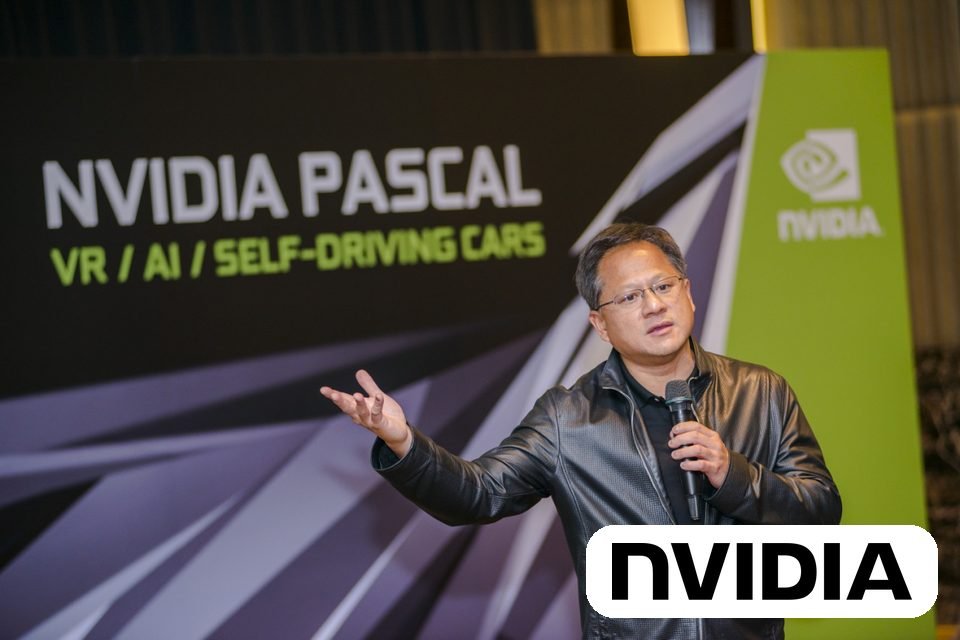
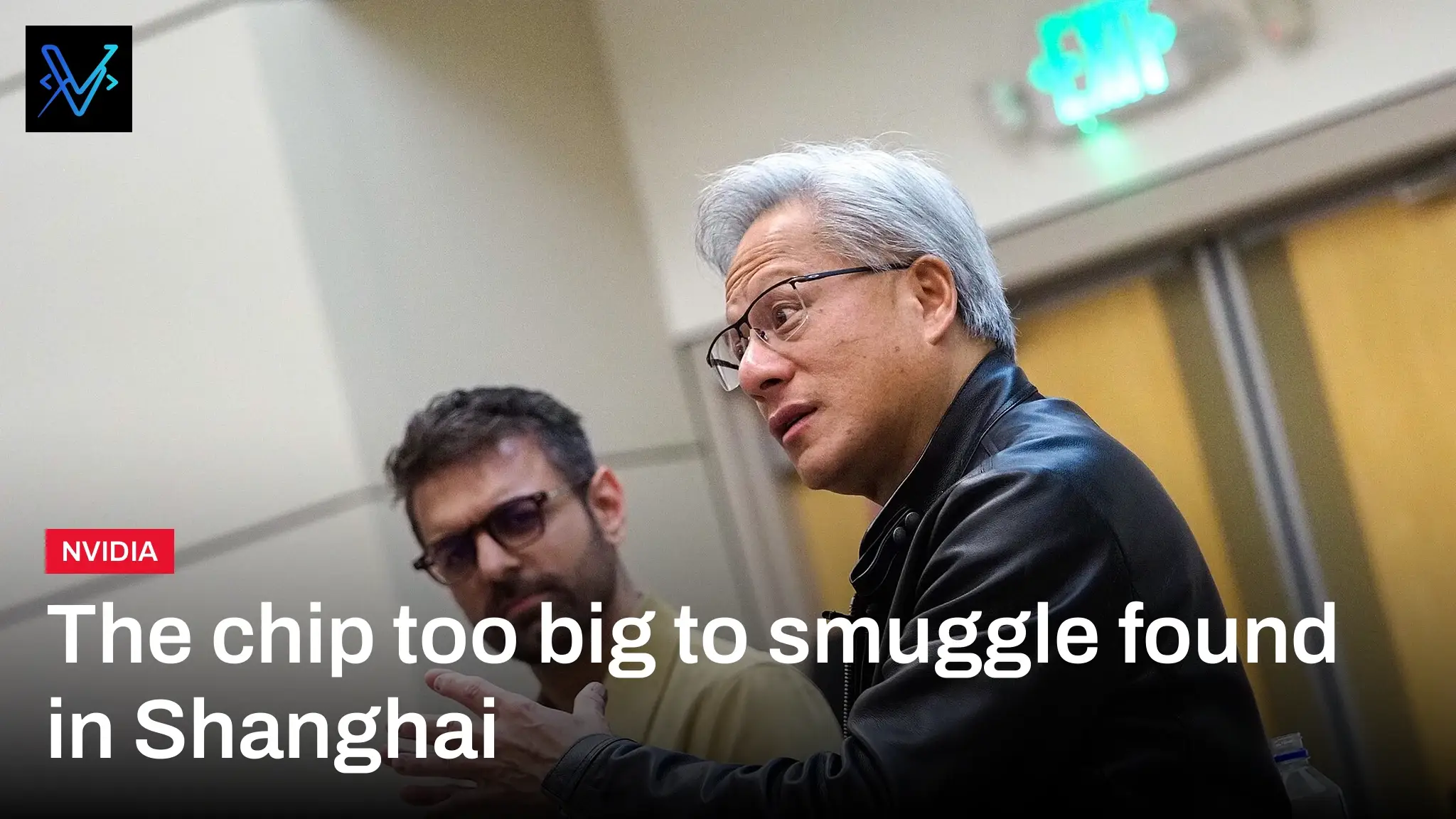
Jensen Huang at Computex Taipei in 2016. (Photo: NVIDIA Taiwan via Wikimedia Commons, CC BY 2.0; Nvidia logo via Wikimedia Commons)
How the trail leads back to Megaspeed
The Shanghai site is tied to Megaspeed, the Singapore-based company that became Nvidia’s largest customer in Southeast Asia and is now under US investigation over concerns it helped smuggle Nvidia chips into China. Alice Huang was a former executive at the company. Shanghai Shuoyao has confirmed it provides services to Megaspeed, while describing the relationship as “limited to ordinary commercial cooperation”.
The US Commerce Department filed paperwork on Monday to add Megaspeed to its trade blacklist, and the Trump administration has spent the last few weeks trying to shore up export controls to make it harder for Chinese tech firms to reach American-made chips through companies based in Southeast Asia and Brazil. Only yesterday, Nvidia told Dell and Supermicro to halt AI server shipments to four Southeast Asian countries under the new controls — the same back door Chinese AI developers have been accused of using.
None of that proves Megaspeed moved this particular rack. Bloomberg said it found no evidence that Megaspeed itself sent hardware to the Shanghai site, and the company has denied wrongdoing. Nvidia did not respond to questions for the Bloomberg report. The filings show the chips are there; they do not show how they got there.
The scale of the site raises the stakes. The Yangtze River Delta Project is planned to house as many as 800,000 servers, putting it on a scale comparable to some of the world’s largest AI data centers. Bloomberg reported that meeting the project’s performance targets would be extremely difficult using domestic Chinese chips from Huawei alone — which is precisely why access to Nvidia’s hardware matters so much to it.
Why it matters
This is no longer a story about one rack. It is a test of whether the export-control regime Washington has built around AI chips actually works. The controls are meant to keep America’s most advanced AI hardware out of China; the discovery of a flagship Blackwell system at a Shanghai site linked to the very company under investigation for smuggling suggests the controls leak at exactly the point they are supposed to hold.
It also lands at the worst possible moment for Nvidia. Huang only won back the chief executive’s job a fortnight ago after an 11-day boardroom battle, and the company has spent the month defending itself on two fronts at once: the smuggling investigation and a brutal market sell-off. US chip curbs have already frozen billions in Asian AI loans and knocked Chinese AI models down the rankings, and investors have punished Nvidia for the uncertainty — the stock remains more than 37% below its October record high, even after rising 3.6% in premarket trading on Friday as the wider market rebounded.
Washington is not letting the matter drop. Huang is scheduled for a closed-door interview with the House of Representatives on December 1, followed by a public hearing before the Senate Banking Committee on December 3. Expect both sessions to dwell on the Shanghai filings.
What to watch next
First, the hearings. What Huang tells Congress next week — and what lawmakers ask about the Shanghai rack — will set the tone for whether this becomes a company problem or a policy problem. Second, whether US investigators say anything more about how the hardware travelled: the serial number gives them a starting point, and Gigabyte’s records may show who bought the rack first.
Third, whether more filings surface. The Shanghai documents came to light because companies pledged the hardware for loans; if other Chinese firms have done the same with Blackwell systems, the paper trail will keep growing. And fourth, Nvidia’s own response — so far the company has not commented on the Bloomberg report at all, and silence is getting harder to sustain with each new disclosure.
Jensen Huang said his biggest systems were too large to smuggle. A two-tonne rack in Shanghai says otherwise — not because anyone carried it in a pocket, but because the supply chain that was supposed to stop it did not.
Looking to grow your business online? Explore Vertex Agency at vertexagency.in for professional website development, Meta Ads and social media growth.
Sources
- Bloomberg Law — Nvidia Blackwell Tech Used at China Site Tied to Alice Huang (Nov 27, 2026)
- Gizmodo — Nvidia’s advanced AI chips found at data center in China (Nov 27, 2026)
- Stocktwits — Nvidia’s Restricted Blackwell Chips Reportedly Found At Chinese Data Center Amid China Smuggling Probe (Nov 27, 2026)
- Reuters (via Kitco) — Nasdaq futures surge as investors pile back into battered AI stocks (Nov 27, 2026)