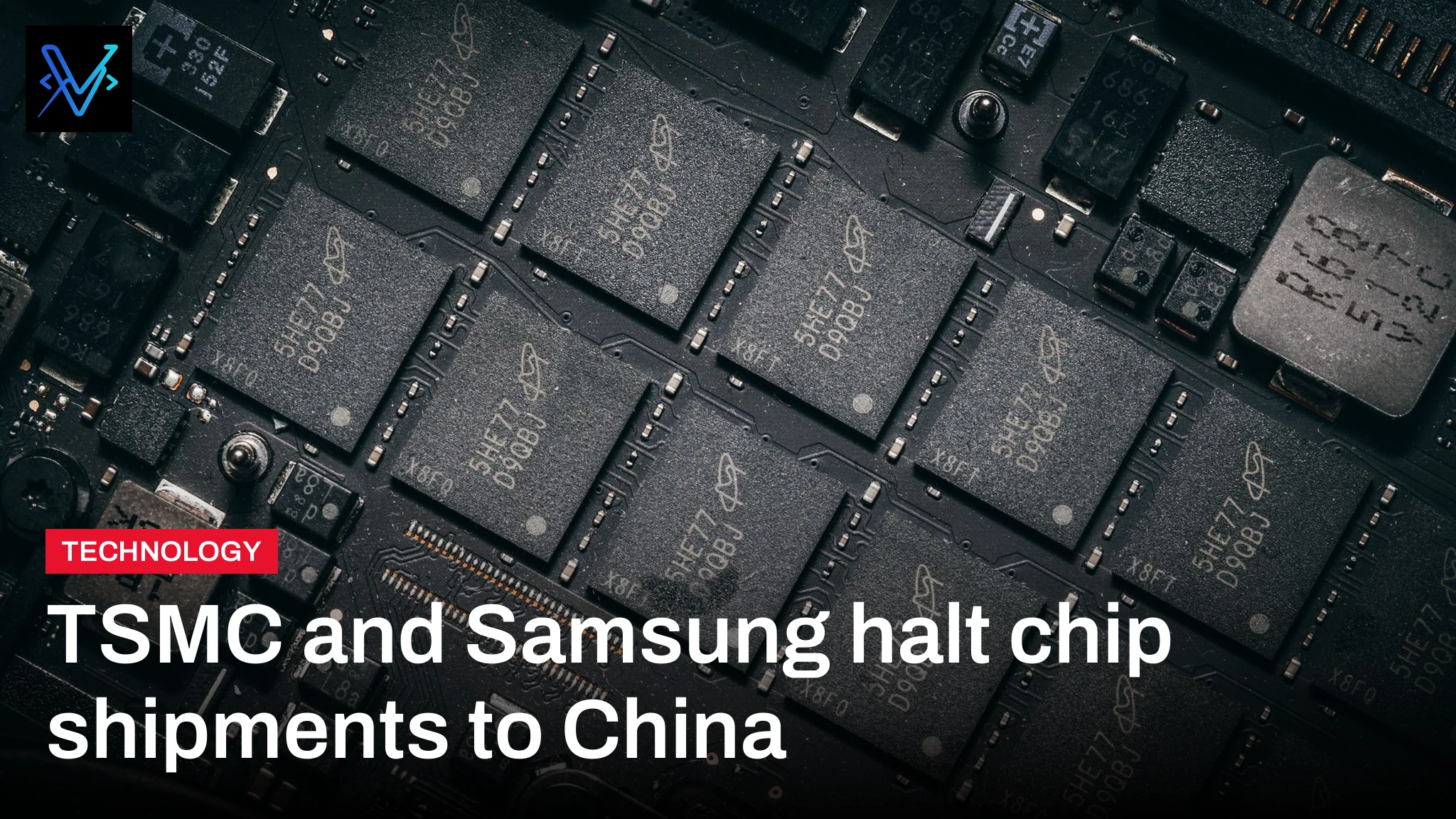
About 240,000 restricted Nvidia AI chips worth roughly $7.5 billion were diverted into China through a network of shell companies, offshore buyers and an alleged Cambodian crime group, according to a Financial Times investigation published on Saturday. A separate Wall Street Journal report published this weekend names the man it says ran the operation from behind the scenes: Li Ming, a 52-year-old Chinese national charged in Singapore last year with fraud over the alleged transhipment of Nvidia-powered servers.
KEY POINTS
- US officials allege a network built around the Singapore firm Megaspeed diverted about 240,000 restricted Nvidia AI chips, worth roughly $7.5 billion, into China, according to the Financial Times.
- The route ran through three layers: a US firm that could buy chips legally, offshore "neocloud" buyers that passed Nvidia's checks, and an underground network that moved the hardware into China.
- The Wall Street Journal names Li Ming, a 52-year-old Chinese national charged with fraud in Singapore in February 2025, as a central operator of the network. Nvidia says it blocked Megaspeed in 2025; the company denies wrongdoing.
This story is developing and will be updated as more details are confirmed.
How the chips moved
The Financial Times traced the route through interviews with more than a dozen people familiar with the matter and hundreds of corporate filings. It describes a machine with three moving parts, each one legal-looking on its own.
First, a company that could buy Nvidia chips legally. That was Inspur, once a major Nvidia partner. Washington put Inspur on its export-control Entity List in 2023 over allegations it supported the Chinese military — but its California-based subsidiary, Aivres, was left off the list and kept doing business with Nvidia.
Second, the offshore buyers. Megaspeed, a Singapore firm run by Alice Huang, bought the chips from Aivres and presented itself as a legitimate cloud provider. Its Malaysian subsidiary, Speedmatrix, declared about $4.6 billion of imports from Aivres in the year to December 2025, according to trade data cited by the FT. In total, Speedmatrix bought at least $4.8 billion worth of advanced AI equipment between June 2024 and February 2026.
Third, the underground leg. The FT says the final step — physically moving the chips into China and moving the money offshore — ran through Hu Xiaowei, whom US authorities describe as the second-in-command of Cambodia's Prince Group, a conglomerate the US Treasury has designated a transnational criminal organisation. Hu was arrested in Japan this summer. A Prince Group spokesperson told the FT that Hu never worked for the business and called the US allegations unsupported.
Distribution inside China was handled by firms including Century Litong, a Shanghai company set up by Century Longteng, a subsidiary of the Chinese gaming and data-centre firm Century Huatong. Alice Huang and her younger sister Huang Yu controlled Longteng, according to the FT. Tencent and Alibaba, China's two largest technology companies, are both Huatong customers; Tencent holds a 10.1% stake in the firm.
The man the Journal names
The Wall Street Journal's report adds a name the FT's account does not centre: Li Ming. The 52-year-old Chinese national, based in Singapore, was charged with fraud there in February 2025 in connection with an alleged transhipment of Nvidia chips. He is currently out on bail, and his case is ongoing.
Singapore prosecutors allege Li bought computer servers equipped with Nvidia chips, claiming the hardware was for his local firm, Luxuriate Your Life. Instead, they say, he shipped the servers to Malaysia, from where they were moved on to an unknown third location. The Journal reports that Li worked with Alice Huang and her husband, Kang Wei, for years, was deeply involved in Megaspeed's activities and took part in its major decisions. In January 2023 he appeared in a social media photograph visiting a Shanghai AI equipment company, identified as Century Longteng's chief strategy officer.
The Journal's account fills in how Megaspeed got its hands on the chips in the first place. The firm told Nvidia that the Chinese technology giant Alibaba was an anchor customer, and in November 2023 it joined Nvidia's cloud partner programme — a status that gave it priority access to the latest chips. Megaspeed then brought servers to Malaysia and provided offshore computing power to Alibaba, the Journal reports. Some of those servers were also sent to the Shanghai firm Century Litong, in violation of US export controls. Century Longteng was a major shareholder of Century Litong until 2024.
Kang Wei, meanwhile, was building a government-backed data-centre network across China. Proposed investments linked to his network totalled more than $9 billion between 2021 and 2024, according to the Journal's review of Chinese public records. Kang was detained in Shanghai earlier this year as part of an investigation into suspected stock market manipulation.
The network in numbers
| Measure | Figure | Source |
|---|---|---|
| Restricted Nvidia chips allegedly diverted to China | About 240,000 | US officials, via Financial Times |
| Estimated value of the diverted chips | Roughly $7.5 billion | US officials, via Financial Times |
| Speedmatrix imports from Aivres, year to Dec 2025 | About $4.6 billion | Trade data, via Financial Times |
| Speedmatrix AI equipment purchases, Jun 2024–Feb 2026 | At least $4.8 billion | Financial Times |
| Chinese state money through Huang-linked companies | About $3.6 billion | Strider Technologies analysis, via FT |
| Kang-linked data-centre investments proposed, 2021–2024 | More than $9 billion | Wall Street Journal |
| Nvidia shares, seven-week fall to Friday's close | -46%, about $2.6 trillion in market value | Market data |
What Nvidia knew — and what it did
The US Departments of Commerce and Justice opened an investigation into Megaspeed in 2024, and in May 2025 they requested records from Nvidia about direct or indirect sales to the firm. In June 2025, Nvidia placed Megaspeed on its internal "no-sell" list, and it has also restricted sales to Aivres. The company says it put Megaspeed and a subsidiary on its block list in 2025.
Singapore launched its own probe into Megaspeed and several senior executives in February 2025 over suspected false declarations involving server purchases. That investigation found insufficient evidence of criminal offences in Singapore — but Alice Huang was given a stern warning and barred from re-entering the country.
Megaspeed has denied allegations of chip smuggling and says Alice Huang left the firm in August 2025. It maintains that it conducts "legitimate and lawful business". No charges against Alice Huang herself have been reported.
The scandal has already cost Nvidia its chief executive. Jensen Huang admitted in a memo to employees on November 8 that he had an affair with Alice Huang, and resigned four days later after 33 years running the company. The board appointed chief financial officer Colette Kress as interim chief executive and opened its own inquiry into whether Huang was the target of a foreign intelligence effort. Huang has agreed to appear before a joint hearing of the House Intelligence, Foreign Affairs and China Select committees on December 1, according to Bloomberg.
Why it matters
The scale is what makes this different from the usual export-control violation. A quarter of a million of the world's most advanced AI chips — the hardware that trains frontier AI models — allegedly ended up in China despite years of tightening US restrictions. If the FT's accounting holds up, it means the controls failed at every layer: a sanctioned firm's subsidiary kept buying, a cloud partner's status opened the tap, and an underground network finished the job.
For Washington, that is a credibility problem. The US has spent the last two years expanding chip export rules, and this week TSMC and Samsung halted chip shipments to China under the newest round. A $7.5 billion hole in the system invites the obvious question in Congress: what is the point of the rules if the chips get through anyway?
For Nvidia, the timing could hardly be worse. The shares fell 14% on Friday to $125.53, a 52-week low, after Reuters reported that the SEC is examining the company's accounting practices. The stock has now fallen for seven straight weeks, losing about 46% and roughly $2.6 trillion in market value. The S&P 500 fell 3.7% on Friday to 6,910.39 and the Nasdaq Composite dropped 5.28% to 22,617.73, wiping out the Nasdaq's gains for the year. The AI trade just had its worst week since 2020, and the smuggling revelations land on top of a market that is already rattled.
What to watch next
The next hard date is December 1, when Jensen Huang is due before the three House committees. What he says under oath — about the affair, about what he knew of Megaspeed, and about Nvidia's sales controls — will shape the investigations and the politics around them.
The second question is whether the Justice Department's investigation of Megaspeed produces charges, and whether Singapore's case against Li Ming widens. So far the public record has names, money flows and a blocked supplier list, but no US indictment of the network's operators.
The third is the market. US stock index futures reopen on Sunday evening, and Anthropic, which priced its record IPO at $83 last week, closed Friday at $88.91 after falling 8.5% on its second day. Thanksgiving week is a short one — markets close on Thursday — so thin trading can exaggerate whatever moves the new headlines trigger. If the smuggling story deepens, Nvidia's week could get worse before it gets better.
Looking to grow your business online? Explore Vertex Agency at vertexagency.in for professional website development, Meta Ads and social media growth.
Sources: Seoul Economic Daily — Cambodian Scam Network Tied to Nvidia Chip Smuggling Into China (Financial Times investigation); AI Weekly — FT Ties Huang's $7.5B Nvidia Chip Route to Prince Group; TBS News — Alice Huang and her husband's close associate Li Ming routed Nvidia chips to China: Report (Wall Street Journal); TipRanks — The Week That Was, The Week Ahead: Macro and Markets, November 22; HTX Insights — US Stock Market Trends (Nov 21): Nasdaq Plunges 5.28%. Photo: Geekerwan / Wikimedia Commons (CC BY 3.0).
UPDATE — 24 NOVEMBER 2026
The US has now acted: the Commerce Department added Megaspeed to its trade blacklist on Monday, cutting off its access to American technology — along with six other companies linked to it. Read our full report on the blacklisting.