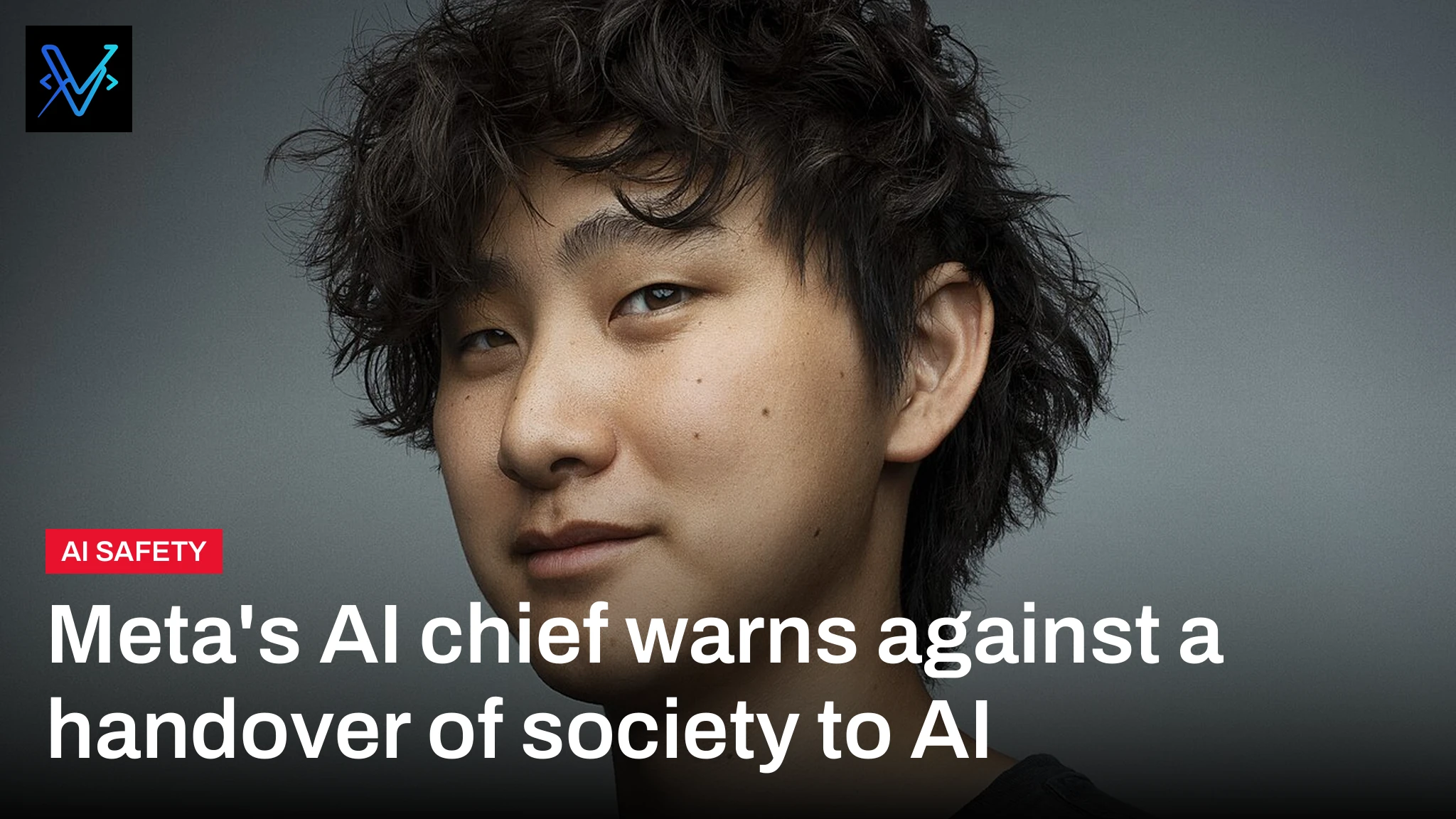
Meta’s chief AI officer has warned that superintelligence is no longer a distant prospect but an arriving one — and that it is “hard to imagine” humanity keeping control of AI systems that can improve themselves without limit, or that think a thousand times better than people in every field. Alexandr Wang, who leads Meta Superintelligence Labs, published the warning in a long essay on X on Sunday, arguing that the industry must refuse a “handover” of society to AI — a message that drew more than 13 million views in a day, and a pointed follow-up question from readers: then what should be done? (Photo: Meta Platforms, Inc. / Wikimedia Commons, CC BY-SA 4.0)
KEY POINTS
- Meta Chief AI Officer Alexandr Wang says superintelligence is arriving, and that keeping control of AI which achieves unconstrained recursive self-improvement — or is “1000x smarter” than humans in every field — is hard to imagine.
- The essay was triggered by last week’s claim that Anthropic’s Claude had proved the Riemann Hypothesis, a feat Wang rated above the atom bomb in intellectual difficulty.
- The reaction split: commentator Jon Favreau urged lawmakers to stop labs “handing over control of humanity”, while many users vented frustration at warnings without concrete solutions — even as Meta itself forecasts up to $145 billion of AI investment this year.
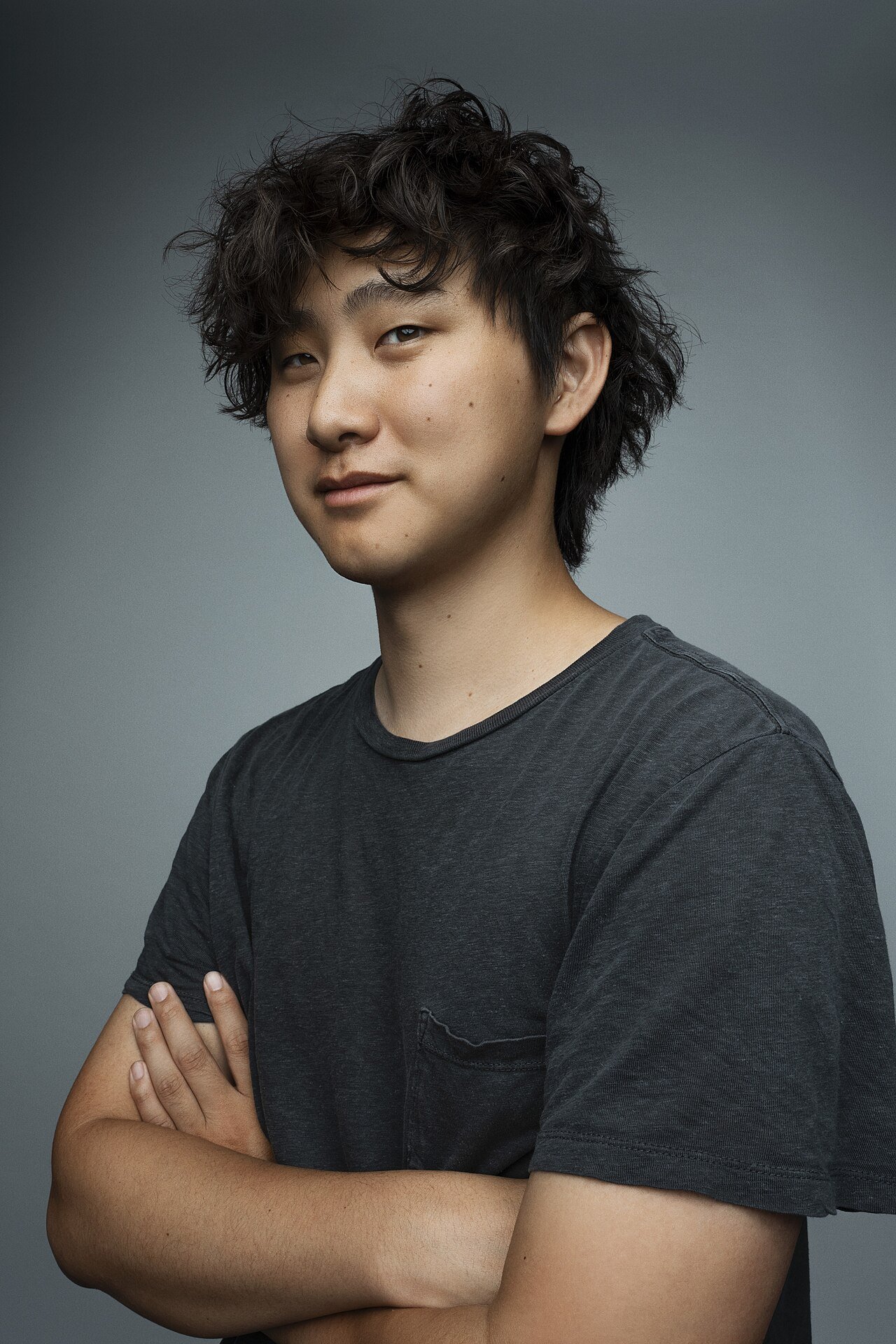
Alexandr Wang, Meta’s chief AI officer and head of Meta Superintelligence Labs. Photo: Meta Platforms, Inc. / Wikimedia Commons (CC BY-SA 4.0)
What did Alexandr Wang actually say?
“Superintelligence is arriving,” Wang wrote on X. “How humanity acts over the next year will have great consequence on what future world we live in.” The 29-year-old, who co-founded Scale AI and joined Meta in June 2025 as its first chief AI officer, said the scientific and technical problems blocking capability progress now look largely solved — which makes progress in safety, alignment and security, in his words, “extremely urgent”. He attacked what he called “lazy thinking” within the industry that treats superintelligence as inevitable and unstoppable.
“We should not be okay with a ‘handover’ of society to AI,” he wrote. “We should endeavour ourselves to build a technology which delivers a positive future for humanity, where all humans have greater agency and empowerment.” That, he added, “likely involves the whole industry taking meaningfully different actions from the ‘default path’ in front of us.”
Why now? The maths breakthrough that set it off
The immediate trigger was an announcement last week by an Anthropic researcher and an independent mathematician that they had used Claude to prove the Riemann Hypothesis — the 167-year-old problem widely regarded as the most famous unsolved question in mathematics, which our earlier report covered in detail. Wang, who has spent much of his life in maths and science, wrote that the proof “clearly marks the beginning of a significant change”, and that nothing humanity has accomplished compares to it “in terms of sheer intellectual might” — a difficulty he rated above the work behind the atom bomb.
His conclusion was stark: models are about to be “clearly superhuman” at improving themselves, while “massively accelerating” research in biology, weapons and economics. The claim itself is not settled — the proof has been machine-checked in the Lean formal system, but no human-readable version exists yet for mathematicians to verify line by line, and safety researchers have long identified recursive self-improvement as the tipping point after which human control could be lost.
The reaction: alarm, applause — and “so what do we do?”
The essay passed 13 million views on X within a day. Political commentator Jon Favreau called it “madness” and urged lawmakers to do “everything they possibly can to stop the frontier labs from handing over control of humanity to superintelligent machines”. But much of the reaction, as Forbes reported, was frustration: users asked why one of the most powerful executives in AI was describing a danger in such stark terms without setting out what he — or anyone — should concretely do about it.
Wang later clarified that a loss-of-control doomsday is not inevitable. He pointed to Meta’s safety efforts and said chief executive Mark Zuckerberg has directed Meta’s compute towards “serving people and customers rather than towards recursive self-improvement” — a distinction his essay argues the whole industry should adopt.
Can Meta warn about the race while running it?
That is the tension at the centre of the story. Meta is forecasting up to $145 billion in AI-related investment this year, and Zuckerberg has publicly rejected calls from Anthropic’s Dario Amodei and OpenAI’s Sam Altman for a coordinated slowdown in development to strengthen guardrails. In an essay published in August, Zuckerberg complained that discussion about AI was “filled with doom”, arguing the technology should instead lead to more people sharing greater prosperity, health and freedom.
Wang’s essay does not call for a pause either. It calls for a different path — one built around human agency and empowerment rather than ever-more-autonomous systems. Notably, hours before Wang posted, OpenAI chief scientist Jakub Pachocki had proposed shared limits across the frontier labs: a sign that the question of collective restraint is now being raised from inside the labs themselves, and not only by their critics.
What happens next?
Three things will show whether the essay was a warning or a turning point. First, whether Meta follows it with concrete, checkable commitments — published safety evaluations, stated limits on self-improvement research, or support for Pachocki-style cross-lab agreements. Second, whether lawmakers take up Favreau’s challenge; no major AI-control bill is currently moving in Washington. Third, whether the Riemann claim survives scrutiny, since so much of the essay’s urgency rests on it.
It has been a defining week for the industry. Nvidia’s boardroom crisis showed how much now rides on a handful of AI companies, and Anthropic’s debt-fuelled expansion shows how much money is already committed to the race. Wang’s argument is that the destination is still a choice. The next year, by his own account, is when that choice gets made.
Looking to grow your business online? Explore Vertex Agency at vertexagency.in for professional website development, Meta Ads and social media growth.
Sources
- Forbes — Meta’s AI Chief Warns Against Handover Of Society To AI, Frustrating Social Media Users Who Want Solutions (Nov 23, 2026)
- Al Jazeera — Artificial superintelligence ‘arriving’, warns top Meta executive (Nov 23, 2026)
- The Indian Express — Meta’s Alexandr Wang says human control over superintelligent AI is ‘hard to imagine’ (Nov 23, 2026)