Two Italian technicians were killed in a drone attack in Kuwait on Thursday, and a worker died when a projectile hit Saudi Aramco’s Jazan refinery in Saudi Arabia — the Gulf war’s sharpest widening in weeks, with two Gulf states hit on the same day. Oil prices climbed on the supply risk, with Brent crude on course for its first weekly gain in a month.
KEY POINTS
- Two Italian technicians working for Rheinmetall Italia were killed when drones struck an air defence surveillance station in Kuwait on Thursday; Italy and Kuwait blame Iran, which denies any involvement.
- A projectile hit Saudi Aramco’s Jazan refinery the same day, killing a Nepali worker, injuring several others and temporarily halting some operations; the Saudi-led coalition blamed Yemen’s Houthis.
- Brent crude rose 0.3% on Friday to $96.85 a barrel, up 4.6% for the week — its first weekly rise in four — as Iran’s Revolutionary Guards claimed two tankers hit mines in the Strait of Hormuz, a claim that could not be independently confirmed.
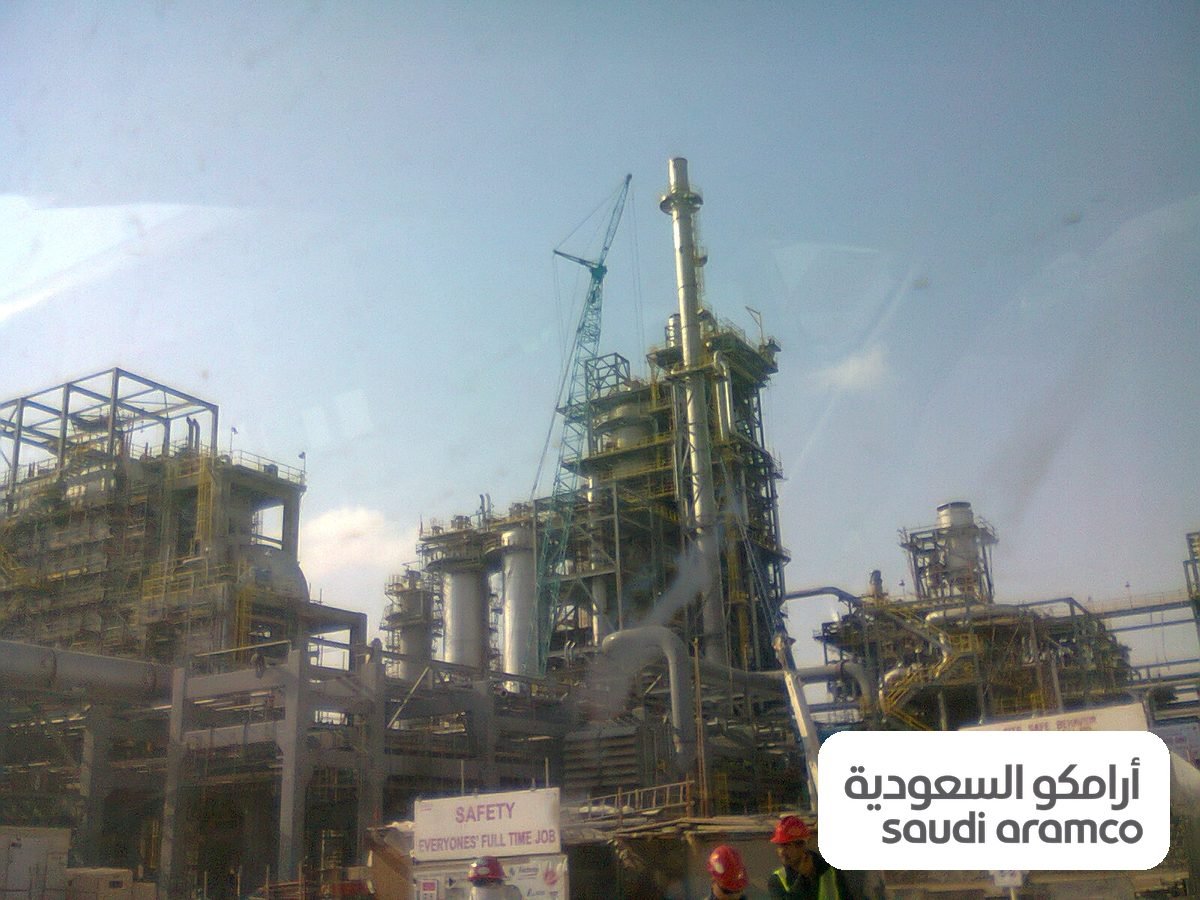
The SATORP refinery in Jubail, Saudi Arabia, a Saudi Aramco joint venture. (Photo: via Wikimedia Commons, CC BY 3.0; Saudi Aramco logo: Wikimedia Commons, public domain)
What happened in Kuwait
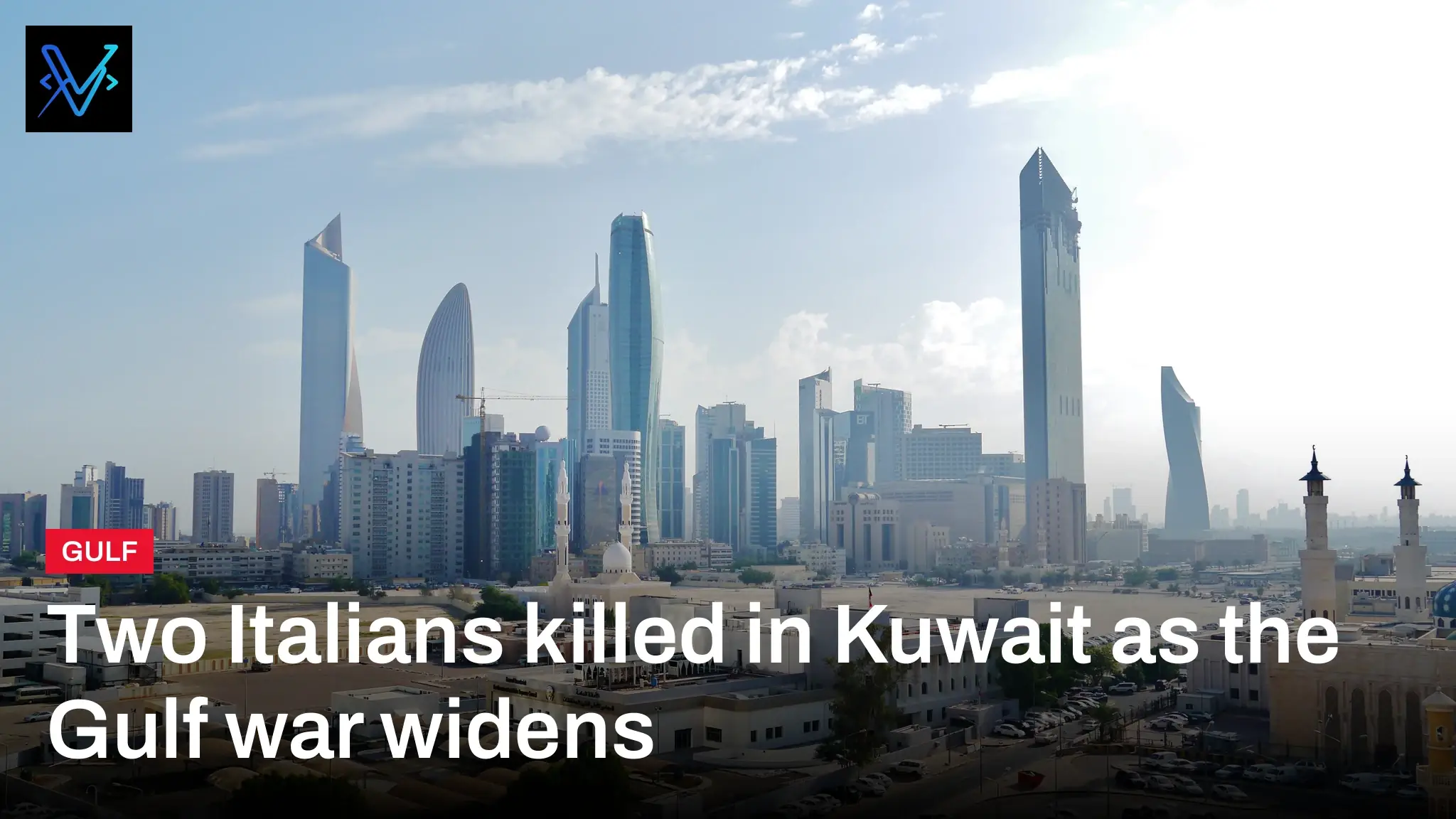
The attack came without warning at an air defence surveillance station in Kuwait, where the two Italians were working on maintenance for Rheinmetall Italia, the Italian arm of the German defence group Rheinmetall. Italian Foreign Minister Antonio Tajani told the Senate in Rome that the men died after a powerful explosion, and that two other people were injured: a Pakistani national and a captain in the Kuwaiti army.
Kuwait’s Defence Ministry confirmed the deaths after first reporting that four people had been wounded by falling debris when a “vital facility” was targeted in what it called an Iranian attack. The ministry said the strike caused material damage. It did not name the facility.
Tehran denied everything. Iran’s senior Armed Forces spokesperson, Abolfazl Shekarchi, said no offensive or military operations by Iranian forces had taken place in the region, and Iran’s embassy in Rome categorically denied the claims in a post on X. Foreign Minister Abbas Araghchi wrote that the incident “looks like a precooked recipe for war.”
Rome is not letting it drop. Tajani said Italy would lodge a formal complaint with the Iranian embassy, adding that there was no need to attack Arab countries bordering Iran that were not involved in the war. European Commission President Ursula von der Leyen weighed in with a sharper line: “We must step up pressure on Iran.”
The Jazan refinery strike
Hours apart, a second front opened in Saudi Arabia. An aerial projectile hit Saudi Aramco’s refinery at Jazan, on the kingdom’s southern Red Sea coast, killing a Nepali worker and injuring several others of different nationalities. The strike started a fire and forced a temporary shutdown of some operations at the plant, which can process up to 400,000 barrels of crude a day.
The Saudi-led coalition blamed Yemen’s Houthis for the attack and said its forces had destroyed a ballistic missile launch platform in the Yemeni port city of Hodeidah in response. Coalition spokesman Turki al-Maliki warned that attacks on civilian infrastructure “would be met with a firm military response.”
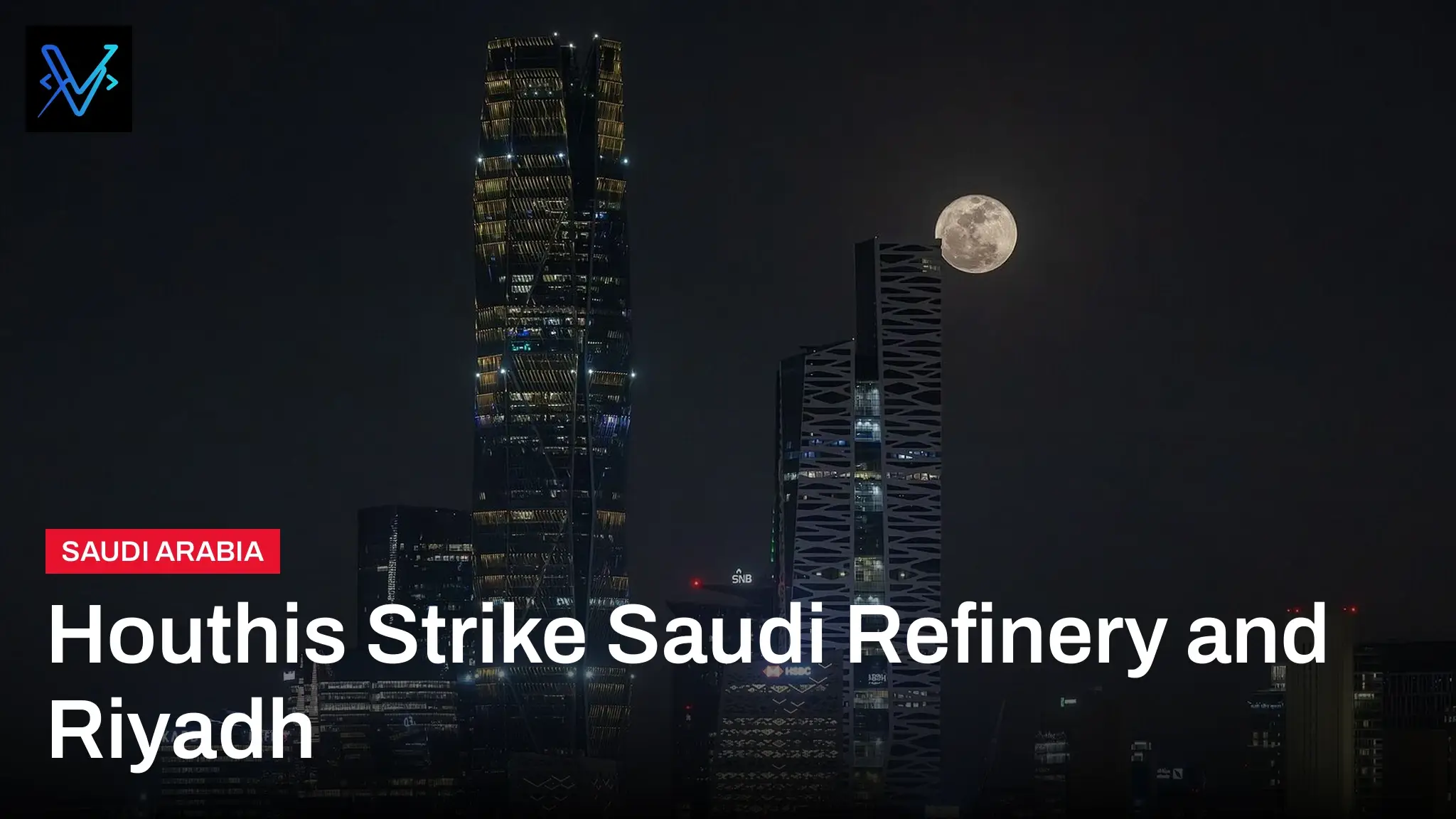
The Jazan strike was not the week’s first hit on Saudi energy infrastructure — the Houthis claimed attacks on the Ras Tanura refinery and Riyadh earlier in the week — but it was the first to kill a worker at a refinery, and it landed on the same day as the deaths in Kuwait. Taken together, the two attacks showed the war reaching further into the Gulf’s energy heartland.
The Hormuz shipping threat — and what oil did
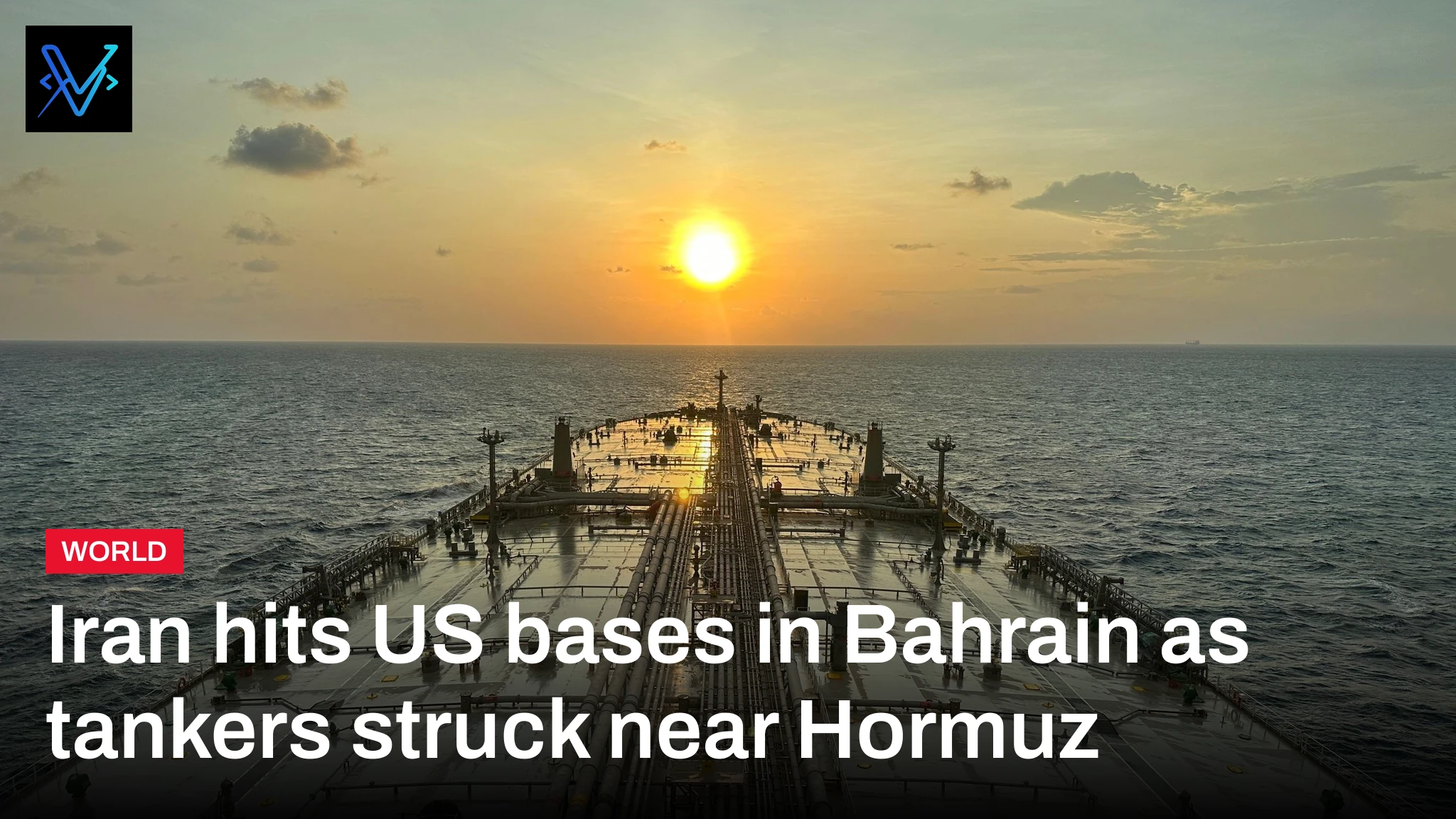
The third strand of Thursday’s escalation played out at sea. Iran’s Revolutionary Guards said two tankers exploded and caught fire after hitting sea mines north of Oman’s Khasab port while crossing the Strait of Hormuz by what the Guards called an unauthorised route. One was a supertanker carrying more than 2 million barrels of crude, they said. The claims could not be independently confirmed, and the UK Maritime Trade Operations agency reported a separate explosion near a tanker west of Dubai, saying the vessel was undamaged and the crew safe.
Oil traders did not wait for confirmation. Brent crude, the global benchmark, rose 0.3% on Friday to $96.85 a barrel and was up 4.6% for the week — on course for its first weekly rise in four, driven by renewed fears of supply disruption. The rally still leaves Brent down nearly 18% for the month, after a bruising November for energy prices.
| Market | Move | Context |
|---|---|---|
| Brent crude | $96.85, +0.3% Friday | +4.6% for the week; first weekly rise in four |
| Nikkei 225 | 58,711.11, +2.1% Friday | Led by chip stocks as Asian markets steadied |
| STOXX 600 | 636.98, +1.8% Thursday | European shares rallied as tariff fears eased |
| Nasdaq futures | +2.4% Friday | Wall Street was shut Thursday for Thanksgiving |
| S&P 500 futures | +1.7% Friday | US markets reopen for a shortened Black Friday session |
Why it matters
The regional conflict erupted on February 28, when the United States and Israel launched attacks on Iran, and it has since widened to Iranian strikes on Israel and on Gulf Arab states hosting US military bases. Iran has already struck US assets in Bahrain and targeted tankers in the Strait of Hormuz, and earlier in November it said it had targeted US drone and missile sites in Kuwait after the United States struck Qeshm Island in the strait.
Thursday changed the shape of that war in two ways. First, it put European civilians in the firing line: two Italian defence contractors, killed at work on a Gulf state’s air defences, give Rome — and Brussels — a direct stake in a conflict they have so far watched from the sidelines. Second, it paired a strike on a Gulf state’s military site with a strike on the world’s biggest oil company’s refinery on the same day, which is exactly the combination that moves crude prices.
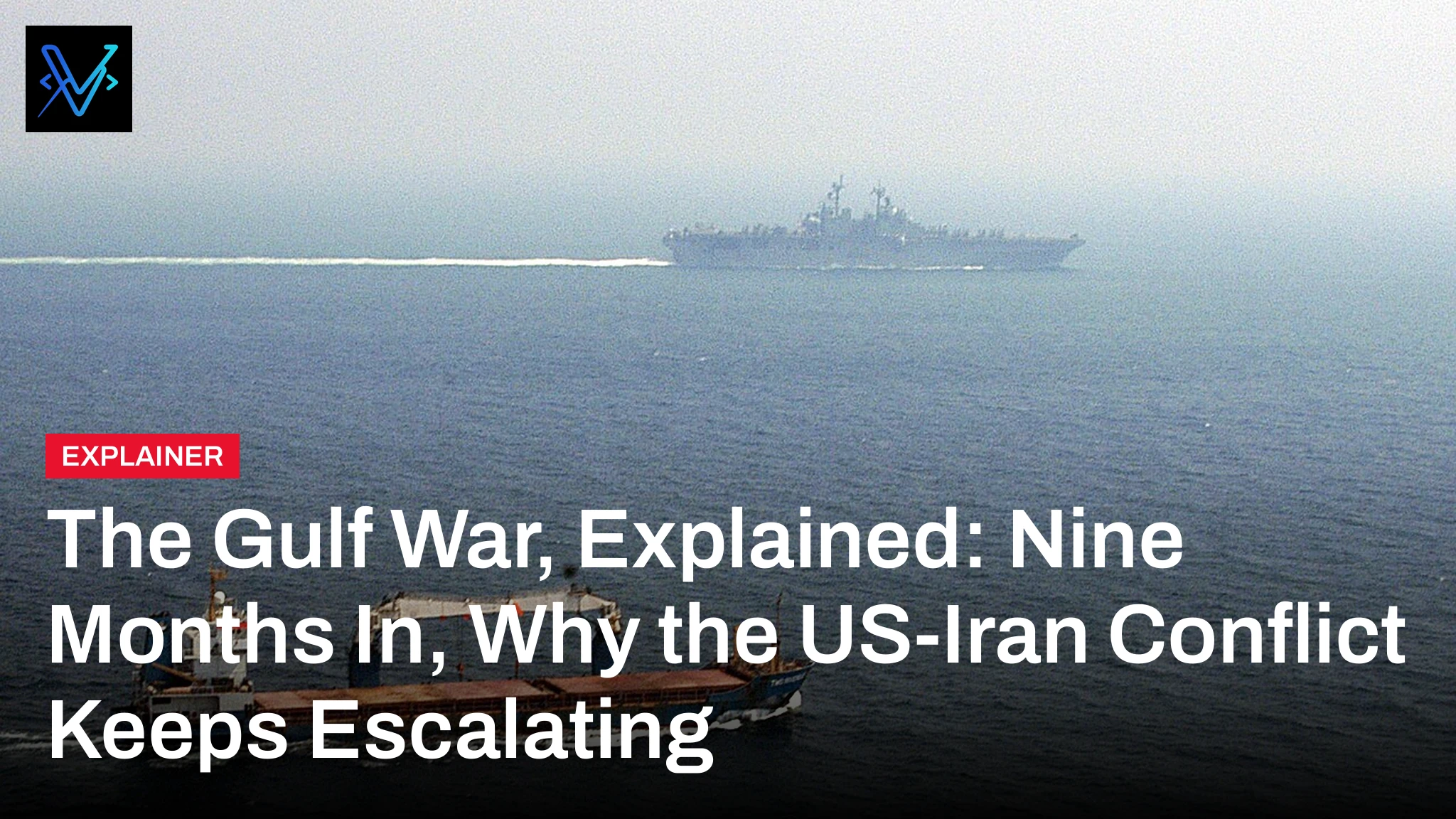
The US government is already treating the region as a live threat zone. In a security alert issued on Monday, the US Embassy in Saudi Arabia told Americans in the Middle East to exercise heightened vigilance, citing Houthi attacks on civilian airports and critical infrastructure that have caused civilian casualties and severe travel disruption. The State Department’s ordered departure of non-emergency US government employees and their families from Saudi Arabia has been in effect since October 23. For background on how the conflict reached this point, see our explainer on the Gulf war.
What to watch next
Three things will decide whether Thursday was a one-day flare-up or the start of a wider phase. The first is Rome: Italy’s formal complaint and von der Leyen’s call for more pressure on Iran could turn into a European sanctions push, or stay at the level of words. The second is Riyadh’s promised “firm military response” — the coalition has already hit a launch platform in Hodeidah, and any bigger retaliation would raise the stakes again.
The third is the Strait of Hormuz. If maritime authorities confirm mines in the shipping lanes, or another tanker is hit, insurers and shippers will reprice Gulf transit fast — and oil’s weekly gain could turn into something much bigger. For now, the claims remain unverified, the tankers are still sailing, and Brent is up but far from its highs. The war, though, has clearly found new ground: Kuwait, a refinery town on the Red Sea, and the world’s most important oil chokepoint, all in a single day.
Looking to grow your business online? Explore Vertex Agency at vertexagency.in for professional website development, Meta Ads and social media growth.
Sources
- Reuters (via DailyFoxNews) — Two Italians killed in attack on Kuwait site, Iran denies involvement (Nov 26, 2026)
- The Bilig — Daily Brief: Italians Killed in Kuwait, China Backs Stocks (Nov 27, 2026)
- Reuters (via Devdiscourse) — GLOBAL MARKETS: Shares bounce after bruising month, dollar on course for third monthly gain (Nov 27, 2026)
- US Embassy & Consulates in Saudi Arabia — Security Alert: U.S. Mission Saudi Arabia (Nov 24, 2026)