Why restaurants are a natural fit for Meta Ads
A restaurant sells something people decide on with their eyes and their stomach, usually within a few miles of where they are standing. That is exactly what Meta Ads are good at: showing a real dish, a real room and a real reason to book — to people nearby, at the moment they are deciding where to eat.
KEY POINTS
- A good restaurant campaign has one job: put the restaurant in front of people close enough to visit, show them a real reason to book now, and make the booking take seconds.
- Target the streets, suburbs and workplaces within a realistic drive of the door, layered with dining and occasion interests, instead of aiming at the whole city.
- Meta Ads management for restaurants runs from $1,250 a month, and the campaign should be judged on bookings, not likes.
Most restaurant owners already know this instinctively. They post a photo of a new dish, it gets likes, and nothing measurable follows. The gap between a post that gets likes and an ad that books tables is not luck. It is targeting, an offer with a deadline, and a booking step that takes seconds instead of minutes. This post covers all three — and what they honestly cost.
What a restaurant Meta Ads campaign actually does
A good campaign has one job: put your restaurant in front of people who are close enough to visit, hungry enough to book, and shown something worth booking for. Everything else — the creative, the audience, the budget — serves that job.
Local targeting first. A restaurant does not need the whole country. It needs the streets, suburbs and workplaces within a realistic drive of its door. Meta lets you target that radius, and it lets you layer in people who have shown interest in dining out, in your cuisine, or in occasions like date nights and birthdays. A campaign aimed at the whole city wastes money on people who will never make the drive; a campaign aimed at your neighbourhood reaches the people who might come this week.
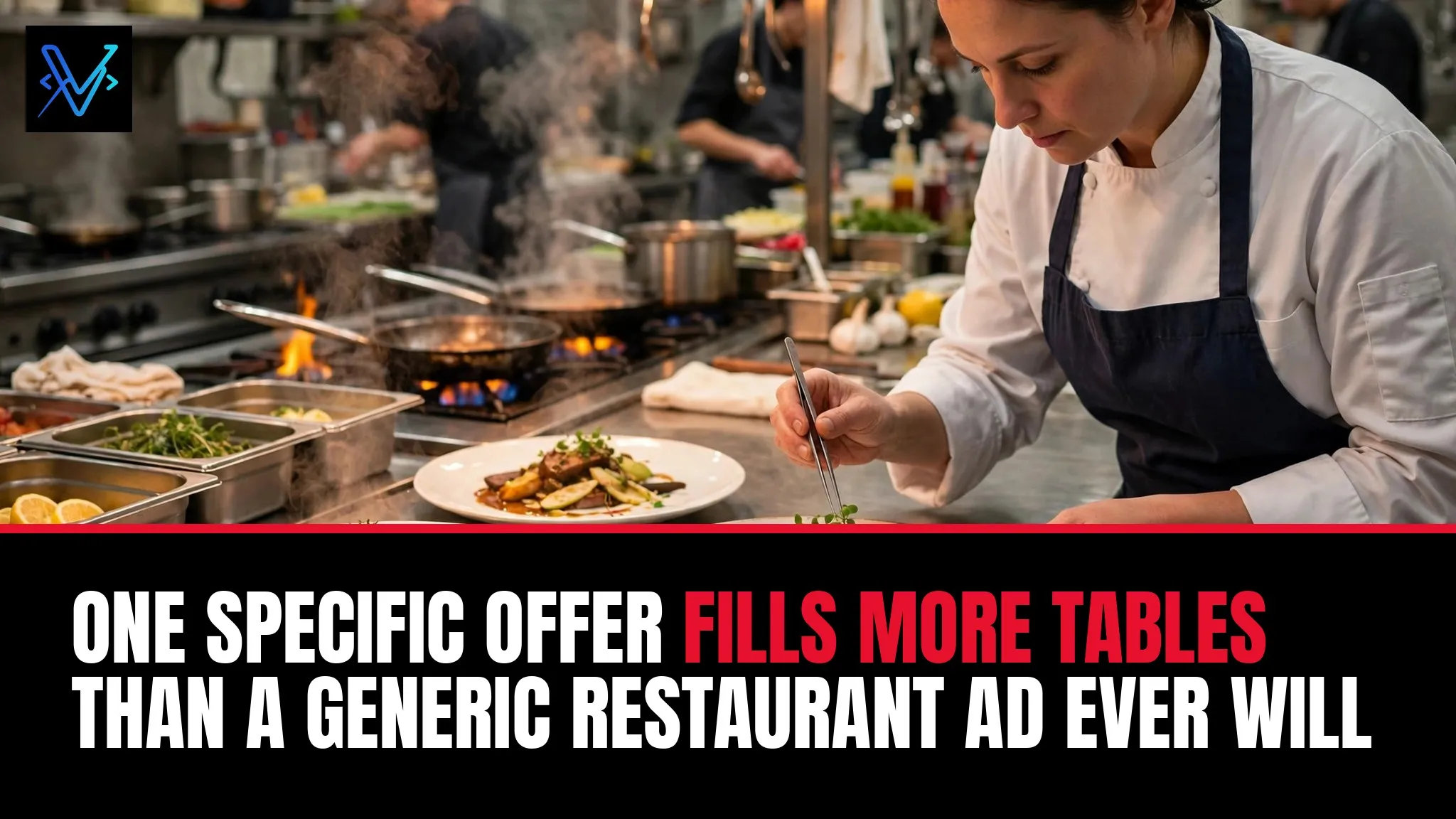
One clear offer. "Come and try us" is not an offer. A set lunch menu on weekdays, a tasting night on Thursdays, a free dessert for tables booked before 6 p.m. — those are offers, because they give someone a reason to book now instead of "sometime". The offer should be real, available, and something the kitchen can actually deliver on a busy night.
Booking in two taps. Every extra step between the ad and a confirmed table loses people. The ad should land on a booking page — not the homepage, not the menu PDF — with the date, time and party size already half-filled. If a diner has to hunt for the booking button, the ad has done its job and the website has undone it.
The creative that works for restaurants
Restaurant ads live or die on the image and the first line. A few things that consistently work:
- Real food, real light. One dish, shot properly, beats a collage of ten. People decide in about two seconds whether the food looks worth the trip — and a dark, flat photo tells them it is not, whatever the caption says.
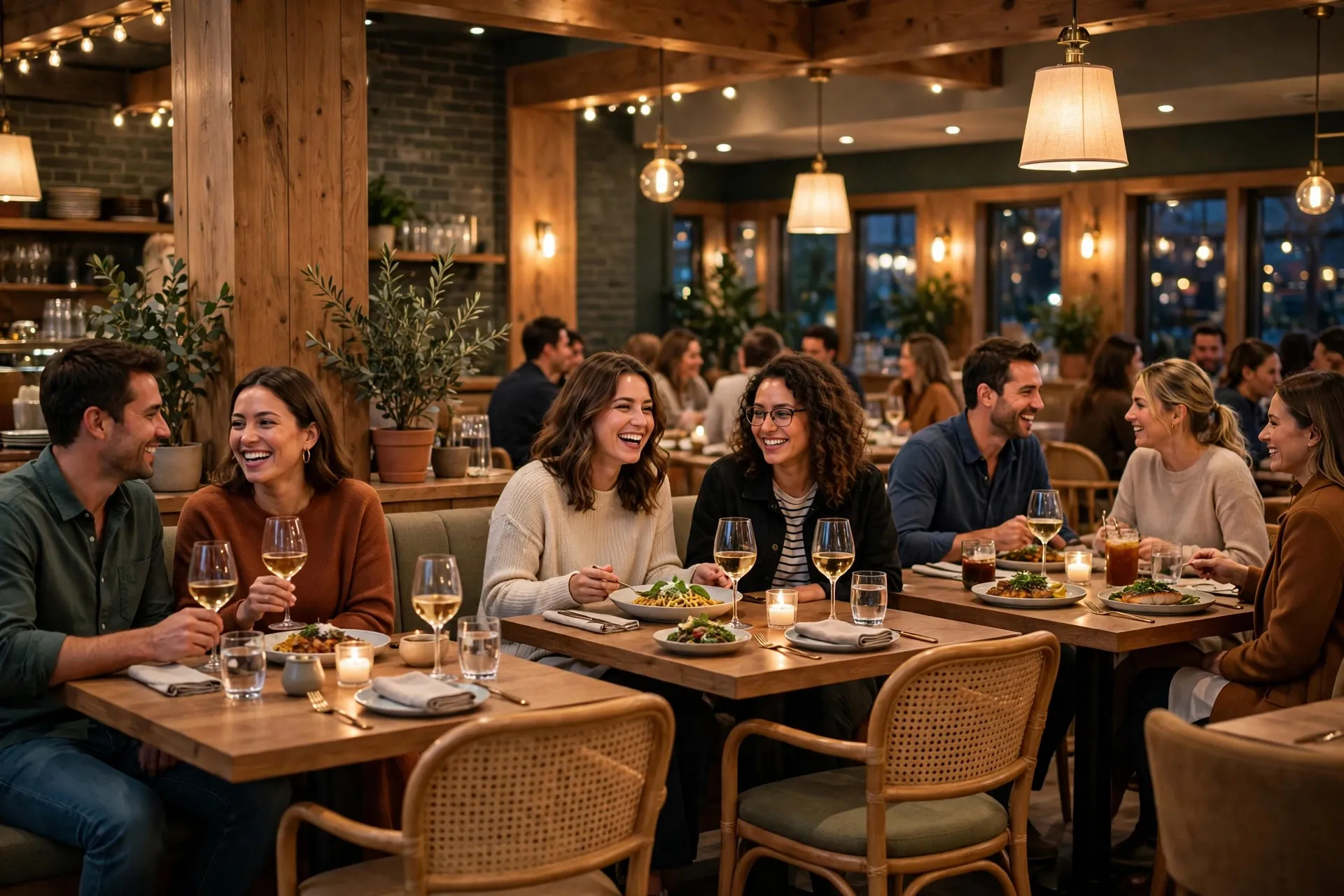
- The room matters as much as the plate. Diners book an evening, not just a meal. A shot of the room at dinner service — tables set, glasses catching the light — sells the occasion. This is especially true for date nights, birthdays and group dinners, where the setting is half the reason to go.
- People, sparingly. A table laughing over a shared dish tells a new customer what the night feels like. Stock photos of strangers do the opposite — they tell the customer the restaurant could not find a real table to photograph.
- Video, short and quiet. A ten-second clip of a dish being plated or a drink being poured works without sound, because most people scroll with sound off. If the ad only makes sense with the sound on, it will be scrolled past.
The rule behind all four: show the experience you actually sell. An ad that promises an evening the restaurant cannot deliver buys one visit and loses the customer for good.
What to spend, and what to expect
Two budgets exist in every Meta Ads campaign, and confusing them is the most common mistake restaurant owners make. The retainer is what the agency charges to run the campaign. The ad spend is what goes to Meta to show the ads. They are separate numbers.
Vertex runs Meta Ads retainers from $1,250 a month, with ad spend on top and agreed separately. For a restaurant, a sensible starting ad spend is usually a few hundred dollars a month in a small town and more in a large city, because the audience is bigger and the competition for its attention is fiercer. The exact figure depends on your covers target, your average spend per table, and how far people travel to reach you — a quote should be built from those numbers, not picked from a menu.
What should you expect in return? Honest answer: not a fixed number of covers. Any agency that guarantees a number of bookings is selling you a number, not a result. What a well-run campaign should deliver is a clear, measurable trail: how many people saw the ad, how many clicked through to booking, how many booked, and what those bookings were worth. If that trail is missing, the campaign is a cost, not an investment — whatever the likes say.
One more honest note: ads do not fix a restaurant people would not return to. If the food, the service or the room disappoints, ads bring people in once and reviews keep them away afterwards. The campaign and the kitchen have to be ready at the same time.
The three mistakes that waste restaurant ad budgets
Boosting posts instead of running campaigns. The Boost button is easy and it is the most expensive way to advertise on Meta. It optimises for engagement — likes and comments — not for bookings. A boosted post can get hundreds of likes from people who live three time zones away. A proper campaign optimises for the booking action, and it is the only thing that should be measured against covers.
Targeting everyone. "Adults 25–65 in my city" is not targeting, it is a phone book. The campaigns that book tables target people near the restaurant, at the times they decide — lunch decisions around late morning, dinner decisions in the late afternoon — with creative that matches the occasion. A weekday lunch offer shown at 10 p.m. is money spent on people who have already eaten.
Sending traffic to the homepage. A diner who clicks an ad for a Thursday tasting menu and lands on a homepage has to find the menu, find the booking page, pick a date and fill in details. Most will not. The ad should land on the exact offer, with booking one step away. This is the cheapest fix in restaurant advertising and the one most often skipped.
What the website has to do
Ads and the website are one system, not two. The ad creates the intent; the website has to convert it before the intent cools — usually within a minute or two of the click.
A restaurant website that converts has four things: the menu and prices visible without a download, the booking system on the same page as the offer, a phone number that works with one tap, and photos that match the ad the customer just clicked. If the ad shows a dish and the website shows a different one, the customer notices — and hesitates.
Vertex builds restaurant websites from $2,650, with online booking and the local search setup that brings in the diners who search instead of scroll. The website and the ads are usually built in that order: the site first, so the ad traffic lands somewhere that can take a booking, then the campaign.
How to judge whether your campaign is working
Ask for four numbers every week:
- How much was spent, and how many people saw the ads?
- How many clicked through to the booking page?
- How many booked — and how many of those bookings actually showed up?
- What were those covers worth, against what the campaign cost?
A campaign that answers all four clearly is worth its retainer at almost any price. A campaign that reports only likes and reach is not a campaign — it is a photo album with a bill attached.
The bottom line
Meta Ads work for restaurants when three things are true: the ad reaches people close enough to visit, it shows them a real reason to book now, and the booking takes seconds. Miss any one of the three and the budget leaks. Get all three right and the same budget that used to buy likes starts buying covers. Vertex runs Meta Ads for restaurants from $1,250 a month, with reporting measured against bookings — not just platform numbers. If your tables are empty on a Tuesday and full on a Saturday, the problem is not demand. It is that nobody told Tuesday's diners where to go.
Want your restaurant's quiet nights filled? See how Vertex runs Meta Ads for restaurants — from $1,250/month — at vertexagency.in/meta-ads-for-restaurants, and the restaurant website that turns those clicks into bookings at vertexagency.in/website-development-salons-restaurants.
Prefer the 60-second visual version? Watch our Web Story: Restaurant Meta Ads That Book Covers — Not Just Likes