 VERTEX AGENCYVERTEX AGENCY
← Blog · Sam Gouri · Nov 5, 2026 ·
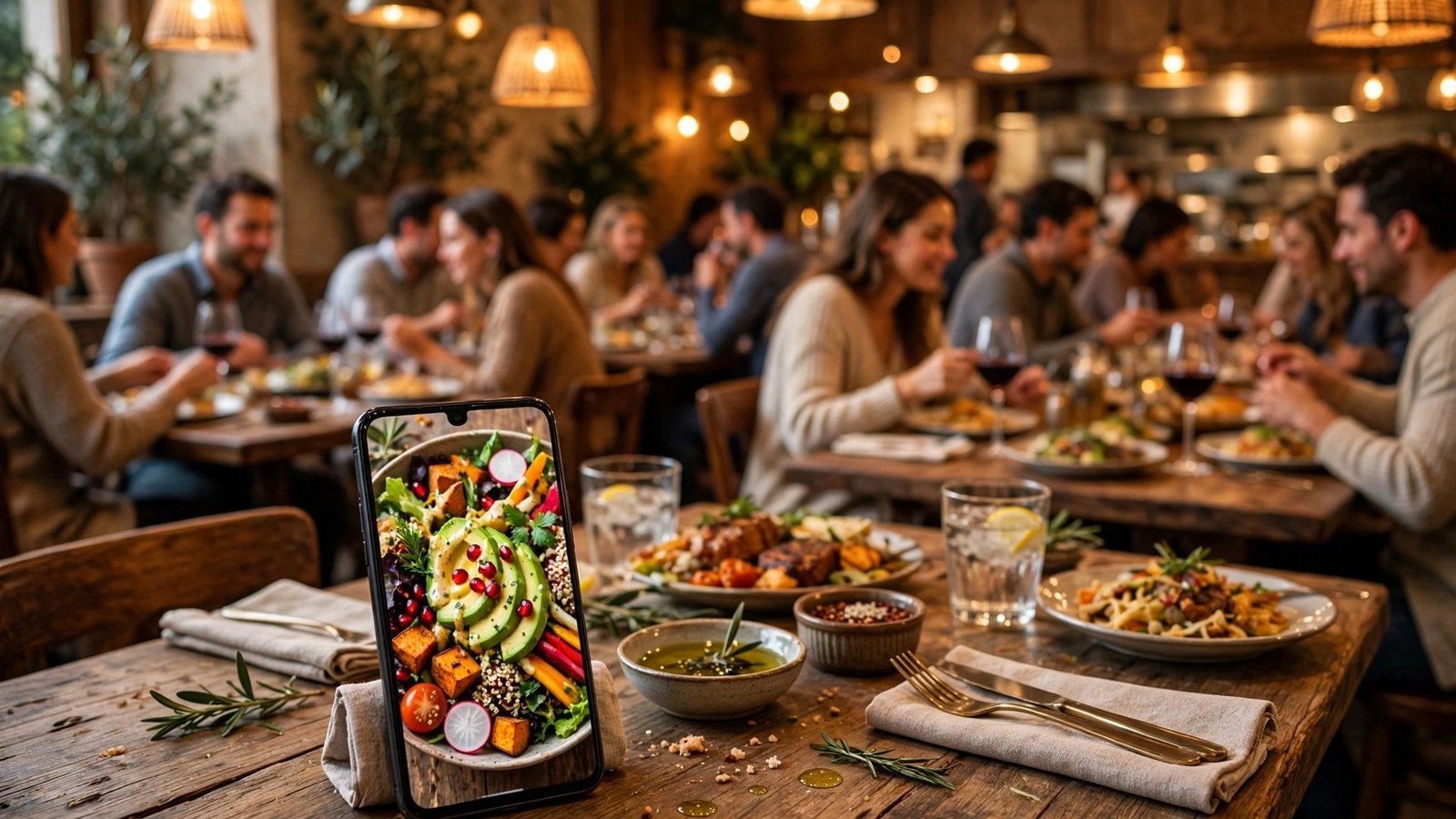
A restaurant does not need more people to see its food. It needs more of the right people, within driving distance, to book a table this week. That is the whole job of Meta Ads for a restaurant — and it is also where most restaurant ad spend quietly disappears. Pretty food photos shown to the wrong city, a "Book now" button that leads to a slow homepage, a campaign left running after the offer ended: none of these fail loudly. They just drain the budget a little every day while the dining room stays half empty on a Tuesday.
The good news is that restaurant advertising on Facebook and Instagram is one of the most forgiving kinds of local advertising when it is set up properly, because the intent is simple and the geography is small. Nobody drives two hours for a Tuesday dinner. Your ads only have to reach people near you, at the moment they are deciding where to eat, and give them one easy next step. Here is how to do that without wasting money.
Most restaurant ads show a beautiful dish and the restaurant's name, and then stop. That is a brand ad, and brand ads are the slowest way for a local restaurant to make its money back. A hungry person scrolling at 6 pm is not choosing a brand. They are choosing tonight.
Advertise a specific reason to come in: a table tonight, a weekend brunch, a set menu, a dish people actually photograph. One clear offer per ad, with the booking step in the same place as the photo. "Tables tonight from 6 pm — book in 30 seconds" will outperform a generic "best food in town" message every time, because it answers the only question that matters at that moment: can I eat there tonight, and how hard is it to arrange?
This also keeps your targeting honest. An ad for a Friday set menu goes to people within a short drive who eat out on Fridays. An ad for a family Sunday lunch goes to parents nearby. When every ad has a specific table behind it, you can tell within days whether it worked — bookings, not likes, are the scoreboard.
The single biggest waste in restaurant ads is reach that can never convert. A 50-kilometre radius around a neighbourhood restaurant includes thousands of people who will never drive that far for dinner. Start with the distance people actually travel for a meal like yours — often 5 to 10 kilometres for a casual restaurant, a little more for a destination venue — and expand only when the bookings prove the wider area works.
Inside that radius, target behaviour, not demographics. People who have recently engaged with food content, who eat out regularly, who have visited your page or your website before. Your existing customers and your past website visitors are usually the cheapest bookings you will ever buy, because they already know you. A small budget spent on people near you who have already shown interest will beat a large budget spent on strangers across the city.
And exclude what you do not need: people who have already booked this week, staff, and anyone outside your delivery or dining area. Every exclusion is money saved.
This is where most restaurant campaigns lose the money the ad itself earned. Someone taps an ad for Friday tables and lands on a homepage with a slider, a story about the chef, and a menu PDF. By the time they find the booking button, the impulse is gone.
Every restaurant ad should land on a page that does one thing: show the offer, show the tables, and take the booking. The booking form should ask for the fewest details that still let you hold a table — date, time, party size, name and phone number. A form that asks for dietary requirements, occasion and marketing consent before the table is booked is a form that filters out hungry people.
Test it the way a customer would: tap your own ad on a phone at dinner time and try to book a table in under a minute. If anything in that path is slow, confusing or broken, that is the highest-value fix in the whole campaign — worth more than a bigger budget. Our guide to restaurant websites that fill tables covers the same booking-first structure for the website itself, because the ad and the page have to work as one thing.
Great food photography matters — it is the reason someone stops scrolling. But the photo is the hook, not the pitch. The pitch is the evening: the table, the time, the ease of booking, and what makes this visit different from cooking at home.
Short video usually earns its keep here: fifteen seconds of a dish being plated, a dining room filling up, a chef finishing a plate. It does not need to be a production. A phone-shot clip of real food in your real dining room often outperforms a polished shoot, because it looks like the place the customer will actually walk into. One honest clip, reused across a few ads with different offers, goes a long way.
What to avoid: stock photos of food you do not serve. Customers notice, and a photo that promises a dish you cannot deliver is a complaint waiting to happen. Use your own food, your own room, your own people.
Nothing kills a restaurant campaign faster than an offer the kitchen cannot keep up with. A "buy one get one free" ad that brings a rush the kitchen cannot serve turns new customers into one-star reviews. Before any promotion goes live, the front of house and the kitchen should agree on the numbers: how many covers the offer can absorb, on which days, at which times.
Quiet nights are the right place for offers. A Tuesday or Wednesday promotion fills tables that would otherwise sit empty, so the cost of the discount is small compared with the value of a full room. A Friday night rarely needs a discount at all — it needs a reminder, sent early enough in the week, that tables are going fast. Spend the budget where the empty chairs are.
A restaurant ad should be judged on one number first: bookings that came from it. Likes and comments are pleasant, but they do not pay the rent. Set up the booking form so you can tell which ad brought the booking — a simple source question or a tracked link is enough to start with — and check it weekly, not hourly.
Give a new campaign at least two weeks of real data before deciding it failed. Meta's system needs time to find the people inside your radius who actually book, and a campaign judged after two days is a campaign judged before it learned anything. Small, steady budgets with weekly adjustments beat large, panicked budgets that get switched off and on. If an ad is not booking tables after two full weeks at a sensible budget, change one thing — the offer, the image or the audience — and test again. Changing everything at once teaches you nothing.
Meta Ads management from Vertex starts from $1,250 per month, and the ad spend itself is separate — it goes to Meta, and the amount depends on your area, your competition and how aggressively you want to fill tables. A sensible starting point for most local restaurants is a modest daily ad budget aimed at one offer and one radius, grown only when the bookings prove it works. Our Meta Ads cost guide breaks down how retainers and ad spend usually combine, so you can see the full picture before you commit to anything.
The honest comparison is not between running ads and spending nothing. It is between a small, well-targeted campaign that fills quiet nights, and an empty dining room on a Tuesday that still costs you rent, staff and ingredients. The first one is a cost you can measure. The second one is a cost you only notice at the end of the month.
If three or more answers are no, fix those before increasing the budget. More spend on a broken path only buys more waste, faster.
Meta Ads work for restaurants when they are treated as a booking tool, not a fame tool. Small radius, specific offer, one-tap booking, honest food, and bookings as the scoreboard. Get those five right and the ad spend starts to look less like a cost and more like the cheapest full dining room you have ever bought.
Ready to fill more tables? Vertex runs Meta Ads for restaurants and cafes — local targeting, booking-first landing pages and weekly reporting, with retainers from $1,250/month. See Meta Ads for restaurants →
Prefer the 60-second visual version? Watch our Web Story: Restaurant Meta Ads That Fill Tables — Not Just Likes (2026)
Social media growth in the UAE
Vertex Agency builds custom websites, Meta Ads campaigns and social growth systems for ambitious brands.